150 years ago today…..

The Melting Pot – Merthyr Tydfil's History and Culture
In Association with the Merthyr Tydfil & District Historical Society
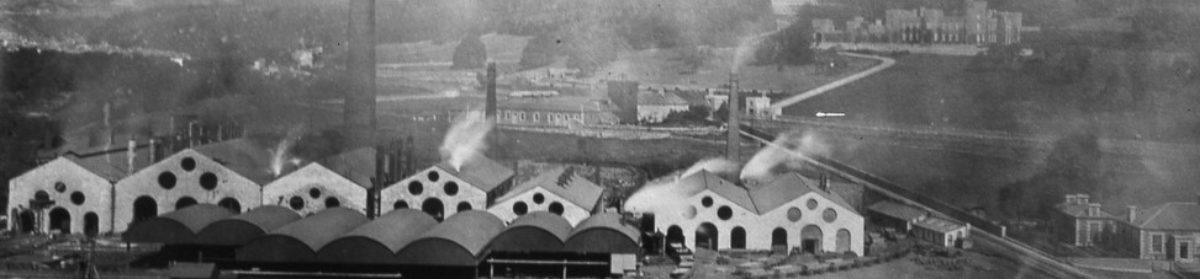
150 years ago today…..
From the Merthyr Express 110 years ago today….

Here is a clearer photo of the ambulance….


The following article is taken from the marvellous website
http://www.treharrisdistrict.co.uk, and is transcribed here with the kind permission of the webmaster, Paul Corkrey.
 Gwilym Davies CBE was a Welsh Baptist minister, who spent much of his life attempting to enhance international relations through supporting the work of the League of Nations and its successor, the United Nations. He also established the Annual World Wireless Message to Children in 1922, and was the first person to broadcast in Welsh, on St David’s Day, 1923. He was born in 29 Commercial Street, Cwmfelin, Bedlinog on 24 March 1879, son of D. J. Davies, a local Baptist minister.
He was a pupil teacher at Bedlinog when his father moved to the neighbourhood of Llangadog and he became a pupil at Llandeilo grammar school. He began preaching as early as 1895 and trained for the ministry at the Midland Baptist College, Nottingham, and at Rawdon College. There he won the Pegg Scholarship which enabled him to enter Jesus College, Oxford, where he graduated. Whilst at Oxford he edited The Baptist Outlook. In 1906 he was ordained minister at Broadhaven, Pembrokeshire, and the same year he married Annie Margaretta Davies, but she died 3 December 1906 and their baby son died four months later; they were buried in Cwmifor cemetery, Maenordeilo, Carmarthenshire.
In 1922 he retired from the ministry to devote himself to the cause of international peace. He joined with Lord David Davies in creating the Welsh council of the League of Nations Union with its headquarters at Aberystwyth. He was appointed a C.B.E. in 1948, and the University of Wales conferred an honorary degree of LL.D. upon him in 1954.
He suffered from ill-health ever since his student days. He spent much of his life in Cardiff and Geneva, and his work took him to all parts of the world. On 24 January 1942 he married Mary Elizabeth Ellis, Dolgellau (the second woman to be appointed an inspector of schools in Wales; she was granted permission to marry and to retain her post till 1943). They lived in 8 Marine Terrace, Aberystwyth. He died 29 January 1955 and his ashes were scattered at Lavernock Point, Penarth, where the first radio messages had been exchanged across water.

Hello everyone.
 Yet again, it is time for my bi-annual appeal to all budding historians out there – please send in your articles.
As you know I am always looking for fresh ideas for this blog, so if anyone feels they would like to contribute a piece – no matter how short, any submissions will be gratefully received.
There have been some articles on the blog this year written by ‘new’ authors (to this blog), and have been about fascinating and vastly different subjects – subjects that I would probably have never written about – that’s what keeps this blog fresh, so why don’t you have a go at writing something?
Everyone is welcome to contribute – whether you are an established historian or someone with a passion for local history who has never written something before.
 Please send me your articles – help keep the blog fresh.
Thank you
Adulam Welsh Independent Chapel, Merthyr

In 1829, David Williams, an elder at Pontmorlais Chapel, became dissatisfied with the form of worship at the chapel and led a breakaway group of worshippers and began holding meetings, originally at the Bush Hotel, Caedraw.
Mr Thomas Powell, Sadler, High Street was one of the staunch supporters of David Williams, It was Thomas Powell who negotiated the land required, and the finance for building their own place of worship. Representation was made to the land owner William Thomas Esq. of the Court Estate to lease a parcel of land to build a chapel for 99 years for the sum of 2½ pence per annum. When sufficient money was raised, a chapel to be called Adulam was built in 1831 on Tramroadside North at a cost of £250.
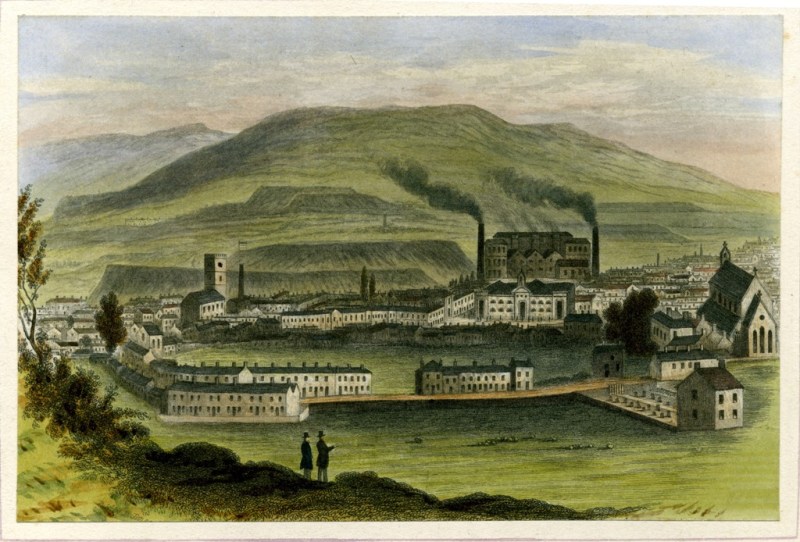

The ministers of Zoar and Bethesda were opposed to David Williams and his people, and many of the ministers outside Merthyr felt the same, but several favoured him and went to Adulam to preach, and invited him to their pulpits, and eventually in Tretwr Assembly, he and the people under his care were recognized as a regular church. The chapel applied to the Methodist Union for membership but were refused; but then applied to, and were accepted into the Independent Union. David Williams was duly installed as Adulam’s first minister.
The church was burdened with a large debt and little effort was made to clear it during David Williams’ lifetime. The cause did not increase much. The fact that it was an old Methodist cause meant that Congregationalists who came to the area did not feel drawn towards it, especially in view of the fact that there were Congregational chapels in the area already. Mr Williams did not live long after joining the Congregationalists, dying on 12 June 1832.
Following Rev Williams’ death, the chapel depended on visiting ministers from other local chapels until Rev Joshua Thomas was ordained on 12 April 1833. Under Rev Thomas, the congregation at Adulam began to grow. Joshua Thomas was also instrumental in the starting of the causes at Bryn Sion Chapel in Dowlais and Horeb Chapel in Penydarren.
By 1856 the congregation had grown to such an extent, that when Lower Thomas Street was being built, it was decided to build a larger chapel with the entrance now on Lower Thomas Street. The new chapel was completed in 1857 at a cost of £1200. To save money, the chapel wasn’t built on the street, but set back behind two houses with a small courtyard in front of the entrance. The new chapel also incorporated a small vestry and stables for visiting ministers which were situated beneath the chapel. The stables were later converted into two small cottages.

Within five years of the new chapel being built, Rev Abraham Matthews was inducted as the minister at Adulam Chapel. Rev Matthews became the minister of the chapel in 1862, but he left Adulam in 1865 when he and his family left Wales and became one of the first group of settlers to start up the Welsh Colony in Patagonia.
 Unlike many other chapels in Merthyr, Adulam was one of those chapels frequented by working class worshipers; its membership did not include an array of financial benefactors and throughout its history struggled to maintain its religious survival. Following the death of Rev Daniel T Williams in 1876, Adulam could not afford to pay for a new minister until 1883 when Rev D C Harris became minister. One of the first things he did on becoming minister was to set about alleviating the debt on the chapel. In 1884 he sent out appeals for aid to relieve Adulam’s financial burden to every household in the area – see above right. It is interesting to note that the name of the chapel is spelt in the English way with two ‘L’s rather than the more usual Welsh way with a single ‘L’.
By the 1960s, due to falling attendances, services began being held in the vestry beneath the chapel. In 1972, the congregation had dwindled to just nine people, and the sad decision was reached that the chapel should close. The final service was held on 24 September 1972. Following its closure, several plans were put forward to use the building for a number of different projects, but none of these came to fruition. By the 1990s the building had fallen into such a derelict state that it had to be demolished.

A new development of flats has been built on the site of the chapel and is called Adulam Court.
TRAMROADSIDE NORTH


The ‘Tramroad’ has changed a lot in the last 50 or so years. The cottages shown in the first photograph have been demolished (as indeed have almost all of the houses that lined the road). Adulam Chapel (which can be seen top middle of the first photo) has also been demolished to be replaced by a new development of flats.
Indeed, if we were to follow the Tramroad towards Twynyrodyn, we would see that the whole layout of the road has entirely changed.
At least there are more trees now!!!!
From the Merthyr Times 150 years ago today….

80 years ago today…..

This article is a transcription from a publication now in the public domain: Dictionary of National Biography (1st supplement). London: Smith, Elder & Co. 1901
On the formation of the British Iron Trade Association in 1876, Clark was elected its first president, and his ‘Inaugural Address’ (Newcastle-upon-Tyne) attracted much attention, provoking considerable controversy in the United States by reason of its trenchant exposure of protection. Few employers of labour have ever studied the social well-being of their workers so earnestly as Clark. At his own expense he provided a hospital for the Dowlais workmen, while the Dowlais schools, the largest in the kingdom, owed their success almost entirely to his direction. He was an early supporter of the volunteer movement, and himself raised a battalion in the Dowlais district. He was chairman of every local authority in the place, and his manifold services in the work of local government are commemorated by a marble bust, the work of Joseph Edwards, placed in the board-room of the Merthyr poor-law guardians. He was sheriff of Glamorganshire in 1868.

Clark’s reputation, however, mainly rests on his archaeological work, and, to a lesser extent, on his historical research, though these were but the relaxations of an otherwise busy life. For half a century he was recognised as the highest authority on all mediæval fortifications, and was the first to give a clear insight into the military and historical importance of the earthworks of this country, and especially to show the use made of the mound – ‘the hill of the burh’ – in Norman times. Before going to India he took a prominent part in the movement which brought about the foundation in 1843 of the Archæological Association (now the Royal Archæological Institute), and, after his return, was constantly associated with its work for the rest of his life contributing papers to its journal, attending its annual meetings, and acquiring a unique reputation as a field-lecturer, inasmuch as the castles visited were ‘called up to their first life by his massive vigour’.
 He was also one of three trustees of the Cambrian Archæological Association. Commencing with an account of Caerphilly Castle as early as 1834, he contributed to the ‘Transactions’ of various societies, and to the ‘Builder,’ a large number of articles dealing with his favourite subject. In 1884 these were collected in his ‘Mediæval Military Architecture in England ‘ (London, 2 vols) a work which is not likely to be superseded, though its information may be supplemented with minor additions of detail.
Next to his purely archaeological attainments should probably be ranked his knowledge of heraldry and genealogy. He wrote the article on heraldry for the ‘Encyclopædia Britannica,’ while his privately printed pedigree of the Babington family has been described as ‘perhaps unsurpassed for its dimensions and grandeur of type.’
His other works were for the most part elaborate contributions towards the history of his adopted county of Glamorgan, the following being the more important among them:
‘Thirteen Views of the Castle of St. Donat’s, with a Notice of the Stradling Family,’ Shrewsbury, 1871.
‘Some Account of Robert Mansel and of Admiral Sir Thomas Button,’ Dowlais, 1883.

‘The Land of Morgan, being a Contribution towards the History of the Lordship of Glamorgan,’ London, 1883, 8vo.
‘Limbus Patrum Morganiae et Glamorganiæ. Being the Genealogies of the Older Families of the Lordships of Morgan and Glamorgan,’ London, 1886, 8vo. Most of these pedigrees had been published ‘nearly a quarter of a century’ previously in the ‘Merthyr Guardian.’
‘Cartæ et Alia Munimenta quæ ad Dominium de Glamorgan pertinent.’ Sumptuously printed, for private circulation only, this great collection of Glamorgan charters extends to 2,300 quarto pages, making four volumes, of which the first was issued in 1885 from a private press at Dowlais, and the other three (in 1890-1-3) from Cardiff.
Clark also edited some devotional works by his father and his ancestor, Samuel Clarke (1599-1682), and wrote numerous articles on the history and antiquities of Glamorgan.
Clark died on 31 Jan. 1898 at Tal-y-garn, near Llantrisant, where he had resided during his later years, and was buried there at St. Ann’s Church, which he had built to the memory of his wife, Ann Price, second daughter of Henry Lewis of Greenmeadow, near Cardiff, and coheiress of Wyndham Lewis. She was married to Clark on 3 April 1850, and died on 6 April 1885, leaving a son (Godfrey Lewis Clark) and a daughter.