From The Pioneer 110 years ago today…..

The Melting Pot – Merthyr Tydfil's History and Culture
In Association with the Merthyr Tydfil & District Historical Society
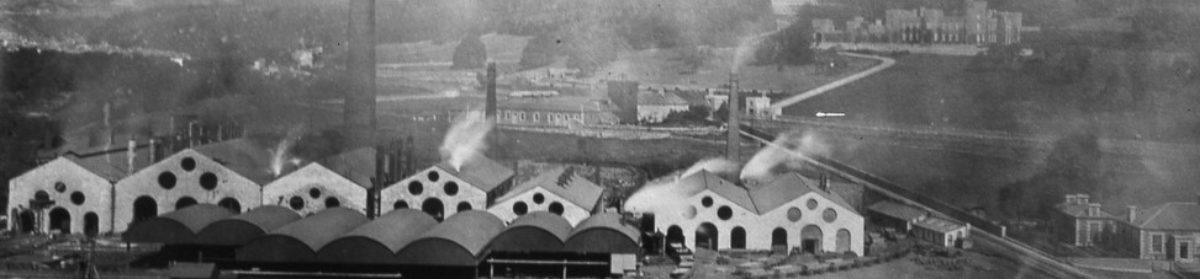
From The Pioneer 110 years ago today…..
by Brian Jones
People living in the Merthyr Tydfil locality shrugged off the trauma of World War II and looked to an ever brighter future. Gone were the hardships of hot physical work associated with the iron works and the burden faced by coal miners, was eased, with mechanisation of that recently nationalised industry. Employment now centred on the new ‘lighter’ industries adapted from wartime production. The new Hoover factory was at the centre of the increasing prosperity and this was reflected in the increase in footfall in the High streets as a consumer society began to emerge. The retail sector thrived and weekend shoppers flooded the centres of the town and nearby villages, although supermarkets and shopping malls were a long way in the future.
Aside from food, furniture and clothing shops the town centres, and villages, were littered with public houses and ‘drinking culture’ became more respectable. Unsanitary pubs were demolished and money invested to brighten their appeal as suitable, and sober, places for both men and women. Sales people strove to market the tied pubs owned by the breweries and their signs were prominently displayed. The dominant sign was that used by Rhymney Brewery, with that of the William Hancock Brewery a poor second.

Today this sign hangs outside the Royal Oak, Nelson, which is still trading, whilst a faded painted image can be seen on the gable end of a private house in Quakers Yard, previously named as the Victoria Inn.
Malting is the germination of grains such as barley, wheat or oats which are soaked in warm water to allow germination and that germinating grain is heated in a kiln in order to to increase the alcohol content. In areas where soil was less fertile barley was used and that drink was referred to as ale. The more water in the mixture the weaker the ale and the lighter the colour, the less water the stronger, darker and richer the ale. In rural areas farms and taverns made their own ale which was sold in malthouses. In Medieval times ale/beer was an important source of nutrition mainly served as small beer, table beer or mild beer. It contained just enough alcohol to act as a preservative without causing intoxication and could be drunk by children. In broad terms beer has an alcoholic strength between 0.5 % to 4% alcohol by volume (ABV) although some craft beers can exceed this.
Change came with the entry of business men who opened numerous iron works along the northern edge of the South Wales valleys. Labour flowed into the area and they acquired new skills in hot blast furnaces, puddling the pig iron and this proved to be thirsty work. The workers could not trust the quality of either drinking water, nor barley water, so they sought refreshment firstly in ale, but later more increasingly in beer which is malted from hops. Beer was readily available and its importance for hydration was recognised by the Ironmasters some of whom took to investing in a more economic way of providing a consistent and safe liquid refreshment. A number of breweries were opened in the locality and these provided extra employment and a number of these were:-
From the mid 18th century there was a race to build new iron works and four were established in Merthyr with others at Hirwaun, Tredegar, Rhymney and Blaenavon. Many of the men and women worked in the open air, mining ironstone, limestone, clay and coal in adits and comparatively small drift mines. In the summer this proved to be thirsty work. Those in the iron works faced hot conditions all year round and sought drink in the many pubs and publicans began to brew alcohol for their customers. The Brewers Arms and the Clarence Hotel in Dowlais were small scale brewers, however some iron companies saw the potential to make safe and consistent quality beers in substantial quantities. A classic example was the Rhymney Iron Company which morphed from the Union Iron Company in Rhymney Bridge, and the Bute Ironworks. In 1838 it was decided to build a brewery for its workers and a year later a Scotsman, Andrew Buchan, became the brewery manager. For some decades the beers were sold as Buchan’s beers brewed and bottled at the brewery in the centre of Rhymney.
Andrew Buchan died in 1870 however, the brewery continued to use his name until 1930 when they acquired the Western Valleys Company in Crumlin, owned by D.F. Pritchard Ltd. In that purchase they also acquired the Pritchard logo and they decided to use the Hobby Horse with “The Man on a Barrel”. This clearly distinguished Rhymney Beers and the Rhymney Company from its competitors. The brewery at Rhymney was to become the largest in South Wales. Their beers dominated the market in Merthyr and their tied pubs became a common sight from Treharris to Cefn Coed and Dowlais. The company was taken over by Whitbread in 1966 and production ceased in Rhymney in 1978. The company name “Rhymney Brewery” and logo were resurrected in 2005 in Dowlais before production moved to its current brewery in Blaenavon. One of its many beers is the historic “Rhymney Hobby Horse”.

The largest of the local Merthyr breweries was the Taff Vale first located adjacent to the canal near the Old Iron Bridge close to where Merthyr college is today. It opened in in the 1840s and in 1904 moved to a new building in Dan Y Parc, to the south of Thomastown Park. The company was acquired by the Rhymney Brewery in 1936 and brewing ceased at that site. The Rhymney Brewery grew in importance as the dominant brewer and owner of public houses in the locality and in this same year(1936) it bought out a large Pritchard brewery in Crumlin and the last of the Merthyr brewing companies ceased production. In parallel with these 1936 acquisitions the William Hancock brewery in Cardiff purchased the Merthyr Brewery located on the Brecon Road and brewing also ceased there.
At the end of World War II the empty building at Dan Y Parc accommodated O.P. Chocolates and chocolate production continued there until 1963 when the company moved to a brand new factory in Dowlais which still operates today.

The Six Bells pub had served the people of Heolgerrig however many may be surprised to learn that a large brewery once stood alongside the original pub. The Heolgerrig Brewery was founded in the 1840s by Thomas Evans until it was destroyed by fire in 1888. He then erected a new building which continued to brew beer until 1916 when it was Purchased by D.F. Pritchard Ltd. of Crumlin. The acquisition of breweries by larger companies became a trend where the new owners closed down local brewing in order to concentrate production at their own brewery. Some years later D.F. Pritchard Ltd. was bought out by the Rhymney Brewery who acquired the “Hobby Horse” trademark as part of that purchase.

The Pontycapel Brewery was founded in the early 1800’s by Robert Millar and was later purchased by James Pearce when it became Pearce and Shapton in 1871.It was described as the most picturesque brewery in the country, sited in a wooded area it predated the construction of the Cefn Viaduct which was completed in 1866. Shortly thereafter the name changed to the Cefn Viaduct Brewery especially known for Star Bright XXXX Pale Ale and production continued until 1921 when there was a post World War I economic downturn.

The Giles and Harrap’s Merthyr Brewery was located on the Brecon Road. An adjacent road was named Brewery Street in an area which was the centre of the Merthyr Irish community and St. Mary’s Catholic church was built a short distance away. In 1936 the brewery was taken over by the William Hancock Company based in Cardiff although the buildings continued to be used as a warehouse and distribution centre for beer and spirits until the Borough Council bought the site. The brewery was the oldest in the locality when it opened in 1830 and so predated the Taff Vale Brewery by about 30 years. Richard Harrap lived in Gwaunfarren House, which later became the Gwaunfarren Maternity Hospital. Both partners built up the business to rival the Rhymney Brewery although in time the Rhymney Brewing Company grew to be larger buying out other brewers. Both companies managed a large number of tied public houses in Merthyr and also sold beer in a large number of local freehold pubs. The Merthyr and Rhymney breweries were to dominate the beer market and their large number of pubs were to have a prominent visual impact in main and side streets spread throughout the locality.
To be continued…….
by Tony Peters, Glamorgan Archives
As we recently celebrated the 200th anniversary of the first locomotive-drawn passenger service, we have delved into our records to unearth photographs of some of the magnificent steam trains that were ‘Made in Wales’.
The selection below is unusual in that the locomotives were never seen at a station or on a main line for they were built at, and for the exclusive use of, the Dowlais Iron Company. Nevertheless, in their design and finish, they were a match for their contemporaries and arguably ‘fit for a King’.
From 1832 onwards the Dowlais Iron Company used steam locomotives on site to move heavy loads. However, it was not until the turn of the century that the company elected to manufacture its own locomotives at the Ifor Works engineering shop. This decision coincided with a change in ownership, with the company acquired by Guest, Keen and Co in 1899 (known as Guest, Keen and Nettlefolds from 1902) and the arrival of George Robson as Locomotive and Engineering Superintendent.
Robson had worked at the Great Western Railway works at Swindon. Drawing on his experience and background, the first engine built under his supervision at the Ifor Works in 1906 was similar in looks and power to mainline engines operated by the GWR. Turned out in a very distinctive green and black livery edged with yellow, it was an impressive sight and named, appropriately, after the company chairman, Arthur Keen.

It was no surprise that, when King George V and Queen Mary visited the Dowlais works in June 1912, Robson’s locomotives were called into service. Such was the scale of the Dowlais site that it was decided that the Royal Party would travel across the works in carriages provided by the London and North Western Railway company and pulled by Dowlais’ own locomotives, with George Robson in the cabin.
The photograph shows ‘Arthur Keen’ drawn up with the two carriages awaiting the arrival of the King and Queen. In reports of the visit, it was noted that the engine was the subject of much …admiring comment… and a …perfect example of sound engineering construction.
The opportunity was also taken during the visit for Queen Mary to name two new locomotives positioned adjacent to the Steel Arch constructed at the High Street exit of the works. Described as the …latest word on locomotive building, the engines, until then, had been known as numbers 40 and 42. However, afterwards, both carried plates confirming their new identity as the ‘King George V’ and ‘Queen Mary’.

In all, nine new locomotives were built at the Ifor works and many more were refitted before the works closed in 1930. Photographs of a selection of the locomotives employed by the Dowlais Iron Company from 1832 onwards can be found at Glamorgan Archives under reference DG/PH/3. The Glamorgan Archives catalogue can be accessed at https://canfod.glamarchives.gov.uk/.
This article is reproduced with the kind permission of the Glamorgan Archives. To view the original, please follow the link below.
by Alison Davies
At the far end of Vaynor, just inside the neighbouring parish of Llandetty, stood the pretty church of St Agnes known as Taff Fechan or Dolygaer Church.
Built in the 1470s, almost 400 years later it was extensively rebuilt in the 1860s. The graveyard was also extended after land was gifted by churchwarden, William Williams, Wernddu, and, a new vicarage also built.

This was a time of immense change in the valley, the building of the Pentwyn Reservoir (Dolygaer Lake) and the construction of the Brecon to Merthyr Railway brought hundreds of day trippers to picnic swim or sail around the lake in Mr Atkins’s steam powered boat.
Then, in 1925, with the added need for clean water, all changed.
The church, its vicarage, the neighbouring Bethlehem Chapel built 1828 and several houses and farms were all demolished for the flooding of the valley, and the building of the Taf Fechan Reservoir that we know today.
The picturesque church with its historic foundations was gone, and, the sacred remains of 445 men, women, children and babies were removed from the graveyard. A further 73 were also removed from Bethlehem Chapel graveyard.

A valley of memories, submerged beneath the lapping waters. Then, every so often, in hot weather, the drought beats the waters retreat, and the archway of Bethlehem Chapel freely emerges from the depths.
At Taf Fechan Church generations of families from the area such as William and Margaret Edward, their sons, Thomas aged 7 days, and, Morgan 2 years, were all removed from their resting place.
Some unknown graves, whose identity was quietly recorded by an unmarked stone, a simple row of river cobbles or a parting in the grass where someone had once sat and grieved. Now, their identity gone, their history lost, they were simply marked as ‘person’ ’child’ and ‘infant’.
Most, including, those both known and unknown, were re-interred at the new burial ground at Pontsticill.
They included 26-year old Sarah Jones from Dowlais and her new born daughter Margery who died Sept 1841, also 71-year old station master Charles Mallet who had worked Torpantau Station for over 45 years, died 1910, or Farmer David Lewis died 1891 Cwm Carr.
Others, such as the ancient Watkins family of Blaencallan, or Rhiwyrychain, and, one of the earliest recorded families in the Dolygaer valley, were reburied at Vaynor and Llandetty Churches.
A new church was opened in 1927 on the embankment above the Dolygaer and a new chapel built in Pontsticill; both are now privately owned.
To see more of Alison’s fantastic research about Pontsarn and Vaynor, please follow this link: https://www.facebook.com/groups/747174317220437
by Mary Owen
 Gwyn Alfred Williams was born on September 30th, 1925 in Lower Row, Penywern, Dowlais. His parents, Thomas John and Gwladys, were schoolteachers. The family attended Gwernllwyn Independent Chapel, where they worshipped in Welsh and where young Gwyn and his friends, the ‘Gwernllwyn Chapel Gang’, absorbed the scriptures and played a lively part in social activities. He was educated in Cyfarthfa Castle Grammar School, where he enjoyed school life and many successes, becoming Head Boy and winning a David Davies Open Scholarship to study History at the University College of Wales, Aberystwyth.
Sadly, he was unable to begin these studies immediately because, as Geraint H. Jenkins wrote in his 18-page tribute to Gwyn on behalf of the University of Wales Centre for Advanced Welsh and Celtic Studies 1996, ‘the demands of war took him instead to the battlefields of Europe where he learnt a great deal about human suffering. Indeed, the experience of wartime service stayed with him for the rest of his days. Having witnessed the liberation of Paris and stood amongst the ruins of Berlin, he was then persuaded that he should help to build a better world in Yugoslavia, where he joined gangs of labourers who built a road linking Zagreb and Belgrade.’
His belated studies began ‘at the feet of Francis Treharne, Professor of History since the 1930s and a fellow native of Merthyr’ who veered Gwyn to specialise in medievalism. He graduated with an ‘outstanding first-class honours in 1950 and ‘was showered with prizes.’ A master’s degree and a doctorate followed and in 1954 Gwyn was appointed to teach Welsh History at the College. Jenkins states, ‘It is entirely appropriate that we in Aberystwyth should pay tribute to Gwyn for it was here that he served his apprenticeship as a historian and made his reputation as a scintillating lecturer. His senior colleagues ‘were rather staid, undemonstrative and solemn lecturers… lacking improvisation and lightness of touch…It was all clearly too dull and complacent for the young ball of fire from Dowlais. In his classes Gwyn was erudite and entertaining and his penchant for irreverent statements meant that the classroom where he delivered lectures to first year students was always filled to the brim.’
The strong views and quick wit of Gwyn’s early lecturing days had been evident in his 1940s school days and honed to perfection when I once heard him recall, in a Prize-giving event in the 1970s at Cyfarthfa High School, when he told us of the day when Miss Davenport, Head of the Girls’ Section, based upstairs, where the boys were not allowed to tread, asked him (then the Head Boy) to come to see her.
‘Mr Williams’, she said, ‘There are boys hanging about upstairs. I want you to do something about it.’ His reply to her complaint was:
‘Miss Davenport, what do you want me to do about it? Cut them down?’
His early research as a keen medieval historian widened and Jenkins relates, ‘he became obsessively interested in the French Revolution and in the Atlantic world. Nor was the early history of Merthyr Tydfil, the cradle of the Industrial Revolution in Wales, ever far from his mind. Indeed, the first articles of Welsh history -published in 1959-61 were devoted to the Merthyr Riots of 1831.’ All helped to make this historian ‘the people’s remembrancer’ he wished to be.
Gwyn’s fame spread and in 1963 he was invited to become Reader in History at the new University of York ‘a major turning-point in his career.’ Two years later he was awarded a Chair and for the next eleven years, the swinging sixties! the young professor enjoyed furthering his career with his own exhilarating, modern style of teaching, delighted by classes, again ‘filled to the brim’.
In 1974 he returned to Wales to become Professor of History at Cardiff University. It was a sea- change: his aim to liven up and modernise the study of Welsh History was met with indifference by senior colleagues, who did not share his left-wing values and enthusiasm for the need to focus on the evils of capitalism and the struggles of the exploited working-class of 19th and 20th century industrial South Wales. His new post brought friction and bitter disappointment to the ambitious 49-year- old Welshman. His health suffered and, after battling against the odds for five years, he was persuaded to retire.
 Nevertheless, there was life after academia, and he was saved by his need to research, write and to impart his views and his knowledge via active political work and then through radio and television. In 1979 his book, The Merthyr Rising of 1831 was an outstanding success, displaying his scholarship and masterly command of language and written in his fast and furious style. It still has a place on many a bookshelf in Merthyr Tydfil and elsewhere. Revolutions, riots and risings in France, Italy and Spain became favoured topics of his writings. Gwyn, who had already relearnt his Welsh, was a gifted linguist, reading and translating from original documents, often studied in those foreign countries. He won great success as a broadcaster too. His passionate performance in the 1988 TV series, The Dragon has Two Tongues, (A History of the Welsh) proved that the ‘ball of fire from Dowlais’ was still blazing.
He died of cancer on November 16, 1995.

Laura Ashley was born in Dowlais 100 years ago today.
To mark the centenary, Cyfarthfa Castle Museum are holding a talk on 10 September.

For details of how to book tickets, please follow the link below.
There will also be a Laura Ashley pop up exhibition in the wedding groom gallery between 10.00-14.00 today. This is in celebration and partnership with USW and Coleg Y Cymoed fashion students to showcase the Laura Ashley inspired garments they’ve created.
In addition, from the week commencing 25 September there will be a brand new Laura Ashley display area featuring a complete overhaul of the lobby display areas.
From the South Wales Daily News 130 years ago today….

Following on from the recent photograph of Wm. R Lewis & Son, Pontmorlais, https://www.merthyr-history.com/?p=9197, I have been sent the following photograph and message.

I thought you may like to see this. My great uncle is the young boy sat by the ladder. He was an apprentice carpenter. They were celebrating King Edward’s visit in 1936 when he visited Dowlais. I added my details years ago because it includes my dear great uncle and it’s such a personal record of his youth. It must’ve been taken by a professional photographer.
Cheryl Kellar
Carrying on with the requested look at Merthyr’s lost chapels, here is the second batch – the lost chapels of Dowlais.
Bryn Sion Welsh Independent Chapel
Brynsion Street, Dowlais
Built 1834. Rebuilt 1844. Demolished 1969

Caersalem Welsh Baptist Chapel
Well Street, Dowlais
Built 1821. Rebuilt 1833. Demolished 1977

Calfaria Welsh Calvinistic Methodist Chapel
High Street, Caeharris
Built 1879. Closed 1979

Ebenezer Primitive Methodist Chapel
Wind Street, Dowlais
Built 1846. Burnt down 1927

Elizabeth Street Presbyterian Chapel
Elizabeth Street, Dowlais
Built 1876. Demolished 1965/6

Gwernllwyn Welsh Independent Chapel
Mary Street, Dowlais
Built 1850. Rebuilt 1874. Demolished 1965

Hermon Welsh Calvinistic Methodist Chapel
Castle Street, Dowlais
Built 1827. Rebuilt 1841. Demolished 1960s

Libanus Welsh Calvinistic Methodist Chapel
Libanus Street, Dowlais
Built 1852. Rebuilt 1858, 1870. Demolished 1996

Moriah Welsh Baptist Chapel
Mount Pleasant Street, Dowlais
Built 1856. Demolished 1992

Penywern Welsh Independent Chapel
Jones Street, Peneywern
Built 1857. Rebuilt 1877. Demolished ?

Shiloh Welsh Wesleyan Chapel
Castle Street, Dowlais
Built 1811. Rebuilt 1853. Demolished 1920s

Tabernacle (Elim) English Baptist (Pentecostal) Chapel
Ivor Street, Dowlais
Built 1873. Rebuilt 1876. Demolished 1974

Unitarian Chapel (later Salvation Army)
White Street, Dowlais
Built 1881. Demolished ?

Wesleyan Chapel
Castle Street, Dowlais
Built 1843. Rebuilt 1850, 1832. Demolished 1967

If anyone has photographs of any other chapels that are no longer with us, and there are a few I can’t find photos of, or if anyone can fill in any details, please get in touch.
120 years ago today, Radcliffe Hall Chapel in Penydarren opened for worship. Below is an article that appeared in July 1905 edition of ‘The Torch’, the official journal of the Forward Movement Methodist Denomination.

