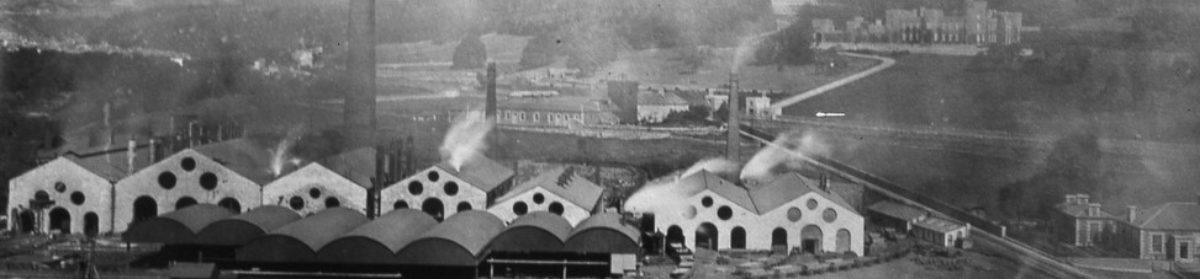
Beer, Brewing and Public Houses in the Merthyr Tydfil Locality – part 2

by Brian Jones

Prior to the early 19th century public houses, coaching inns, hotels and hostelries sold beer of variable quality in vessels of various sizes and without restrictions on opening times. Governments did not interfere in the trade however the “Gin Riots”  in England, particularly in London, of the early 18th century prompted legislation spread over many decades in order to standardise units of measures, pub opening times and the legal definition of beers, wines and spirits. Premises had to be licenced, pub landlords needed to apply for licences and it was necessary for them to keep their pubs in good order for fear of losing their licence. Licensed Victuallers, or pub landlords, became more professional and local licensed victualler Associations were formed. Some important Acts of Parliament were:-

  • 1824 British Weights and Measures Act which defined the imperial measurements for (amongst others) the pint and half pint.
  • 1830 Beerhouse Act which sought to encourage the establishment of pubs with more supervision plus the promotion of beer sales as a more wholesome beverage than gin and other spirits. This Act resulted in a significant increase in the number of public houses.
  • 1921 The Licensing Act made permanent the World War I restriction on alcohol sales, establishing standard opening hours for licensed premises.
  • 2003 Licensing Act aimed to pull a host of previous legislation together and covers the production, advertising, sale and taxation of products based on their alcohol by volume (ABV) Alcohol is now defined if it exceeds 1.2% ABV.

In 1835 ironworks were the major employer in the locality whilst the coal industry still remained relatively small scale. The population was less than 14,000 and “Pigot’s Directory” described Merthyr as a market town. His listing of the local businesses has the characteristics of a growing urban population with bakers, blacksmiths, booksellers, boot makers, hardware dealers, hairdressers, tanners etc. The directory also lists over 50 pubs and retailers of beer. Nearly all of the pubs no longer exist with a few exceptions such as The Crown and The Vulcan, both in the High Street, the Wyndham in Glebeland Street and the Glove and Shears (now a fast food outlet)  adjacent to the Labour Club. It is remarkable that these premises still exist after nearly 200 years!

Courtesy of the Alan George Archive

The local pubs in the era of the iron aside from selling beer, also served as centres of trade and mischief. Most of the ironworkers were not employed by the Ironmasters but by contractors, and their gangmasters would pay workers in the pubs, initially in tokens, and after the Truck Act of 1819 in coin of the realm. These men were captive customers and in the decades that followed drunkenness became a significant social problem. Local press was littered with stories of assaults, thefts and public indecency whilst under the influence of alcohol, and such was public concern that alcohol became political in nature. It transpired that the Beerhouse Act of 1830 had been too lax and a rift emerged between the political parties; the Conservative Party represented Brewers and Licensees and the Liberal Party represented those groups seeking to reduce the effects of “demon drink”. In Wales this came to a head in 1881 when pressure from Non-Conformists forced the prohibition of the sale of alcohol on Sundays. In time the national Liberal Party supported a 3 year Royal Commission into Liquor Licensing because of concerns about alcohol consumption, public order and social progress. In 1908 a Licensing Act sought to reduce pub licenses and opening hours and a later Act in 1921 reinforced changes in the laws.

Deep Coal mines were sunk in the 1880s and a surge in the transport of coal by the improved rail transport, coincided with immigration into the coalfield and a second rapid increase in population. Tom Hier produced a significant piece of work set out in the Alan George archives, He listed in alphabetical order more than 500 pubs in the Merthyr locality and these establishments became important economic and social centres The list starts with Aberfan Hotel and finishes with the Zebro in Mary Street, Dowlais and spans the economic history of the locality from farming to the Iron works era, through the railway age and then coal mining. Here are a few examples of the number of pubs with similar names:-

  • 12 Plough /Farmers Arms
  • 7 Rolling Mill/Puddlers Arms/Blast Furnace
  • 12 Railway/ Locomotive /Station
  • 12 Miners/Colliers Arms

There were also a small number of pubs with curious names which mirrored the makeup of the population. Greyhound racing had been a popular pastime and there were at least 10 pubs named the Greyhound. The Irish communities of both Merthyr and Dowlais had their own Shamrock pubs at Bethesda Street and Cross Street respectively whilst the leather tanners at “The Skinyard” near Jackson Bridge had the Tanyard pub in Bethesda Street.

The Tanyard Inn. Courtesy of the Alan George Archive

Throughout  the 19th and into the 20th century the beer trade expanded however most breweries confined their sales to premises within a relatively short distance because the mode of transport was a limiting factor. Beer wagons were drawn by sturdy horses who could manage heavy loads on the flat or slightly sloping ground but not the steep climbs from one valley to the next one. That was to change at the end of World War I with the manufacture of petrol driven lorries. Prior to 1914 The Rhymney Brewery company had bought out local breweries however they were now able to expand their transport fleet and this enabled them to further economise by closing the local brewers and concentrate production at their brewery in Rhymney. In addition their sales outlets increased with the acquisition of freehold premises and now they owned more than 70 pubs in the Merthyr locality and the “Hobby Horse” reigned supreme adorning pubs such as:-

Eagle Inn (right). Courtesy of the Alan George Archive
The Aberfan Hotel. Courtesy of the Alan George Archive
The Glamorgan Arms in Abercanaid. Photo courtesy of the Alan George Archive

To concentrate on the ownership of pubs as part of the real estate owned by the breweries can diminish their importance as part of the social fabric of 19th and 20th century communities. It was not all about beer sales and beer drinking! In the first 100 years after the opening of the four local ironworks pubs were the centres for trade, conversation, smoking and music. Welsh was the dominant language and the Welsh harp was the principal instrument played. The singing voice accompanied the 3 string harp in the men only pubs often described as “spit and sawdust” places. Clay pipes would be given to customers and sometimes these would bear the name of the pub.

In the next 100 years Government legislation and “good order” gained the upper hand. The increased efforts of local government, licensees and the police saw pubs change their character, more English was spoken, women were allowed to enter “The Snug” but not the bar! The pub no longer became the working man stronghold and respectability saw increased use by the middle and professional classes. By way of example Cyfarthfa Castle Grammar school teachers met in the Lamb Inn in Castle Street each Friday evening and the Football Referees Association held their meetings tin the Narrow Gauge, Glebeland Street. The laws of Association and Rugby football had been codified and clubs were formed in pubs especially after World War II. Some examples are a rugby team at the Lamb and a football team at the Iron Horse, Galon Uchaf. Pub darts was popular with darts leagues whilst table games included cribbage, dominoes and cards.

The Lamb Inn. Photo courtesy of the Alan George Archive

Selling alcohol, keeping good order and resolving disputes were the job of both landlords and landladies however they also raised families and a brief note is made of some of these. Thomas Stevens served in “B” Company at the battle of Rourke’s Drift (1879) and his family kept the Robin Hood pub in Dowlais. Aladdin Gibb  (1874-1939) followed his more famous father as an accomplished player of the Welsh harp and he was the landlord at the Rose and Crown in the Quar and later the Brecon House, Brecon Road. Some ex-professional footballers looked to retire to life behind the bar. Shenkin Powell (of the thunderous shot) played for Merthyr Tydfil after World War II and he was the landlord of the Brunswick in Church Street. The father of Lynn Mittell MBE kept the Royal Oak pub in old Caedraw, sited near to St. Tydfil’s Church, it was demolished in the 1960’s as part of the redevelopment of Caedraw.

Royal Oak Inn. Courtesy of the Alan George Archive

The pub trade of the 21stcentury bears no resemblance to that of the previous 200 years. Pubs are no longer the centres of public life, considerably fewer in number and now cater for the younger generation with less draught beer, more bottle and draught lager produced by a few national brewers. Supermarkets now sell a substantial volume of liquor for consumption in the home. Catering is a major part of the trade and gone are the days of pork scratchings, peanuts and pickled eggs. Those of us from the post 1945 generation remember the significant part that pubs played in the social and economic life of the youth, middle aged and older population,. All of that was played out beneath the sign of the man on a barrel sometimes identified as a jockey on a “Hobby Horse”.

Beer, Brewing and Public Houses in the Merthyr Tydfil Locality – part 1

by Brian Jones

People living in the Merthyr Tydfil locality shrugged off the trauma of World War II and looked to an ever brighter future. Gone were the hardships of hot physical work associated with the iron works and the burden faced by coal miners, was eased, with mechanisation of that recently nationalised industry. Employment now centred on the new ‘lighter’ industries adapted from wartime production. The new Hoover factory was at the centre of the increasing prosperity and this was reflected in the increase in footfall in the High streets as a consumer society began to emerge. The retail sector thrived and weekend shoppers flooded the centres of the town and nearby villages, although supermarkets and shopping malls were a long way in the future.

Aside from food, furniture and clothing shops the town centres, and villages, were littered with public houses and ‘drinking culture’ became more respectable.  Unsanitary pubs were demolished and money invested  to brighten their appeal as suitable, and sober, places for both men and women. Sales people strove to market the tied pubs owned by the breweries and their signs were prominently displayed. The dominant sign was that used by Rhymney Brewery, with that of the William Hancock Brewery a poor second.

Courtesy of the Alan George Archive

Today this sign hangs outside the Royal Oak, Nelson, which is still trading, whilst a faded painted image can be seen on the gable end of a private house in Quakers Yard, previously named as the Victoria Inn.

Malting is the germination of grains such as barley, wheat or oats which are soaked in warm water to allow germination and that germinating grain is heated in a kiln in order to to increase the alcohol content. In areas where soil was less fertile barley was used and that drink was referred to as ale. The more water in the mixture the weaker the ale and the lighter the colour, the less water the stronger, darker and richer the ale. In rural areas farms and taverns made their own ale which was sold in malthouses. In Medieval times ale/beer was an important source of nutrition mainly served as small beer, table beer or mild beer. It contained just enough alcohol to act as a preservative without causing intoxication and could be drunk by children. In broad terms beer has an alcoholic strength between 0.5 % to 4% alcohol by volume (ABV) although some craft beers can exceed this.

Change came with the entry of business men who opened numerous iron works along the northern edge of the South Wales valleys. Labour flowed into the area and they acquired new skills in hot blast furnaces, puddling the pig iron and this  proved to be thirsty work. The workers could not trust the quality of either drinking water, nor barley water, so they sought refreshment firstly in ale, but later more increasingly in beer which is malted from hops. Beer was readily available and its importance for hydration was recognised by the Ironmasters some of whom took to investing in a more economic way of providing a consistent and safe liquid refreshment. A number of breweries were opened in the locality and these provided extra employment and a number of these were:-

  • Rhymney Brewery, Rhymney
  • Taff Vale Brewery, Georgetown, Merthyr
  • Taff Vale Brewery, Dan Y Parc, Merthyr
  • Six Bells (Heolgerrig), Merthyr
  • Pontycapel Brewery, Cefn Coed
  • Merthyr Brewery, Brecon Road, Merthyr

From the mid 18th century there was a race to build new iron works and  four were established in Merthyr with others at Hirwaun, Tredegar, Rhymney and Blaenavon. Many  of the men and women worked in the open air, mining ironstone, limestone, clay and coal in adits and comparatively small drift mines. In the summer this proved to be thirsty work. Those in the iron works faced hot conditions all year round and sought drink in the many pubs  and publicans began to brew alcohol for their customers. The Brewers Arms and the Clarence Hotel in Dowlais were small scale brewers, however some iron companies saw the potential to make safe and consistent quality beers in substantial quantities. A classic example was the Rhymney Iron Company which morphed from the Union Iron Company in Rhymney Bridge, and the Bute Ironworks. In 1838 it was decided to build a brewery for its workers and a year later a Scotsman, Andrew Buchan, became the brewery manager. For some decades the beers were sold as Buchan’s beers brewed and bottled at the brewery in the centre of Rhymney.

Andrew Buchan died in 1870 however, the brewery continued to use his name until 1930 when they acquired the Western Valleys Company in Crumlin, owned by D.F. Pritchard Ltd. In that purchase they also acquired the Pritchard logo and they decided to use the Hobby Horse with “The Man on a Barrel”. This clearly distinguished Rhymney Beers and the Rhymney Company from its competitors. The brewery at Rhymney was to become the largest in South Wales. Their beers dominated the market in Merthyr and their tied pubs became a common sight from Treharris to Cefn Coed and Dowlais. The company was taken over by Whitbread in 1966 and production ceased in Rhymney in 1978. The company name “Rhymney Brewery” and logo were resurrected in 2005 in Dowlais before production  moved  to its current brewery in Blaenavon. One of its many beers is the historic “Rhymney Hobby Horse”.

Taff Vale Brewery at Dan-y-Parc. Courtesy of the Alan George Archive

The largest of the local Merthyr breweries was the Taff Vale first located adjacent to the canal near the Old Iron Bridge close to where Merthyr college is today. It opened in in the 1840s and in 1904 moved to a new building in Dan Y Parc, to the south of Thomastown Park. The company was acquired by the Rhymney Brewery in 1936 and brewing ceased at that site. The Rhymney Brewery grew in importance as the dominant brewer and owner of public houses in the locality and in this same year(1936) it bought out a large Pritchard brewery in Crumlin and the last of the Merthyr brewing companies ceased production. In parallel with these 1936 acquisitions the William Hancock brewery in Cardiff purchased the Merthyr Brewery located on the Brecon Road and brewing also ceased there.

At the end of World War II the empty building at Dan Y Parc accommodated O.P. Chocolates and chocolate production continued there until 1963 when the company moved to a brand new factory in Dowlais which still operates today.

Six Bells Brewery. Photo Courtesy of the Alan George Archive

The Six Bells pub had served the people of Heolgerrig however many  may be surprised to learn that a large brewery once stood alongside the original pub. The Heolgerrig Brewery was founded in the 1840s by Thomas Evans until it was destroyed by fire in 1888. He then erected a new building which continued to brew beer until 1916 when it was Purchased by D.F. Pritchard Ltd. of Crumlin. The acquisition of breweries by larger companies became a trend where the new owners closed down local brewing in order to concentrate production at their own brewery. Some years later D.F. Pritchard Ltd. was bought out by the Rhymney Brewery who acquired the “Hobby Horse” trademark as part of that purchase.

Pontycapel Brewery. Photo Courtesy of the Alan George Archive

The Pontycapel Brewery was founded in the early 1800’s by Robert Millar and was later purchased by James Pearce when it became Pearce and Shapton in 1871.It was described as the most picturesque brewery in the country, sited in a wooded area it predated the construction of the Cefn Viaduct which was completed in 1866. Shortly thereafter the name changed to the Cefn Viaduct Brewery especially  known for Star Bright XXXX Pale Ale and production continued until 1921 when there was a post World War I economic downturn.

Photo Courtesy of the Alan George Archive

The Giles and Harrap’s Merthyr Brewery was located on the Brecon Road. An adjacent road was named Brewery Street in an area which was the centre of the Merthyr Irish community and St. Mary’s Catholic church was built a short distance away. In 1936 the brewery was taken over by the William Hancock Company based in Cardiff although the buildings continued to be used as a warehouse and distribution centre for beer and spirits until the Borough Council bought the site. The brewery was the oldest in the locality when it opened in 1830 and so predated the Taff Vale Brewery by about 30 years. Richard Harrap lived in Gwaunfarren House, which later became the Gwaunfarren Maternity Hospital. Both partners built up the business to rival the Rhymney Brewery although in time the Rhymney Brewing Company grew to be larger buying out other brewers. Both companies managed a large number of tied public houses in Merthyr and also sold beer in a large number of local freehold pubs. The Merthyr and Rhymney breweries were to dominate the beer market and their large number of pubs were to have a prominent visual impact in main and side streets spread throughout the locality.

To be continued…….

My Dad Makes Sweets

by Tiffèny Davies (née Bray)

When I first started school, my teacher told my mother that I was the only one in my class who knew what their father did for a living!  “My Dad makes sweets!”, I’d said.   My mother told her, it was because I saw him at work, as the factory was in an old water mill, just off Merthyr Tydfil High Street, across the garden from our house and we would often pop in to see him on our way back from town.

My father at work in the factory

Frederick William Bray, my Great Grandfather, who established F W Bray and Sons, started his business in Glyn Terrace, Merthyr Tydfil.

F W Bray & Sons shop at Glyn Terrace. Photo courtesy of the Alan George archive

Frederick had a sweet factory at the back of the house and he would load his horse drawn cart full of jars of sweets and deliver to market traders as well as running his own stall in Aberdare market. In 1904, Frederick married, Mary Ann Vining, the daughter of a china merchant based on Pontmorlais who also had large china stalls in Merthyr and Dowlais Markets as well as a shop on Pontmorlais.

In 1934, Frederick and Mary Ann moved into Pontmorlais and established a sweet shop, continuing to make sweets in a building at the bottom of Old Mill Lane and eventually taking over the Old Mill that had, until then, been used by the Vining family in which to store China. The Vinings had bought the Old Mill in 1922 after the Millers failed to return from the First World War.

Frederick and Mary Ann had three children, Thomas, Sydney and Phyllis. Both sons joined the family business, becoming Master Sugar Boilers and also helped to deliver to all the small retail shops in the surrounding valleys.

During the Second World War my Grandfather, Thomas, served as a cook with the Royal Engineers while Sydney and Phyllis worked in the local munitions factory, which meant that there was little time for sweet making. I am told, that in order to keep up the supply of sweets, Mary Ann contacted the local Member of Parliament, S O Davies, on two occasions, to request Thomas’ return from the frontline. It is said that S O Davies would take a bag of sweets up to Parliament, to Winston Churchill’s War Cabinet.

F W Bray & Sons shop in Pontmorlais in the 1940s. Photo courtesy of the Alan George Archive

In 1937, Thomas married Anne Berry Powell who had been working as a Night Sister in the General Hospital. After the war, they lived above their own sweet shop at Park Place, Merthyr Tydfil. While Thomas travelled the valleys, visiting the small shops, delivering and taking orders, Sydney made sweets.

When I was born in March 1963, my Father, Fred Bray, was already working in the well-established sweet making business which employed around 25 people; in the factory, the shop on Pontmorlais, market stalls in Merthyr and Aberdare as well as a newsagents on Glebeland Street, Merthyr.

F W Bray & Sons stall at Merthyr Market. Photo courtesy of the Alan George Archive

They manufactured a range of hard boiled sweets, as well as whole sale and retail of ranges from across the confectionary spectrum. Sales representatives from brands such as Cadbury’s, Taveners, Rountrees, Walkers, Milady and even the man from Mars, were frequent visitors. To a young child, it was really exciting to be around when a travelling sales representative was visiting, they always had a case full of colourful delights out of which I might be handed a sample to try.  Sometimes there would even be promotional toys – I acquired a clockwork dalek, cuddly chipmunk (that advertised chipmunk crisps) and even a digital watch that came with Bazooka bubblegum!   I remember being closely watched as I sampled a packet of popping and fizzing, space dust which I thought was great fun and, on another occasion, Uncle Sid handed me a packet of Wotsits, that he’d been sampling, before dashing to the sink to wash out the gooey mess from his false teeth!  Needless to say, the Wotsits were a hit with the kid, and the sales representative got an order!

It would be all hands on deck to unload deliveries from the lorries of large companies and stock our warehouse ready for distribution to shops across the valleys. Our adverts read “Home Made Sweets with Glucose – Good For You!”  We had a burgundy coloured Commer van, emblazoned with the family name – F W Bray and Sons – kitted out with shelves to hold the glass sweet jars and boxes, that my Grandfather, Thomas, used for deliveries to all the small shops, all over the valleys.   As a child, it was always a novelty to sit, up front, with him in the “big van”.

The advent of the supermarket eventually meant that confectionary was being sold cheaper by them than we could buy directly from the manufacturer and, as a result the wholesale of other brands dwindled. Focus shifted to the Bray’s lines and links with the National Museum of Wales, doing sweet making demonstrations at events and fairs.

My mother and father demonstrating sweet making

As I grew older, I have memories of helping in the factory, washing jars, pasting labels, mixing the Braymix and adding colour and flavour to the sherbet. During one school summer holiday, I even operated the cut and twist wrapping machine. I sat for hours, putting sweets into holes and watching them go round, the machine picking up our branded cellophane, chopping it and spinning pincers twisting the ends before dropping them down a shute into a tray. I must say, the novelty quickly wore off!

Although, my Father told us to break away from the business, we could not help but be drawn in and we did get involved, especially when it was all hands on deck! I nagged my Father to allow me to work as Saturday staff and my sister, Fiona and I worked in the Merthyr Market Stall, my brother, Jason, who had a morning paper round, occasionally helped out in the shop on Pontmorlais.

Until 1994, when my Parents retired, they ran the business together, changing the structure to sweet making and travelling to events in order to do demonstrations, at mostly Welsh Heritage Sites. The wholesale business, shops and stalls were now gone. The watermill that used to store china, and then became a sweet factory, is now a garage.

My parents Fred and Pam Bray

My father always said that the sweet making business would end with him and advice was to break away. On the 8 of September 2024 at my brother, Jason’s installation as Dean of Llandaff Cathedral, I remember those words, and how things have worked out. The business did end when my father retired in 1994 and he handed machinery to St Fagans Welsh National Museum of History and his recipes, glass jars and labels handed to relatives in Bray’s of Cardiff. I sometimes see some of our lines of hard boiled sweets in the supermarket and Bray’s sweets were sold at St Fagans from the original glass jars with our labels.

Me at St Fagans

A New Fire Station

The article transcribed below appeared in the Merthyr Express 100 years ago today.

MERTHYR’S FIRE STATION.

OPENING OF NEW BUILDING AND MEDICAL COMFORTS DEPOT.

On Thursday afternoon the Mayor of Merthyr (Coun. F. A. Phillips), in the presence of a large number of local ladies and gentlemen, opened the new Fire Station for the Borough, which is erected on a site adjoining the Central Police Station, the cost of which was about £1,800. Accommodation is provided on the ground floor for the fire engine and the police ambulance car. The first floor will be used as a recreation room, and this has been equipped and furnished out of the Police Athletic Club’s funds. The third floor has been fitted up as a medical comforts’ department under the Merthyr Centre of the St. John Ambulance Brigade.

A number of the nurses were present wearing their uniform, under the supervision of Mr. D. M. Davies, the Chief Constable, who is also the Commissioner the Merthyr Centre of the St. Johns Ambulance Brigade; Miss Williams, the supt.; and Mr. Harry Jones the corps supt. The Mayor, who was accompanied by Mrs. Phillips, the Mayoress, was supported by members and officials of the Corporation; Lady Herbert Lewis, O.B.E. of Cardiff, who later opened the medical comforts’ department; and Miss Herman, of the Priory of Wales.

A large and interested crowd of spectators assembled outside the fire station, and before the opening ceremony the Brigade gave a demonstration of how promptly they can act in case of a call being received. The fire bell sounded, the large doors swung open, and the motor fire engine, fully manned, darted out of the station and stopped just outside the entrance to the market. At the same moment another door was opened, and the ambulance car, fully manned, left the other department, and made its way to High Street. Inspector J. Lamb was in charge of the Brigade.

The Chief Constable was Master of Ceremonies and after this interesting demonstration he asked Mr. Edmund Rees (the architect) to present the Mayor with a miniature fireman’s axe, and the key with which to formally open the building. The Mayor unlocked the large doors amid applause, and Ald. W. Burr, the Deputy-Mayor, unlocked the doors of the ambulance entrance amid a similar demonstration.

The Mayor said: I congratulate the Architect (Mr. T. Edmund Rees) and all others concerned for this beautiful structure just opened. For many years this part of the building has not been used owing to its unsuitability for any purpose. The ground upon which it stands is freehold, and is the property of the Corporation. This beautiful fire station will greatly add to the efficiency of the Fire Brigade, being attached to the Police Station itself, and only a few yards from the firemen’s bedrooms. Heating apparatus will be fixed later, and a certain temperature can be maintained throughout the winter, whereas now in the fire station just vacated it is almost a matter of impossibility to start a horse-power engine during the winter months owing to the low temperature, with a consequent loss of valuable time; and the most valuable time at a fire is the first few minutes alter the discovery the outbreak. (Applause)

The Chief Constable’ s two pretty little daughters then presented beautiful bouquets to Lady Lewis and the Mayoress.

Inside the building the Mayoress (Mrs. Phillips) was presented by P.S. Edward Jones, Chairman of the Police Athletic Club, with a pair of silver scissors with which to cut a ribbon at the foot of the staircase leading to the recreation room, where she subsequently unveiled a framed memorial to six policemen who were killed in the Great War. The Memorial was dedicated by the Rector of Merthyr, the Rev. J. Richards-Pugh, R.D., and the “Last Post” was sounded by P.C. F. Standard, one of four brothers who are members of the Merthyr Force, and who went through the war.

The Mayor said: As Chairman of the Watch Committee, I are very pleased that at long lost the members of our Police Force have a club room for their own use. Hitherto the only room at their disposal was the messroom downstairs, which will only hold about a dozen. This messroom was used for breakfast room, dining room, supper room, etc.; and all games and meetings of necessity had to be held there. In appreciation of the provision of this club room the Police themselves purchased this billiard table, the beautiful and appropriate pictures which you see on that wall; the War Memorial in memory of their comrades who fell in the Great War; and the clock—costing altogether £103.0s.6d. this beautiful memorial was executed throughout by Mr. E. A. Gilbert, of Rhymney, a postman; and I must congratulate him on his work. Mr. Gilbert is well known throughout the lend, and especially at the Royal Academy, where he was awarded prizes for similar work; also at National Eisteddfodau. The names you see on it are those of highly respected officers of our Police Force. Four of them belonged to the “Old Contemptibles”, viz.: Tom Evans, Stubbs, Leonard and Clarke. Lovis and Morgan were volunteers, and they joined the Army in 1915. It may interest you to know that 47 members of our Police Force served during the Great War, leaving 40 behind to “keep the home fires burning.” The Police. out of their own feeds, gave the dependents of the six men who did not come back £50 each. (Applause.)

Lady Lewis then formally opened the medical comforts’ department, and was presented with a silver key by Miss Williams, the Lady supt. of the Nursing Division.

Among others who took part in the proceedings were Ald. F. Pedler, Councillors Isaac Edwards, F. T. James, H. M. Lloyd, David Parry, B. J. Williams, Miss C. Jones (Matron of Mardy Hospital) and Miss Templeman (Supt. Nurse of the Merthyr Infirmary).

Coun. Parry proposed, and Coun. B. J. Williams seconded a vote of thanks to the Mayor for opening the building; Coun. F. T. James moved a similar compliment to the Mayoress, which Coun. H. M. Lloyd seconded; and Miss C. Jones, matron of Mardy Hospital, moved a vote of thanks to Lady Lewis, which was seconded by Miss Templeman, of the Merthyr Infirmary.

Refreshments were afterwards partaken of, and the interesting ceremony will be a memorable day in the history of the local police force.

– Merthyr Express 4 July 1925

Merthyr Central Police Station (left) and Fire Station shortly before demolition. Photo courtesy of the Alan George Archive
A Fire Engine outside the Fire Station in 1932. Photo courtesy of the Alan George Archive

Harvey Boots

by Phil Sweet

“For thirty years Mr. Boots associated himself with every progressive movement in the town and was a zealous and active worker in every good cause.”

This comment, which appeared in the Merthyr Express of November 10th 1923 in an article describing the occasion to honour Mr. Boots that was held three days earlier at the Belle Vue Hotel aptly sums up the contribution to the cultural and civic life of the Borough in the last decade of the Nineteenth and first two decades of the Twentieth Century by H. Harvey Boots.

Born in Aberbeeg and the brother of Welsh Rugby international, George Boots, Boots would embark on a career as a dentist. After being articled to Mr. Gill Williams of Newport Harvey Boots came to Merthyr in 1891 as an assistant to Mr. Musgrove with whom he completed his articles. After gaining further experience as a dentist in Croydon, Southsea and Bristol, Boots returned to Merthyr in 1896 and opened his own dental practice in the High Street.

Aside from his career as a dentist Harvey Boots made a valuable and pioneering contribution to the sporting life of the town. Initially his focus was on the rugby field where he turned out for both Merthyr Thursdays and Merthyr RFC, serving as chairman of the latter organisation whilst still turning out as player.

Boots also served as the first chairman of the Merthyr Athletic Club which had leased Penydarren Park from the Bolgoed Estate and was responsible for converting the site into a sporting arena. With the demise of the rugby union club Boots switched his attention to Merthyr Town AFC becoming their first chairman of directors. A true sporting all-rounder, Boots was also a keen bowls player and golfer being a member of first the Morlais and later the Cilsanws golf clubs, while he was also in great demand as an MC for whist drives.

Away from the sporting sphere Harvey Boots was a keen horticulturalist serving as vice-chairman of the Merthyr Horticultural Society and winning many prizes for his carnations while he also found the time to take an active interest in the Scout Movement in the town.

During the Great War although he was unable to volunteer for the armed forces Boots served as a special constable in the Borough and acted as honorary dentist to the Knighton Red Cross Hospital and travelled to Knighton every week free of charge and at his own expense to attend to wounded soldiers sent home from the front, actions which led to him receiving the diploma of the Red Cross & St. John Society.

In addition to the above Harvey Boots also played a prominent and active part in the public life of the town. After the Great War he was elected as the first chairman of the newly formed Merthyr Ratepayers Association. A lifelong member of the Constitutional Party Boots was one of the original members of the Constitutional Club in Thomastown. Furthermore, he was a devoted churchgoer serving as a sidesman in St. David’s Church and secretary of the Parochial Quota Fund.

A married man with two daughters Boots left Merthyr in the summer of 1923 for Great Yarmouth where he had purchased a large dental practice in the hope that the sea air would prove to be more beneficial for his health.

Over the next few months, various articles written by Harvey Boots will appear in this blog.

The Peace-Building Bedlinog Boy

by Christine Trevett

We very easily forget people on our own patch who tried to make a difference and to make the world a better place. One of those was Gwilym Davies, who was born in Bedlinog – though in his day (he died in 1955) Bedlinog was not part of the Merthyr Tydfil region patch, as it is now.

After the carnage of the First World War there were those in Wales promoting ties and understanding between nations through membership of the Welsh League of Nations Union.  The Rev’d Gwilym Davies (a Welsh speaking Baptist minister) was at the forefront of that work in Wales, was its secretary and became the WLNU’s honorary director. He tried to promote international understanding in other ways too. This was the man who in 1922 created the annual message of peace and goodwill from the children of Wales to the children of the world. It is still sent out each year through Urdd Gobaith Cymru.

The League of Nations had been founded in January 1920, following the Paris Peace Conference in 1919. This was the first ever organisation working inter-governmentally for international peace, for the settlement of disputes and co-operative working between nations. It was a sort of predecessor for The United Nations.  Then in 1925, almost certainly for the first time ever in Wales, the major non-conformist churches (chapels) got together with the Church in Wales in a public act for a cause which seemed more important than the many things which separated them. That was to try to persuade America to join the League of Nations. American churches might be a way forward in achieving that. It was Gwilym Davies who carried and publicly delivered the document.

2025 sees the centenary of that first Welsh ecumenical action.  There will be various events to commemorate it during the coming year, at a time when our world feels all-too wracked by wars and need for negotiation.

You can read about Gwilym Davies in Merthyr Historian, the publication of Merthyr Tydfil & District Historical Society. He appears in its 50th anniversary volume (no. 32, 2022), titled Troedyrhiw Southward and Taff Bargoed. Glimpses of Histories and Communities. You can see a video from the Welsh Centre for International Affairs about what the commemoration in 2025 is all about and his part in what happened

https://www.youtube.com/watch?v=DPyQZXwUBbs

and better still, you can go along to what is happening on January 26th 2025. See the poster below.

There you will hear a range of speakers on the times, the people a century ago, the implication for our own times and about the Bedlinog boy Gwilym Davies.  January 2025 will bring the 70th anniversary of his death. All are welcome.

If further information is needed nearer the date, contact Judith Jones of Gelligaer Historical Society (judithjones131@gmail.com) or
(second best) Christine Trevett (editormerthyrhistorian@gmail.com)

Jack Jones (1884-1970)

by Mary Owen

‘…he has made for us a tender, deeply understanding picture of the      home-life of simple, patient, incredibly diligent workers in the mining towns of South Wales, and the regal heroism of their wives and mothers.’  D Lloyd George. (in his 1937 preface to Jack’s autobiography, Unfinished Journey)

‘…no other Anglo-Welsh writer’s experience comes near to Jack’s in variety, pace and richness.’ Glyn Jones (eminent Merthyr-born writer in his book, The Dragon Has Two Tongues – 1968)

Jack Jones was born on 140 years ago today, November 24th 1884 in Tai Harry Blawd, a row of small cottages on a bank of the Morlais Brook, a squalid area of Merthyr Tydfil. His father, David (Dai), was a collier and his mother, Sarah Ann (Saran), was typical of her kind, who, having worked as a young girl in the local brickyard, continued her life of hard labour in the home, struggling to bring up a large family, especially when money was scarce at times of pit strikes and lock-outs. Saran gave birth to fifteen children of whom nine survived. Jack was the eldest. His education at St Davids Church School and Caedraw Higher School was sporadic because his mother often needed him at home. He left school at the age of twelve to become a collier with his father. Always energetic and eager to help the mother he adored, he worked in his spare time as a butcher’s delivery boy and as a pop and orange-seller at the new Theatre Royal, where his love of the stage and the literary life was born. Fortunately, he grew up strong and healthy, surviving to tell and to write countless tales of his life, the working-class life of families particularly in Merthyr Tydfil and in South Wales in general. In his wordy, simply stated recollections of his long and eventful life he presents us with a true social and cultural history of the times of our grandparents and great-grandparents. His writings, first published in 1935, comprise eleven novels, three plays, a biography of David Lloyd George, newspaper articles, radio scripts, speeches and much material that was unpublished. Those considered his best are the novels: ‘Black Parade’, ‘Bidden to the Feast’, ‘Off to Philadelphia in the Morning’; the autobiographies: ‘Unfinished Journey’, ‘Me and Mine’, Give Me Back My Heart’ and the screenplay of the film ‘Proud Valley’ in which Jack also had an acting part.

Jack made popular appearances on television in the 1960s and became known to many more admirers as a self-educated ex-collier whose love of writing had led him, after service and injury in the Great War, to realise his true calling. After his first successes he settled in Cardiff, where he made up for his lack of education by reading regularly at the central library and being allowed by an understanding librarian to borrow far more than the allotted number of books to read at home. With the knowledge he had gained of the history of South Wales and of his beloved Merthyr, he improved the book he had first called ‘Saran’ to honour his mother, the determined woman who steered her large family through many hard times. He told, honestly and without exaggeration, of the squalor and destitution that had existed in some areas of the then prosperous town, which Merthyr’s wealthy businessmen and professionals had helped to create. ‘Saran’ disgusted and disappointed much of Merthyr Tydfil’s reading public and this attitude, sadly, lingered – and still lingers! among people who recall what their parents and grandparents had regarded as the author’s treachery. The book, later renamed ‘Black Parade’, is now known as a Welsh ‘classic’. It is an impressive cavalcade of past times and a fine tribute to his people and his hometown. It was not written to shame and scorn his beloved Merthyr, but with great pride and compassion. In book-signings he always used the same two words above his name: Yours sincerely.

Unlike his father, who worked underground for half a century from eight years of age, Jack led a far more varied life. Before becoming a successful published writer when he was fifty Jack had been a soldier, navvy, communist agitator, political protagonist, trade union official, book salesman and cinema manager.  In the following thirty years he was a freelance journalist, playwright, author, fluent public speaker, film actor, script writer and television personality. Success bought him a comfortable bungalow home, which he named ‘Sarandai’, located in Rhiwbina, a pleasant garden suburb of Cardiff and close to a direct bus route to Merthyr. Amidst a community of noted Anglo-Welsh writers and academics, Jack, whose writing and character had so impressed Lloyd George in 1937, would cut a striking, silver-haired figure as he strolled and chatted easily with them, no doubt sounding sincerely every bit like the Merthyr man he was proud to be.

Merthyr Historian Sale

The Merthyr Tydfil & District Historical Society is pleased to announce a very special offer price for back issues of Merthyr Historians.

All books are as new and are offered at £2.00 each or 3 for £5.00.

Postage is £3.50 per book, or books can be picked up from depositaries in Merthyr (on arrangement).

If you would like to buy any of these volumes, please contact merthyr.history@gmail.com

The volumes on offer are:-

VOLUME 15 (2003)  ISBN 0 9544201 1 X Ed. T.F. Holley
1.  Dr. Joseph Gross by Glanmor Williams
2. Attraction and Dispersal by John Wilkins
3. Mrs. Mary Ann Edmunds by Mary Patricia Jones
4. Bacon v Homfray by Eric Alexander
5. Cheshunt College, Hertfordshire by Barrie Jones
6. Striking Features: Robert Thompson Crawshay’s Large-Scale Portraits by Jane Fletcher
7. Margaret Stewart Taylor. A Notable Woman of Merthyr Tydfil by Carolyn Jacob
8. Iron Working in the Cynon Valley by Douglas Williams
9. Owain Glyn Dwr – After Six Hundred Years by Glanmor Williams
10. Merthyr Amateur Theatricals, 1860’s by H. W. Southey
11. Shon Llywelyn of Cwm Capel by Lyndon Harris
12. Hoover Transport, 1948-98 by Gwyn Harris M.M.
13. David Jones (1760-1842), Merthyr Clockmaker, Revisited by W. Linnard, D. Roy Sears & Chris Roberts
14. The English Bible by J. W. Bowen
15. He Came, He Saw, He Conquered Merthyr Commerce – Thomas Nibloe’s Story by T. F. Holley
16. Colour Supplement – Merthyr Buildings

VOLUME 17 (2004) ISBN 0 9544201 3 6 Ed. T.F. Holley 
1.  & Pastimes in the 18th & 19th Century, Merthyr Tydfil by Geoffrey Evans
2. Celtic Connections: Early Quoiting in Merthyr Tydfil by Innes MacLeod
3. The Will of the Revd. William Price Lewis, 1839 by T. F. Holley
4. The Dic Penderyn Society and the Popular Memory of Richard Lewis by Viv Pugh
5. The Welsh Religious Revival, 1904-5 by Robert Pope
6. Reporting Revival by Neville Granville
7. A French View of Merthyr Tydfil and the Evan Roberts Revival by William Linnard
8. Songs of Praises: Hymns and Tunes of the Welsh Revival, 1904-5 by Noel Gibbard
9. Revival, Cwm Rhondda, 1905 by William Linnard
10. Diwygiad 1904-5. A Select Reading List by Brynley Roberts
11. Rosina Davies, 1863-1949. A Welsh Evangelist by Eira M Smith
12. Evan Roberts, the Welsh Revivalist by J. Ann Lewis
13. Evan Roberts at Heolgerrig, Merthyr, January 1905 – Transcribed
14. Sir Thomas Marchant Williams & the Revival – Transcribed
15. Potpourri, a Medley by The Editor
16. What Wales Needs – Religiously, 1907 by Evan Roberts
17. Joseph Williams, Printer. TYST A’R DYDD. 1903 by T. F. Holley
18. Dr. Thomas Rees (1825-1908), of Cefncoedycymer by John Mallon
19. Everest & Charles Bruce (1866-1939): The Welsh Connection by Huw Rees
20. The Lusitania Catastrophe and the Welsh Male Voice Choir by Carl Llewellyn
21. Merthyr Amateur Theatricals, 1860’s. Part Two by H. W. Southey
22. Books, Old and New. Short Reviews by The Editor
23. Night Mrs. Evans by Ken J. Mumford
24. Some Early History of Park Baptist Church, The Walk, Merthyr – Transcribed
25. Letter re: Wool Factory, Merthyr Tydfil

VOLUME 22 (2011) ISBN 0 9544201 8  7  Ed. T.F. Holley
1. A Visit to Merthyr Tydfil in 1697 by Brynley F. Roberts
2. A Pedestrian Tour Through Scotland in 1801: New Lanark before Robert Owen by Innes Macleod
3. Note for Merthyr Historian by K. H. Edwards
4. Charles Richardson White, Merthyr Vale by T. F. Holley
5. Isaac John Williams, Curator by Scott Reid
6. The Merthyr Historian. Some Statistics by J. D. Holley
7. Thomas Evan Nicholas, 1879-1971 by Ivor Thomas Rees
8. Eira Margaret Smith: A Personal Tribute by Huw Williams
9. Saint Tydfil’s Hospital 1957. A House Physicians Recollections by Brian Loosmore
10. John Devonald, 1863-1936. Aberfan Musician and Remembrancer of Musicians by T. F. Holley
11. The Remarkable Berry Brothers by Joe England
12. Albert de Ritzen: Merthyr Tydfil’s Stipendiary Magistrate 1872-1876 by Huw Williams
13. A Scrap of Autobiography by Charles Wilkins, Annotated by His Great Grandson by John V. Wilkins, OBE
14. Industrial History of Colliers Row Site and Environs by Royston Holder (the late)
15. The Life of Maria Carini by Lisa Marie Powell
16. Lecture by J. C. Fowler, Esq., Stipendiary Magistrate, 1872 ‘Civilisation in South Wales – Transcribed
17. Gwyn Griffiths -‘The Author of our Anthem. Poems by Evan James’ – Book Review by Brian Davies
18. Enid Guest – ‘Daughter of an Ironmaster’ by Mary Owen – Book Review by Ceinwen Statter
19. Caepanttywyll – A Lost Community by Christopher Parry
20. James Colquhoun Campbell (in four parts) – T. F. Holley
(A) The Social Condition of Merthyr Tydfil, 1849
(B) The Venerable Archdeacon Campbell, 1859, Biography
(C) St. David’s Church, Merthyr Tydfil, Visited, 1860
(D) J. C. Campbell and the Census Record, Research 
by Mrs. C. Jacob
21. Interesting Book Plate

VOLUME 23 (2012) ISBN 0 9544201 9 5  Ed. T.F. Holley
1. Vince Harris, 1904-1987 by Margaret Lloyd
2. All Change for Plymouth: A Year in the Life of a Mining Engineer by Clive Thomas
3. Who Was The Real Lydia Fell? by Christine Trevett
4. Sewage Pollution of the Taff and the Merthyr Tydfil Local Board (1868-1871) by Leslie Rosenthal
5. Redmond Coleman, the Iron Man from Iron Lane by Carolyn Jacob
6. The Assimilation and Acculturation of the Descendants of Early 20th Century Spanish Industrial Immigrants to Merthyr by Stephen Murray
7. David Williams, High Constable, Merthyr Tydfil 1878-1880 by T. F. Holley
8. John Collins, V.C. by Malcolm Kenneth Payne
9. Marvellous Merthyr Boy – Transcribed
10. A Remarkable and Most Respected Enterprise, J. Howfield & Son, Merthyr Tydfil, 1872-2001 by Mary Owen
11. The Uncrowned Iron King (The First William Crawshay) by J. D. Evans
12. Watkin George 1759-1822, The Mechanical Genius of Cyfarthfa, The Pride of Pontypool by Wilf Owen
13. Opencast History (Illustrated) by Royston Holder
14. The Laundry Trade by T. F. Holley
15. Grand Concert at the Oddfellows Hall, Dowlais – Transcribed
16. Guidelines for Contributors – By courtesy of the Glamorgan History Society

VOLUME 24 (2012) Ed. T.F. Holley
1. Elphin, Literary Magistrate: Magisterial Commentator by Brynley Roberts
2. Picturing ‘The Member For Humanity’. J. M. Staniforth’s Cartoons of Keir Hardie, 1894-1914 by Chris Williams
3. William Morris, Yr Athraw and the ‘Blue Books’ by Huw Williams
4. Hugh Watkins by Carl Llewellyn and J. Ann Lewis
5. Gomer Thomas J.P. 1863-1935 by Wilf and Mary Owen
6. Oddfellows and Chartists by Lyndon Harris
7. John Roberts, Ieuan Gwyllt, Composer of Hymns by G. Parry Williams
8. Georgetown? How Was It? By Clive Thomas
9. Book Review: Bargoed and Gilfach – A Local History
10. A History of Ynysgau Chapel by Steven Brewer
11. ‘Mr Merthyr’ S.O. Davies 1886-1972 by Rev. Ivor Thomas Rees
12. Historical Farms of Merthyr Tydfil by John Griffiths Reviewed by Keith Lewis-Jones
13. National Service, Doctor With The Gurkhas by Brian Loosmoore
14. A Year of Anniversaries: Reflections on Local History 1972-2012 by Huw Williams
15. The Family of Dr. Thomas Rees, Revisited by John Mallon
16. Merthyr District Coffee Tavern Movement, 1880 by T. F. Holley
17. Henry Richard (1812-1888) – Apostle of Peace and Patriot by Gwyn Griffiths
18. Owen Morgan – Miners’ Reporter by Brian Davies
19. The Tredegar Riots of 1911 – Anti Liberalism ‘The Turbulent Years of 1910-1914’ by Lisa Marie Powell
20. Adulum Chapel by Carl Llewellyn
21. Cyfarthfa’s Curnow Vosper Archive by Gwyn Griffiths
22. Whithorn Gas, 1870 by Innes Macleod
23. A Journey from Merthyr to Sydney, A Talented Portrait Painter by Graham John Wilcox
24. The Merthyr Bus Rallies by Glyn Bowen

VOLUME 25 (2013)  Ed. T.F. Holley
1. The Merthyr Tydfil 1835 Election Revisited, Lady Charlotte Guest’s Account by E (Ted) Rowlands
2. John Josiah Guest at Auction by Huw Williams
3. Conway and Sons Dairies Ltd. – Some Notes by G. Conway
4. John Petherick; Merthyr’s Man of Africa by John Fletcher
5. Travels in the Valleys. Book Review by Glyn Bowen
6. Plaques by John D. Holley
7. William Thomas Lewis 1837-1914 by A Family Member
8. Boom Towns by Brian Loosmore
9. The Taff Valley Tornado 1913 by Stephen Brewer
10. Plaques by John D. Holley
11. From Mule Train to Diesel Lorries. The Dowlais Iron Company Connects the Coast by Wilf Owen
12. Review CD. Some of the History of Merthyr Tudful and District via Its Place Names by John & Gwilym Griffiths by Keith Lewis-Jones
13. Caedraw Primary School, 1875-1912 by Clive Thomas
14. Charles Butt Stanton, 1873-1946 by Revd. Ivor Thomas Rees
15. The Merthyr and Dowlais Steam Laundry Limited, 1891 by T. F. Holley
16. Dynamism, Diligence, Energy and Wealth. Trade and Commerce in Merthyr Tydfil 1800-1914 by Mary Owen
17. YMCA. Merthyr Tydfil Lecture 1861 by J. C. Fowler – Transcribed
18. John Nixon and the Welsh Coal Trade to France by Brian Davies
19. Tydfil School, Merthyr Tydfil, 1859-1873 by Evan Williams – Transcribed
20. Gossiping in Merthyr Tydfil by Carolyn Jacob
21. Penywern to Pontsarn. The Story of the Morlais Tunnel. The Writer’s Early Impressions by A. V. Phillips
22. Short History of the Thomas-Merthyr Colliery Company. Merthyr Tydfil, 1906-1946 by Ronald Llewellyn Thomas – Transcribed
23. Morien and Echos of Iolo Morgannwg by T. F. Holley
24. Merthyr Tydfil’s Stipendiary Magistracy and Walter Meyrick North (1886-1900): A Case Study by Huw Williams

VOLUME 26 (2014) ISBN 978 0 9929810 0 6 Ed. T.F. Holley
1. Three Generations of a Dowlais Medical Family 1860-1964 by Stuart Cresswell
2. Viscount Tredegar, Balaclava Veteran, 1913 by T. F. Holley
3. What Makes a Country Great? Lecture by Stipendiary Magistrate – J. C. Fowler – 1858
4. Billy ‘The Doll’ Williams by Malcolm K. Payne
5. Evan James, Dr. William Price and Iolo Morganwg’s Utopia by Brian Davies
6. John A. Owen (1936-1998), Dowlais Historian: An Appreciation by Huw Williams
7. Welsh Women and Liberation from Home: Feminist or Activist? By Lisa Marie Powell
8. Gwilym Harry (1792-1844), Unitarian – Farmer – Poet by Lyndon Harris
9. ‘Aunt’ Emma’s Ronnie by Clive Thomas
10. Morgan Williams: Merthyr’s Forgotten Leader by Joe England
11. Matthew Wayne (1780-1853) by Wilf Owen
12. The Contribution of Hunting to the 1914-18 War, 1914 by T. F. Holley
13. The Difficulties of M.T.C.B.C.’s Financial Management and Administration, 1926-1937: Maladministration, Political Ideology or Economic Reality? By Barrie Jones
14. The Rail Accident at Merthyr Station, 1874 by Stephen Brewer
15. Courtland House, 1851 by Mary Owen
16. Formation of the South Wales and Monmouthshire Brass Bands Association, 1891 by T. F. Holley
17. Moses Jones (1819-1901) by Annette Barr
18. Dr Richard Samuel Ryce, M.D. M.Ch.: An Irish Doctor by T. F. Holley
19. Cwmtaf – A Drowning of the Valley and its Consequences by Gwyneth Evans
20. A Professor Gwyn A. Williams Symposium
a. Recollections of Professor Gwyn Williams, University of York, 1967-70 by Frances Finnegan
b. Memories of Gwyn at York by Brian Davies
c. Professor Gwyn Alf Williams. A Personal Remembrance by Viv Pugh
21. Merthyr Tydfil at War, 1914 by Stephen Brewer
22. Photo Feature – Archaeology by T. F. Holley