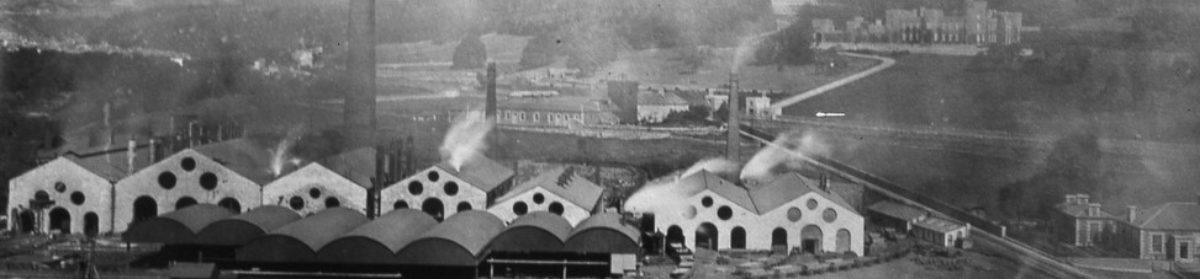
Beer, Brewing and Public Houses in the Merthyr Tydfil Locality – part 1

by Brian Jones

People living in the Merthyr Tydfil locality shrugged off the trauma of World War II and looked to an ever brighter future. Gone were the hardships of hot physical work associated with the iron works and the burden faced by coal miners, was eased, with mechanisation of that recently nationalised industry. Employment now centred on the new ‘lighter’ industries adapted from wartime production. The new Hoover factory was at the centre of the increasing prosperity and this was reflected in the increase in footfall in the High streets as a consumer society began to emerge. The retail sector thrived and weekend shoppers flooded the centres of the town and nearby villages, although supermarkets and shopping malls were a long way in the future.

Aside from food, furniture and clothing shops the town centres, and villages, were littered with public houses and ‘drinking culture’ became more respectable.  Unsanitary pubs were demolished and money invested  to brighten their appeal as suitable, and sober, places for both men and women. Sales people strove to market the tied pubs owned by the breweries and their signs were prominently displayed. The dominant sign was that used by Rhymney Brewery, with that of the William Hancock Brewery a poor second.

Courtesy of the Alan George Archive

Today this sign hangs outside the Royal Oak, Nelson, which is still trading, whilst a faded painted image can be seen on the gable end of a private house in Quakers Yard, previously named as the Victoria Inn.

Malting is the germination of grains such as barley, wheat or oats which are soaked in warm water to allow germination and that germinating grain is heated in a kiln in order to to increase the alcohol content. In areas where soil was less fertile barley was used and that drink was referred to as ale. The more water in the mixture the weaker the ale and the lighter the colour, the less water the stronger, darker and richer the ale. In rural areas farms and taverns made their own ale which was sold in malthouses. In Medieval times ale/beer was an important source of nutrition mainly served as small beer, table beer or mild beer. It contained just enough alcohol to act as a preservative without causing intoxication and could be drunk by children. In broad terms beer has an alcoholic strength between 0.5 % to 4% alcohol by volume (ABV) although some craft beers can exceed this.

Change came with the entry of business men who opened numerous iron works along the northern edge of the South Wales valleys. Labour flowed into the area and they acquired new skills in hot blast furnaces, puddling the pig iron and this  proved to be thirsty work. The workers could not trust the quality of either drinking water, nor barley water, so they sought refreshment firstly in ale, but later more increasingly in beer which is malted from hops. Beer was readily available and its importance for hydration was recognised by the Ironmasters some of whom took to investing in a more economic way of providing a consistent and safe liquid refreshment. A number of breweries were opened in the locality and these provided extra employment and a number of these were:-

  • Rhymney Brewery, Rhymney
  • Taff Vale Brewery, Georgetown, Merthyr
  • Taff Vale Brewery, Dan Y Parc, Merthyr
  • Six Bells (Heolgerrig), Merthyr
  • Pontycapel Brewery, Cefn Coed
  • Merthyr Brewery, Brecon Road, Merthyr

From the mid 18th century there was a race to build new iron works and  four were established in Merthyr with others at Hirwaun, Tredegar, Rhymney and Blaenavon. Many  of the men and women worked in the open air, mining ironstone, limestone, clay and coal in adits and comparatively small drift mines. In the summer this proved to be thirsty work. Those in the iron works faced hot conditions all year round and sought drink in the many pubs  and publicans began to brew alcohol for their customers. The Brewers Arms and the Clarence Hotel in Dowlais were small scale brewers, however some iron companies saw the potential to make safe and consistent quality beers in substantial quantities. A classic example was the Rhymney Iron Company which morphed from the Union Iron Company in Rhymney Bridge, and the Bute Ironworks. In 1838 it was decided to build a brewery for its workers and a year later a Scotsman, Andrew Buchan, became the brewery manager. For some decades the beers were sold as Buchan’s beers brewed and bottled at the brewery in the centre of Rhymney.

Andrew Buchan died in 1870 however, the brewery continued to use his name until 1930 when they acquired the Western Valleys Company in Crumlin, owned by D.F. Pritchard Ltd. In that purchase they also acquired the Pritchard logo and they decided to use the Hobby Horse with “The Man on a Barrel”. This clearly distinguished Rhymney Beers and the Rhymney Company from its competitors. The brewery at Rhymney was to become the largest in South Wales. Their beers dominated the market in Merthyr and their tied pubs became a common sight from Treharris to Cefn Coed and Dowlais. The company was taken over by Whitbread in 1966 and production ceased in Rhymney in 1978. The company name “Rhymney Brewery” and logo were resurrected in 2005 in Dowlais before production  moved  to its current brewery in Blaenavon. One of its many beers is the historic “Rhymney Hobby Horse”.

Taff Vale Brewery at Dan-y-Parc. Courtesy of the Alan George Archive

The largest of the local Merthyr breweries was the Taff Vale first located adjacent to the canal near the Old Iron Bridge close to where Merthyr college is today. It opened in in the 1840s and in 1904 moved to a new building in Dan Y Parc, to the south of Thomastown Park. The company was acquired by the Rhymney Brewery in 1936 and brewing ceased at that site. The Rhymney Brewery grew in importance as the dominant brewer and owner of public houses in the locality and in this same year(1936) it bought out a large Pritchard brewery in Crumlin and the last of the Merthyr brewing companies ceased production. In parallel with these 1936 acquisitions the William Hancock brewery in Cardiff purchased the Merthyr Brewery located on the Brecon Road and brewing also ceased there.

At the end of World War II the empty building at Dan Y Parc accommodated O.P. Chocolates and chocolate production continued there until 1963 when the company moved to a brand new factory in Dowlais which still operates today.

Six Bells Brewery. Photo Courtesy of the Alan George Archive

The Six Bells pub had served the people of Heolgerrig however many  may be surprised to learn that a large brewery once stood alongside the original pub. The Heolgerrig Brewery was founded in the 1840s by Thomas Evans until it was destroyed by fire in 1888. He then erected a new building which continued to brew beer until 1916 when it was Purchased by D.F. Pritchard Ltd. of Crumlin. The acquisition of breweries by larger companies became a trend where the new owners closed down local brewing in order to concentrate production at their own brewery. Some years later D.F. Pritchard Ltd. was bought out by the Rhymney Brewery who acquired the “Hobby Horse” trademark as part of that purchase.

Pontycapel Brewery. Photo Courtesy of the Alan George Archive

The Pontycapel Brewery was founded in the early 1800’s by Robert Millar and was later purchased by James Pearce when it became Pearce and Shapton in 1871.It was described as the most picturesque brewery in the country, sited in a wooded area it predated the construction of the Cefn Viaduct which was completed in 1866. Shortly thereafter the name changed to the Cefn Viaduct Brewery especially  known for Star Bright XXXX Pale Ale and production continued until 1921 when there was a post World War I economic downturn.

Photo Courtesy of the Alan George Archive

The Giles and Harrap’s Merthyr Brewery was located on the Brecon Road. An adjacent road was named Brewery Street in an area which was the centre of the Merthyr Irish community and St. Mary’s Catholic church was built a short distance away. In 1936 the brewery was taken over by the William Hancock Company based in Cardiff although the buildings continued to be used as a warehouse and distribution centre for beer and spirits until the Borough Council bought the site. The brewery was the oldest in the locality when it opened in 1830 and so predated the Taff Vale Brewery by about 30 years. Richard Harrap lived in Gwaunfarren House, which later became the Gwaunfarren Maternity Hospital. Both partners built up the business to rival the Rhymney Brewery although in time the Rhymney Brewing Company grew to be larger buying out other brewers. Both companies managed a large number of tied public houses in Merthyr and also sold beer in a large number of local freehold pubs. The Merthyr and Rhymney breweries were to dominate the beer market and their large number of pubs were to have a prominent visual impact in main and side streets spread throughout the locality.

To be continued…….

Watkin George

Today marks the 200th anniversary of the death of one Merthyr’s greatest pioneers – Watkin George.

Watkin George is not a name that most people think of when talking about Merthyr’s great men of the past, but his contribution to the town’s history and his legacy is incalculable.

Born in about 1759 in Trevethin, Pontypool, very little is known about his early life, other than he trained as a carpenter, but by his early thirties, he had had married Anne Jenkins (of also of Trevethin), and had moved to Merthyr to work at the Cyfarthfa Ironworks as an engineer, as his expertise in designing and building metal structures had become well known.

He soon became the foundry manager at the Cyfarthfa Works, and in 1792, Richard Crawshay appointed him as a partner in the business. One of his first projects as partner was designing the Pont-y-Cafnau (Bridge of Troughs), a combined tramroad and enclosed aqueduct built to supply the works with limestone and water.

The Gwynne Aqueduct leading to the Pont-y-Cafnau (middle right) from a painting by Penry Williams
Pont y Cafnau Aqueduct, rendered still in a south-east isometric view, taken from the 3D Studio Max model. © Crown copyright: RCAHMW. This image is Crown copyright and is reproduced with the permission of the Royal Commission on the Ancient and Historical Monuments of Wales (RCAHMW), under delegated authority from The Keeper of Public Records.

This was closely followed by the incredible and innovative design for a mechanism to pump air into the blast furnaces – a huge timber aqueduct spanning the River Taff and providing water to power a 15m diameter waterwheel, used to work an air pump for blowing the iron smelting furnaces. The Gwynne Aqueduct and ‘Aeolus Waterwheel’ soon became famous throughout the country, and visitors would come to Merthyr just to see them. Indeed Some contemporary accounts actually referred to the Aeolus Wheel as ‘the Eighth Wonder of the World’.

‘Cyfarthfa Works and Waterwheel’ by William Pamplin. The Aeolus Waterwheel can clearly be seen at the centre of the illustration. Photo courtesy of Cyfarthfa Castle Museum & Art Gallery

In 1799, George designed what would become his most iconic structure – the Old Iron Bridge, and two years later he designed the Ynysfach Ironworks.

In about 1805, having helped Cyfarthfa Ironworks expand, George left the partnership. Reports vary on the amount of money he amassed for his 13 years of service, either £40,000 or £100,000 — “equal to one share”. He joined Pontypool Ironworks as partner to its owners Capel Hanbury Leigh (1776-1861) and Robert Smith, restructuring the works and making great improvements to balling and refinery operations.

In 1811 he prepared a design for Chepstow Bridge – a series of cast iron spans on the existing piers. His design was not adopted, and the new bridge was eventually designed by John Urpeth Rastrick. George’s designs for the Chepstow bridge are his last known work.

Watkin George died on 10 August 1822 and was buried at St Cadoc’s Church in Trevethin.

Today, of his works, the Ynysfach Ironworks Engine House still stands, and his Pont-y-Cafnau is the oldest surviving example of a cast iron railway (tramway) bridge and aqueduct, and is probably the second oldest surviving iron bridge in the British Isles (after Ironbridge in Shropshire), so he is certainly someone who should be remembered amongst the great men of Merthyr.

Pont-y-Cafnau in March 2017

Merthyr’s Bridges: Caedraw Cart Bridge

By the end of the 19th Century, the only means of crossing the River Taff in Merthyr, south of the Iron Bridge, was by means of a the Rhydycar Ford – little more than set of stepping stones.

An extract from an 1860s map showing the Rhydycar Ford

This crossing was totally inadequate, as, except when the weather was exceptionally fine, the crossing was impassable and exceptionally dangerous. Indeed, it was reported as early as 1835, that a young man from Waunwyllt, having crossed the ford to visit his fiancée in Merthyr, upon returning to the spot to make his way home, found the ford flooded. In desperation, he took refuge in the warmth of the Caedraw kiln, but overcome by the heat, fell asleep and suffocated. For many years after this requests were made that a proper crossing be erected.

By 1890, no progress had been made, and indeed the minutes from the Board of Health’s meeting on 14 May 1890 show that the question of a bridge at Caedraw was still being raised, and that a Surveyor’s Report had in fact been carried out the previous year, but the Board decided that they had more important projects to carry out and that “the question of this Bridge be deferred for the present year”.

Wranglings over the bridge continued for another three years, until the Board finally decided to give the go-ahead for plans to be drawn up for a cart bridge to be built across the Taff at Caedraw with the proviso that the building of the bridge and approaches should cost no more than £450.

By November 1894, concrete foundations and masonry footings had been erected for the abutments for the new bridge, and orders had been placed for iron girders, iron flooring and timbers. The girders forming the main span of the bridge, with iron cross-members covered by the timber forming the base of the bridge. Timber was chosen to form the ‘flooring’ of the bridge over steel flooring suggested by the surveyor, as it was £39 cheaper to use wood than iron.

Within ten years however, this ‘false economy’ proved the surveyor correct, as the wooden flooring of the bridge was disintegrating badly. Throughout 1910 and 1911, arguments continued about repairing the bridge. Again it was suggested that steel flooring be laid on the bridge, but the Board decided that creosoting the timbers would suffice. In March 1938, however, the floor of the bridge collapsed and the bridge was closed to traffic. Even though it was eventually patched up and was put back into use again, the bridge was condemned in 1951, and it was demolished in 1966.

In retrospect, the bridge was doomed from the start. In order to cut costs, the Board of Health insisted on using the wrong materials, and indeed, the materials that they did use were all second-hand, and technically unsound.

Caedraw Cart Bridge. Photo courtesy of the Alan George Archive

Memories of Old Merthyr

We continue our serialisation of the memories of Merthyr in the 1830’s by an un-named correspondent to the Merthyr Express, courtesy of Michael Donovan.

An extract from the 1851 Public Health Map showing the area in question

The first thing met would be another turnpike, then a few cottages; one was a public-house, next to which a space or front yard of the Plymouth Arms. On the right hand side for some distance a wall was the only thing between Bridge Street and the River Taff, but the weir not far down diverted its water into the feeder as it was called. The continuation of the river wall kept the road safe for traffic, until further down, after passing the Isle of Wight and the entrance to Caedraw at the end of Swan Street there really was not any protection. However, even that had some advantage, for a leading tradesman, in his evidence as to the sanitation of Merthyr, recommended the use of buckets and their discharge into the watercourse! Brilliant idea!

From the Plymouth Arms dwellings adjoined each other. One was the Duke of York Inn, whose money-box was ransacked in the lodge-room once, and the thief never detected.

Edward Lewis Richards

A little lower was the Greyhound. The son of the person who had kept this was Mr Edward Lewis Richards, a barrister, who through its becoming known that he was a partner in a brewery there, did not receive the appointment he had hoped for, viz, the stipendiaryship of Merthyr; but got that of Judge of a North Wales County Court, and died at Mold many years ago. A Mrs Todd kept a grocer’s shop a little further on, and then small cottages continued awhile. The rectory was not built.

The end of Albert Street was only an entrance into the field now covered with buildings, and The Hollies was Mr Meyrick, the solicitor’s office. He resided at Gwaelodygarth, which was his own property.

After the death or removal of the Rev Mr Jones a Rev Thomas Williams officiated in the old church, and he resided between Swan and Salmon Streets on the left. It was an old house; it stood by itself, with its gable abutting the road alongside the feeder.

There were three or four bridges over the watercourse. The first was to the  house and shop of the Williamses “over the pond” as they were known by. Old Mr Williams had been a veterinary man. His son kept an ironmonger’s shop there. One daughter became a Mrs Davies, another a Mrs David James, and another a Mrs Petherick. Another bridge lower down was to the slaughter-house and the Crawshay’s Arms adjoining; a third, at the end of Three Salmons Street led into Caedraw, and a fourth to the public house adjoining the road.

Just below were the ruins of the old grist mill, which formed an important factor in a lawsuit at one time, but which will be told with other things connected with it by-and-by.

We are now again at the end of Mill Street, with the stocks at its other end, and have completed a peregrination right around the chief part of “the village” as it then existed. Only the short roads have yet to be traversed, the one Quarry Row, and the other the Grawen, or Brecon Road, and after that we will go through Penydarren to Dowlais.

To be continued at a later date…….

Memories of Old Merthyr

We continue our serialisation of the memories of Merthyr in the 1830’s by an un-named correspondent to the Merthyr Express, courtesy of Michael Donovan.

An extract from the 1851 Public Health Map showing a more detailed view of the area covered in this article.

What may be called Ynysfach rows were close by, but we cross the bridge over the canal, and on the right was the coalyard of Waunwyllt. Just fancy! The coal was sold out in ‘drafts’ by one of Mrs Thomas’ sons. Coal or colliery proprietors would think it infra dig to let their sons do so now, and yet it was done, and done properly then with results that satisfied them.

The small cottage and workshop in the garden adjoining was the residence of the father of Penry Williams, one of, if not the greatest painters Wales has produced. John (*see below) Williams, whom I knew, was a clever artist, but was unfortunately deaf and dumb. The father and son carried on the glazing business here while Penry was in the zenith of his fame in Rome. There was also a sister, Miss Sophia Williams, who carried on a school for many years.

Penry Williams’ painting of his father’s cottage. Photo courtesy of Cyfarthfa Castle Museum & Art Gallery

In the house just around the corner Mr Abraham Jones, the nailer, resided and a timber yard followed. Upon the other side, the corner house, opposite the coalyard, was a grocery establishment, opened by a Mr Rees. He was connected with the Waunwyllt family, and if I mistake not, an ancestor of the family of that name of Lletty Shenkin.

Several small cottages followed, and the last house bordering the river was the Heathcock Inn, at one time kept by Mrs Williams after her husband had, with John Frost and William Jones, been banished to Australia for their connection with the Chartist rising.

We re now at the Iron Bridge – I mean the old one, going straight across to Ynysgau-not the modern one erected by the old Local Board, and going to Victoria Street. I have crossed it on many occasions, have felt its vibrations when a heavy load passed over a rough place, and yet always thought it was a well-developed structure, reflecting credit on some whose names I have never learnt. Remembering the time and state of knowledge when it was put up, it was a wonderful example of daring skill.

The Old Iron Bridge

Crossing this, the locality to the left was analagous to China. The road direct in front, leaving the chapel to the right, would bring us to an archway or a narrow opening over which the upstairs room of one of the houses extended, and to the end of Castle Street; but we turn at the foot of the bridge, and keeping the chapel on our left instead go down Bridge Street.

*Penry Williams’ father was named William – as can be seen from the portrait. The original writer either made an error with his name or he was actually known as John as well. We will probably never know!!!

Right – A portrait by Penry Williams of his father William. Photo courtesy of Cyfarthfa Castle Museum & Art Gallery

To be continued at a later date…….


**Many thanks to Dr John Taylor for the following….

Isn’t the “John”, referred to above, the deaf and dumb brother of Penry Williams? Accordingly, this would not conflict with the father’s name, William.  The deaf and dumb brother is made reference to in the blog post for 17 July 2020 ‘Death of Penry Williams’.

I think that clears up a lot – the original author could easily have been mistaken.

Memories of Old Merthyr

We continue our serialisation of the memories of Merthyr in the 1830’s by an un-named correspondent to the Merthyr Express, courtesy of Michael Donovan.

An extract from the 1851 Public Health Map showing a more detailed view of the area covered in this article.

We must now start from the Dynevor Arms towards the Iron Bridge. A curriery premises was erected and for some time carried on a little way down on the right hand by Messrs M. Davies and Wayne. This was one of the Davies’s of Pantyscallog and a Wayne of the Gadlys, but Mr Wayne migrated to the Carmarthen Tinplate Works, which he carried on for many years.

Anterior to the curriery there was in this very locality a nailmaker working by the name of Samuel Jones. At this time all nails were made by hand (cut and wire nails not yet known). They were all made of slit rods, a process that, as far as South Wales works are concerned, has entirely ceased, and the making of a nail was really a good specimen of the handicraft. There was a small bellows blowing upon the point of the nail, and the work was always carefully held so that the air current passed up the rod. The why and wherefore of this has many a time been thought over, and I acknowledge that no satisfactory solution has ever been found.

Lower down was the residence of of Mr Coffin, who, in addition to curriery, was, or had been, the clerk of the Small Debts Court, and thus became very obnoxious to some, so that at the time of the Merthyr Riots his house and furniture suffered damage at the hands of the mob. One of his daughters afterwards married Mr Thomas Wayne, and resided at Glancynon, near the Gadlys. The other married a Mr William Llewellyn, of Abercarn, the then mineral and other agent of the Llanover Estates. There was a jeu d’esprit in the Cardiff and Merthyr Guardian in or about the time of Mr Wayne’s marriage, showing how very careful he had been, for he not only obtained a wife, but a coffin also.

The British Schools followed Mr Coffin’s garden, and then the Three Horse Shoes Inn, kept by a Daniel Stephens. The next and adjoining was the premises of Mr John Bryant, whose curriery was (as Mr Coffin’s was also) across the road, and Mr Bryant also took Pride’s storehouse for his trade purposes after the railway had rendered canal traffic obsolete, or rather obsolete as far as shop goods were concerned, to Merthyr at that time.

The Three Horse Shoes Inn. Next door is the Kirkhouse, built on the site of the British School. Photo courtesy of the Alan George Archive.

Close to Mr Bryant’s house is a way to Aberdare, which joins the road up from the Dynevor Arms, close beyond Mr Jeffries’ house. On the opposite side of this opening was the Cyfarthfa Surgery. Mr Edward Davies was the head, and in physique always reminded me of the Emperor Nicholas of Russia. Years after, Dr Davies lived at the Court House, and practised after he had left Cyfarthfa. The Miners’ Arms was adjoining. The residences coming next were built by a Mr Teague subsequently.

Bridgefield Terrace with the Miners’ Arms at the centre. Photo courtesy of the Alan George Archive.

To be continued at a later date…….

Merthyr’s Bridges: Ynysgau Bridge

By the mid 1800s, the only bridge of any note across the Taff in central Merthyr was the Iron Bridge at the bottom of Castle Street, the only other bridge being Jackson’s Bridge further up the river. It soon became obvious that the Iron Bridge was not adequate for the amount of traffic needing to cross the river.

In June 1860, the Surveyor of the Local Board of Health submitted a plan for a new bridge to be situated downstream of the Iron Bridge to carry traffic from the town to Georgetown. His proposal stated:

“The proposed bridge to be erected….is the continuance of the line of Victoria Street and its terminus by Ynysgau Chapel, and crossing the river Taff on the skew at an angle of sixty-five degrees – thus forming a direct communication between Victoria Street and Penry Street, which will effect greater facility of traffic that the inconsistent turns at the present site”.

An excerpt from an 1860 map showing the planned new bridge just below the Iron Bridge.

The proposed new bridge would cross the river in one single 80 foot span, and would be built of wrought iron plate girders six feet deep. It would be 24 feet wide, five foot of which would be set aside for a pedestrian footpath on the north side. The cost of the new bridge was estimated at £1,700, and would take about four months to complete.

The Board of Health decided to hold over the report for a month to allow them time to consider the proposals. Ten years later, the bridge still hadn’t been built.

It was in 1879 that it became obvious that the situation at the Iron Bridge was critical and that a new bridge was needed straight away. The Board finally dusted off the old plans, and the new bridge was begun. The work was entrusted to Messrs Patton and Co of Crumlin Viaduct Works, and the bridge was finally completed on 17 March 1880.

Ynysgau Bridge. Photo courtesy of http://www.alangeorge.co.uk/index.htm

The bridge remained the primary road bridge in the centre of Merthyr until the 1960s, by which time everyone was becoming increasingly concerned by the way the bridge would move and spring alarmingly every time heavy vehicles passed over it. It was decided that a new bridge was required, and a new concrete bridge was built 50 yards upstream (the present bridge near the Fire Station).

The old bridge closed in November 1963 when the new bridge was opened, and the structure was dismantled in 1964.