From the Cardiff & Merthyr Guardian 180 years ago today….

The Melting Pot – Merthyr Tydfil's History and Culture
In Association with the Merthyr Tydfil & District Historical Society
From the Cardiff & Merthyr Guardian 180 years ago today….
From the Cambria Daily Leader 110 years ago today….

The grand new Central Post Office in John Street was opened 120 years ago today. Below is an article about the opening, and also a fantastic photograph of the opening ceremony.


by Tony Peters, Glamorgan Archives
As we recently celebrated the 200th anniversary of the first locomotive-drawn passenger service, we have delved into our records to unearth photographs of some of the magnificent steam trains that were ‘Made in Wales’.
The selection below is unusual in that the locomotives were never seen at a station or on a main line for they were built at, and for the exclusive use of, the Dowlais Iron Company. Nevertheless, in their design and finish, they were a match for their contemporaries and arguably ‘fit for a King’.
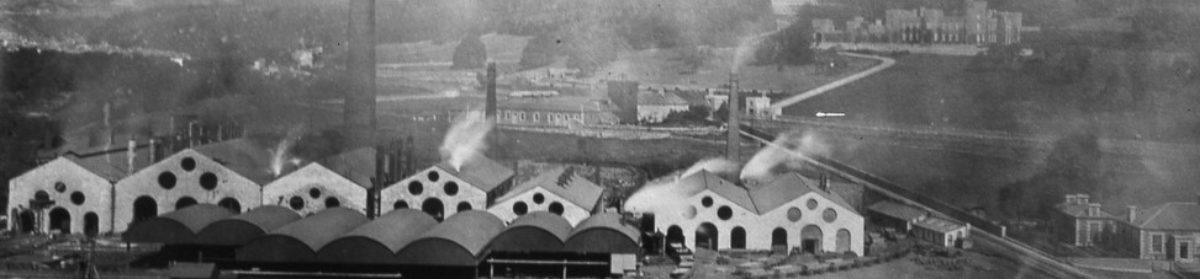
From 1832 onwards the Dowlais Iron Company used steam locomotives on site to move heavy loads. However, it was not until the turn of the century that the company elected to manufacture its own locomotives at the Ifor Works engineering shop. This decision coincided with a change in ownership, with the company acquired by Guest, Keen and Co in 1899 (known as Guest, Keen and Nettlefolds from 1902) and the arrival of George Robson as Locomotive and Engineering Superintendent.
Robson had worked at the Great Western Railway works at Swindon. Drawing on his experience and background, the first engine built under his supervision at the Ifor Works in 1906 was similar in looks and power to mainline engines operated by the GWR. Turned out in a very distinctive green and black livery edged with yellow, it was an impressive sight and named, appropriately, after the company chairman, Arthur Keen.

It was no surprise that, when King George V and Queen Mary visited the Dowlais works in June 1912, Robson’s locomotives were called into service. Such was the scale of the Dowlais site that it was decided that the Royal Party would travel across the works in carriages provided by the London and North Western Railway company and pulled by Dowlais’ own locomotives, with George Robson in the cabin.
The photograph shows ‘Arthur Keen’ drawn up with the two carriages awaiting the arrival of the King and Queen. In reports of the visit, it was noted that the engine was the subject of much …admiring comment… and a …perfect example of sound engineering construction.
The opportunity was also taken during the visit for Queen Mary to name two new locomotives positioned adjacent to the Steel Arch constructed at the High Street exit of the works. Described as the …latest word on locomotive building, the engines, until then, had been known as numbers 40 and 42. However, afterwards, both carried plates confirming their new identity as the ‘King George V’ and ‘Queen Mary’.

In all, nine new locomotives were built at the Ifor works and many more were refitted before the works closed in 1930. Photographs of a selection of the locomotives employed by the Dowlais Iron Company from 1832 onwards can be found at Glamorgan Archives under reference DG/PH/3. The Glamorgan Archives catalogue can be accessed at https://canfod.glamarchives.gov.uk/.
This article is reproduced with the kind permission of the Glamorgan Archives. To view the original, please follow the link below.
by Carolyn Jacob
The Castle Cinema was built on the site of the Castle Hotel, the first purpose-built hotel in the town and where William Crawshay himself often stayed. It is also the premises from whose windows the troops fired into an unarmed crowd during the Merthyr Rising of 1831. George Borrow, author of ‘Wild Wales’ stayed at the Castle Hotel in 1854. Merthyr did not impress him but he found the Ironworks ‘stunning’.

In 1926 the Castle Hotel was described as being ‘a disgrace to the town’ and it was soon to be demolished. The building was pulled down partly to widen Castle Street, but in 1928 a splendid cinema was erected on the vacant site. The Castle Cinema was built, at a cost of £36,000. Designed by O.P. Bevan and built by Mr. Warlow of Merthyr, it was one of the Principality’s finest cinemas.

It combined American and Welsh influences in its design and its interior was beautifully decorated with landscape murals which captured the feel of medieval Wales. Panels designed by a local artist J. Jones, a local artist showed castles in their settings under a brilliant sky, illuminated by two light ray domes. Its comfort and decoration were up to date and it had seats for 1,600.

The Castle was locally owned and run by Merthyr Cinemas Ltd. The post war depression had hit Merthyr by this time, but when he opened the building the Mayor said he looked on the venture as: ‘a magnificent gesture of faith in Merthyr’s future‘. The popular cinema was taken over by the ABC in 1932.
The Castle also had installed one of the finest organs in Wales, a Christie 3 Manual/10 Rank organ. The well-known Mr Gene Lynn was the resident organist at the Castle Cinema in the 1930s and he made many radio recordings.

The manager in the 1930s was Mr Haggar, a holder of the ‘Company of Showmen Shield’.
Advertised as ‘Castle Super Cinema’ in the 1930s with a ‘Christie Unit Organ, the third largest organ in Europe’. The organ however fell into disrepair in the late-1940’s and was removed in 1954. Strangely there were allotments behind the Castle Cinema right in the centre of the town where now there is a car park.

The fight for Sunday Opening of Cinemas, 1956
At one time chapel and church dominated life in the Borough. The social life of the town revolved around the many places or worship and the attendance every Sunday reveals a strong religious tendency. Merthyr Tydfil was a ‘non-conformist’ town and many people would attend chapel twice on a Sunday but they gradually lost control of Sundays, as the defeat over the Sunday closing of cinemas and pubs shows. In March 1956 there was a plebiscite on the much-debated issue – Sunday Cinemas in Merthyr. Derek Harris a young collier of Darren View, Penyard entertained in Al Jolson style the large crowd waiting for the result of the Sunday Cinema poll. The vote in favour of Sunday openings was a milestone.
The Castle Cinema was renamed the ABC Castle Super Cinema around 1963, still providing a vast 1,696 seats. beauty contests and Pop concerts were held here, one being by Pink Floyd in 1967 another by the group The Small Faces. In 1972 control passed to the Leeds based Star Group, converting the stalls area into a bingo hall, and constructing two studio cinemas in the balcony, seating 195 and 98, both were by means of periscope mirror projection with Westar Projectors and long play towers. The projection room being constructed from the second balcony level high in the original building, making it a nightmare journey for any projectionist to carry films up and down.
From 1977 the cinemas passed to a series of independent operators, and when bingo ceased in 1998, the former stalls area was re-seated and a giant 45-foot screen placed in front of the original stage area, with luxury seating for 300, this new Screen 1 opening in June 1999 with “The Mummy”. The two other screens also remained in operation but due to the high costs in maintaining such an old and rambling building, the cinema finally closed in September 2003. The building degenerated into a dilapidated state and was not used for the presentation of films again. For a brief time it was converted into a skating rink, a venture which soon failed. The permission for Merthyr Tydfil Council to demolish this listed but crumbling building came in October 2010 and by the close of 2011 nothing remained on the site.
Below are the pages from the 1835 Pigot’s Directory relating to Merthyr.


Carrying on with the requested look at Merthyr’s lost chapels, here is the next batch – the lost chapels of Abercanaid down to Merthyr Vale.
ABERCANAID
Deml Welsh Baptist Chapel
Church View, Abercanaid
Built 1896. Demolished ?

(Old) Graig Welsh Calvinistic Methodist Chapel
Graig Road, Abercanaid
Built 1848. Demolished 1948

(New) Graig Welsh Calvinistic Methodist Chapel
Church View, Abercanaid
Built 1905. Demolished 1996

Silo Welsh Baptist Chapel
Upper Abercanaid
Built 1842. Demolished ?

TROEDYRHIW
Mount Zion Congregationalist Chapel
Cardiff Road, Troedyrhiw
Built 1871. Demolished 2004

Saron Welsh Independent Chapel
Chapel Street, Troedyrhiw
Built 1835. Rebuilt 1852. Demolished 1990

ABERFAN
Capel Aberfan Welsh Calvinistic Methodist Chapel
Aberfan Road, Aberfan
Built 1876. Burned down 2015

Old Bethania Welsh Independent Chapel
Aberfan Road, Aberfan
Built 1876. Rebuilt 1885. Demolished 1968

Hope Church of Christ
Bridge Street, Aberfan
Built 1900. Demolished ?
Mount Hermon Congregationalist (later Gospel Hall)
Aberfan Crescent, Aberfan
Built 1899. Demolished ?

Smyrna Welsh Baptist Chapel
Aberfan Road, Aberfan
Built 1879. Rebuilt 1902. Demolished 2002

MERTHYR VALE
Bethel Welsh Wesleyan Chapel
Wesley Place, Merthyr Vale
Built 1886. Demolished ?

Calfaria Welsh Baptist Chapel
Cardiff Road, Merthyr Vale
Built 1877. Rebuilt 1910. Demolished 1979

Trinity Presbyterian Chapel
Wesley Place, Merthyr Vale
Built 1876. Rebuilt 1904. Demolished ?

Zion English Baptist Chapel
Nixonville, Merthyr Vale
Built 1879. Rebuilt 1891. Demolished 1971

If anyone has photographs of any other chapels that are no longer with us, and there are a few I can’t find photos of, or if anyone can fill in any details, please get in touch.
From the South Wales Echo 130 years ago today…..

From the Merthyr Express 90 years ago today…..
