80 years ago today…..

The Melting Pot – Merthyr Tydfil's History and Culture
In Association with the Merthyr Tydfil & District Historical Society
80 years ago today…..
By Carolyn Jacob
The story of modern Italian immigration began with a tide of economic migrants in the 19th century. The majority coming from the mountain villages of the North, often as seasonal workers walking overland to French ports. Gradually more stayed and either saved enough to bring their families here or married local women and started families here. They encouraged other family members and friends from their villages to join them in a classic pattern of chain migration. The 20th century saw another wave of immigration, predominantly from the South of Italy and Sicily. A significant number passed through London and branched out to establish communities in South Wales.
Charlie Speroni wrote that leaving the family farm and vineyards in Italy was a major upheaval. As a child in 1927 he arrived in Wales unable to speak a word of English but he was made to feel very welcome. As well as attending school he was expected to work in the family business. During the depression the family rented a fish and chip shop in Penydarren and Charlie was in full time employment working on the chip carts in the winter and the ice cream carts in the summer months. He worked in London for a few years but always returned to Merthyr. Charlie never returned again to Italy and said that “The sky may not be so blue in Wales, but the friendliness of its people make it home.”

The Galleozzie family are a Merthyr family! They have been living in Merthyr Tydfil for over 130 years, since Luigi moved here in the 1870s. Martyn Galleozzie, a former Welsh ABA featherweight champion in the 1970s was definitely Welsh.

Dominico Basagelao arrived in South Wales in the early 1860s and finding himself in Pantywaun on a snowy winter’s evening he took lodgings with Mr and Mrs Thomas of the Royal Arms Public House. He found work in as a colliery in the South Tunnel Drift Mine. Although a poor Italian and a stranger, he married into the rich Jones (Ceffyl Gwyn) family who were Welsh speaking chapel people. John Martin Basagelao born in 1868 became a wealthy man. He was the landlord of the Tredegar Arms and the former Red Lion public houses at Dowlais Top.
At the start of World War II Italian nationals were interned as enemy aliens, which many felt to be extremely harsh treatment as they themselves were fiercely anti-Fascist. Just prior to the Second World War a number of Italian residents in the Borough decided that the time had come to make important decisions and a number made the big step of applying for and achieving British citizenship. Among their number was Giovanni Bracchi from Troedyrhiw, Giovanni and Giuseppe Opel from Treharris and lastly Cesare Cordani, Merthyr Tydfil in April 1940.
From the 1880s the Berni family had a café in Pontmorlais, and then John Berni had a temperance bar and high-class confectionery at 91 High Street.

Mr Barsi was at one time an electric tram driver but later he ran a fish and chip shop in Penydarren. He was thankfully not interned during the Second World War, having served his adopted country well during the First in the Welsh Regiment.

The Provini’s came to Cefn Coed from Tredegar and kept the Corner Cafe for many years, there was the Provini fish-bar in Georgetown and they also kept the Wellington in Bethesda Street. Frank and Tony Viazzani in the Station Café, John Street were the ticket agents for all local boxing tournaments and the walls of the café are still decorated by many boxing photographs of Howard Winstone.
Carrying on with the requested look at Merthyr’s lost chapels, here is the next batch – the lost chapels of Abercanaid down to Merthyr Vale.
ABERCANAID
Deml Welsh Baptist Chapel
Church View, Abercanaid
Built 1896. Demolished ?

(Old) Graig Welsh Calvinistic Methodist Chapel
Graig Road, Abercanaid
Built 1848. Demolished 1948

(New) Graig Welsh Calvinistic Methodist Chapel
Church View, Abercanaid
Built 1905. Demolished 1996

Silo Welsh Baptist Chapel
Upper Abercanaid
Built 1842. Demolished ?

TROEDYRHIW
Mount Zion Congregationalist Chapel
Cardiff Road, Troedyrhiw
Built 1871. Demolished 2004

Saron Welsh Independent Chapel
Chapel Street, Troedyrhiw
Built 1835. Rebuilt 1852. Demolished 1990

ABERFAN
Capel Aberfan Welsh Calvinistic Methodist Chapel
Aberfan Road, Aberfan
Built 1876. Burned down 2015

Old Bethania Welsh Independent Chapel
Aberfan Road, Aberfan
Built 1876. Rebuilt 1885. Demolished 1968

Hope Church of Christ
Bridge Street, Aberfan
Built 1900. Demolished ?
Mount Hermon Congregationalist (later Gospel Hall)
Aberfan Crescent, Aberfan
Built 1899. Demolished ?

Smyrna Welsh Baptist Chapel
Aberfan Road, Aberfan
Built 1879. Rebuilt 1902. Demolished 2002

MERTHYR VALE
Bethel Welsh Wesleyan Chapel
Wesley Place, Merthyr Vale
Built 1886. Demolished ?

Calfaria Welsh Baptist Chapel
Cardiff Road, Merthyr Vale
Built 1877. Rebuilt 1910. Demolished 1979

Trinity Presbyterian Chapel
Wesley Place, Merthyr Vale
Built 1876. Rebuilt 1904. Demolished ?

Zion English Baptist Chapel
Nixonville, Merthyr Vale
Built 1879. Rebuilt 1891. Demolished 1971

If anyone has photographs of any other chapels that are no longer with us, and there are a few I can’t find photos of, or if anyone can fill in any details, please get in touch.
by Barrie Jones
Merthyr Tydfil and District has produced its fair share of prominent football referees: Leo Callaghan (1924-1987), Iorwerth Price Jones (b.1927), and Howard King (b. 1946) come to mind, men who managed the ‘middle’ and ran the ‘line’ in English League and international football matches. To reach that status they had to ‘cut their teeth’ as members of referees’ associations, where over the decades men and now women have given up their free time to officiate at local league and tournament matches.
One such referee was my Grand-uncle Glyndwr Jones (1913-1960), a keen footballer in his youth, who also played for Hills Plymouth Cricket Club well into middle age. ‘Uncle’ Glyn’s reward for his services to refereeing was to be selected to officiate at an international schoolboy U15/16 match between Scotland and Northern Ireland at Celtic Park, Glasgow. Born in Troedyrhiw, Glyn followed his four older brothers working underground and at the time of his selection for the international match he was working as a colliery official at Merthyr Vale Colliery.
Shortly before his trip to Glasgow, Glyn attended an evening at Merthyr Vale and Aberfan Social Democratic Club, there club members, officials of the NCB Colliery Merthyr Vale, and other friends gathered to present him with a travelling bag and a sum of money. The presentation was made by Mr W. J. Williams JP, headmaster of Pantglas Secondary School and vice-president of the Welsh Schools Football Association. Mr Williams said that:
“Mr Jones has served Welsh schools’ football freely for many years as a referee to Pantglas School, Merthyr Schools League and the Welsh Schools Football Association, and he had long been recognised as a first-class referee who was particularly qualified to take charge of schoolboy football, he had always given his services without any remuneration or reward.”
Receiving the gifts Uncle Glyn said he “would endeavour to live up to Merthyr Vale and Aberfan’s fine record of sportsmanship.” Reporting on his selection and the evening’s presentation, the press commented that it was a “rare honour.”
The match took place on Saturday, 23rd of May 1953, the match programme titled it as the ‘Schools Coronation International’ and Scotland won four goals to none. The following season Uncle Glyn was further rewarded when he officiated at the Welsh Schools Cup Final.
Sadly, Glyn died at an early age in May 1960, aged forty-six, several referees’ representing the Merthyr Referees’ Society, including Leo Callaghan, attended his funeral.

by Barrie Jones
Chapter Four
Wheatley Place
Wheatley Place was the last street built in this the first phase of the Keir Hardie Estate building programme. The programme commenced in late 1946 and the first house in the development, number one Aneurin Crescent was let in January 1948. Tenants of Wheatley Place moved into their new homes in the summer of 1948.
The street comprises of twenty-two properties, three concrete, (Wimpy No Fines), and nineteen prefabricated, (BISF). The houses are numbered from one to forty-three, odd numbers only, perhaps in anticipation that the ‘green’ opposite would be built on sometime in the future. The street is unusual in so far as that number one is one half of a semidetached concrete house, the pair of which is number thirty-four Glasier Road. The house is tucked around the corner from Wheatley Place, so there must have been some confusion when persons were trying to find number one. In fact, before the estate was completed the Housing Manager obtained approval to have house numbers fitted to the doors of all the estate’s houses to avoid this sort of problem. Located at the top of the street are numbers three and five, the remaining two concrete houses in the street. The street descends from its junction with Jowett Avenue levelling off as it approaches number thirty-three. The last house in the street, number forty-three, is a prefabricated house paired with number thirty-seven Aneurin Crescent.
The following families were first allocated houses in Wheatley Place in 1948:
| House Number | Tenant | Housing List Number |
| One | Davies | 3025 |
| Three | ? | – |
| Five | ? | – |
| Seven | Richards | 692 |
| Nine | Jones | 2479 |
| Eleven | Scriven | 3051 |
| Thirteen | Curtis | 1005 |
| Fifteen | Pratt | 2772 |
| Seventeen | Johnson | 2634 |
| Nineteen | Egan | 779 |
| Twenty-one | Moran | 2631 |
| Twenty-three | Chamberlain | 1189 |
| Twenty-five | Davies | – |
| Twenty-seven | Coombes | Key Worker |
| Twenty-nine | ? | – |
| Thirty-one | Regan | 3048 |
| Thirty-three | Bowen | 859 |
| Thirty-five | O’Neill | 1556 |
| Thirty-seven | Jones | 2222 |
| Thirty-nine | Howells | 3259 |
| Forty-one | Thomas | 2023 |
| Forty-three | Richardson | 3031 |
In August 1948, my parents with my two older brothers moved into number thirty-seven. My father was demobbed from the Royal Navy in June 1946 and my two brothers were born in 1946 and 1947, respectively. At that time, my parents were living with my father’s parents in number twelve Union Street, Thomastown. My father recounted that to better his chance of securing a council house he paid a visit to Councillor Claud Stanfield at his home in Troedyrhiw. My grandfather was born in Troedyrhiw and many of my father’s aunts and uncles lived in the village and so the family were known to Councillor Stanfield. As well as being the Troedyrhiw Ward councillor, he was also the local insurance agent for a Friendly Society, which would involve calling on numerous families in the village. It is not certain that my father’s lobbying had any influence in securing a council house, his waiting list number was quite low, 2222, but Councillor Stanfield may have hastened the housing allocation. Two months following the move, my mother gave birth to me in the front bedroom of number thirty-seven. So, I may have been the first born on Keir Hardie Estate.
In July 1948 the Home Office, in consultation with the Ministry of Health, offered an additional allocation of twenty houses to meet general housing needs on the understanding that twenty houses on various sites in the borough were made available for occupation by police officers. Number one Wheatley Place was selected for one such police house and Police Constable (PC) Davies was the first police tenant; later PC Vernon Conway assumed the tenancy.
The County Borough’s expansive post-war house building programme occurred during a time of industrial relocation and growth and new housing was essential for key workers as well as new families and it was the Council’s policy to ensure suitable housing for such workers. In May 1947, the Housing Committee re-emphasised its intention that one in ten new council properties would be allocated to key workers. On the Keir Hardie Estate this ratio was not achieved with only eighteen first lettings from a total of two-hundred and seventy-six houses. Number twenty-seven Wheatley place was allocated to Mr E. F. Coombes, of Hoover Ltd., who moved in with his wife and two children. Sometime later, Mr Coombes purchased a property elsewhere and moved out of the street, when older his son Ernest (Ernie) joined the Merthyr Borough Police Force.
Growing up in the 1950s, the Second World War was still fresh in the memories of those living on the estate and Mrs Richardson of number forty-three was a war widow. Her husband Ernest had been killed soon after the Normandy landings (1944), leaving Mrs Richardson to raise her children, twins Eric and Eileen, on her own. Being one of the older boys in the street, Eric would take the lead in some of our street activities, especially the construction of our November the Fifth bonfire which was always built on the green space between the boundary fence of the Mardy Hospital and the rear of numbers fifty-two and fifty-four Aneurin Crescent.
In 1948 the National Service Act introduced peacetime conscription into the armed services. From the 1st of January 1949 all healthy males between the ages of seventeen and twenty-one were required to serve a period of service of eighteen months. Men working in ‘essential services’: mining, farming, and the merchant navy were exempt from call up. National service ended gradually from 1957 with the last national service man leaving service in May 1963. I recall that two boys on either side of our house were called up; Mr O’Neill’s son from number thirty-five went into the army, and Eddie Howells from number thirty-nine went into the Royal Navy.
One of the characters in the street was Mr Davies of number twenty-five, known to us ‘locals’ as Dai Brecon. Dai took great enjoyment in annoying our pet dog, Peg, who would bark at him every time he passed our house. Other than chasing motor bikes, Peg never barked at anyone else in the street.

The green between Jowett Avenue and our street was an ideal play space for us children with trees to climb etc. The road around the green, the “block” was used as a cycling and running track and races were a favourite pastime with the finishing line by the lamppost on the flat stretch near our house.

Conclusion
As stated in my introduction Wheatley Place does not have as long a history as other streets in Merthyr Tydfil, just under seventy-seven years, nevertheless, it has a story to tell. Also, my account only covers the street up to 1980 and a lot more has happened in or near the street since then; a murder in Greenwood Close and more expansion of the Estate on the remaining part of the ‘Green’ are just a few examples. Others may accept the baton to tell more of the story of Wheatley Place, whilst after reading my account others may wish to tell the story of their own street.
Although prefabricated buildings have a long life, they are not expected to remain standing as long as those built under more traditional methods, my only hope is that Keir Hardie Estate and Wheatley Place in particular, have more years before and more stories to tell.
To mark the 80th anniversary of V.E. Day, here are some photographs of events that were held in 1945 to celebrate.


by Carolyn Jacob
After World War II more street lights were powered by gas than electricity. Electricity was then supplied by the Merthyr Electric Traction and Lighting Co. Ltd and gas mainly by the Dowlais Gas Company and the Merthyr Tydfil Gas Company.
High Street Sewers
From the 1850s onwards the Board of Health continually argued as to how a High Street sewer was to be paid for and how to clean up certain problem areas such as Caedraw.
The drainage of the High Street was a problem as the town had no means of proper drainage. Mr. Hill said that sewers were made large for the purpose of admitting men and boys to clean them and that he would prefer draining the worst localities in the town first, especially those which had been afflicted with cholera like Caedraw.

Merthyr Tydfil had a 100 miles of sewers varying in diameters between 9 inches and 30 inches. In 1946 a new main sewer was built from Dowlais to Troedyrhiw, the trunk mains in the upper part of the Borough being defective and inadequate. It was proposed to broaden the whole of the old High Street.
 In 1949 Trystan Edwards (left), father of the New Towns Movement and opposed to tower blocks became the architect for Merthyr Council. His classic book on ‘Style and Design in Architecture’ by Mr Trystan Edwards’ of Merthyr Tydfil was published in 1950. Mr Trystan Edwards who had a high reputation as a town planner and architect made 3 objections in September 1952 to the new Merthyr Tydfil Development Plan. It seems that as early as 1905 a new Town Hall was on the cards and he objected to its proposed position and not a new building itself.
Caedraw Central Housing Development
In the 1960s came the new Caedraw flat scheme at a cost of £540,000. The new police station was officially opened in April 1965 by James Griffiths, the Secretary of State for Wales. He said the development had transformed the area from an over-crowded slum to an ultra modern residential area ‘ bold and imaginative’ as he had a conducted tour of the estate.

St Tydfil’s Shopping Centre
The bridge from the St Tydfil’s Shopping Centre to the car park constructed 1969 was the first of its kind 300 foot cost £55,000 to build. Gareth Morgan a ten year old boy from Dowlais received a prize of £25 for naming the one and a half million new shopping centre St Tydfil’s. All 80 suggested names were connected with the history of the town and variations of the name Winstone were common. The centre developed by Chesterfield Properties Ltd included 48 shopping units, 2 supermarkets, a market hall, one large departmental store, public house, entertainments centre, 25 maisonettes and office accommodation.

The Market Square Chapel was demolished.
In July 1966 the Eagle Hotel was completely renovated and modernised throughout. The landlord and land lady were Mr and Mrs Parry.
Oldway House, Castle Street was begun in 1966 by Oldway Properties Ltd. as part of the new Merthyr and took 13 months to complete. The building itself was a frame structure.

The new central Police Station cost £150,000 in Swan Street was completed 1968, it was only a 75 yard move from the old Merthyr Police Station at Graham Street.

Victoria Street clearance 1966
In the 1970s it was decided that the High Street was extremely congested and it was unsafe for pedestrians and it was decided in the 1970s that there ought to be a traffic-free shopping centre. The High Street became a haven of peace and quiet in September 1976. The Welsh Office gave a grant of £103,725 to take the traffic out of the High Street This ring road was to get the traffic out of the High Street
In 1988 the shops and offices in the High Street in Pontmorlais were treated to a facelift under a commercial improvement scheme. A car park and flower beds were created at the junction with Bethesda Street.
‘A past, a tradition, an experience in space and time we seem hellbent on bulldozing away … A man who loses his memory is half a man … A man who destroys his won memory is a madman’.
From an address given by Professor Gwyn Alf Williams to the first meeting of the Merthyr Tydfil Civic Society.
by Barrie Jones
Chapter XXI. Henry recounts the remainder of his journey from Parkhurst Prison and his arrival at Merthyr Tydfil station, where is met by his mother and two younger sisters.
The Dark Side of Convict Life (Being the Account of the Career of Harry Williams, a Merthyr Man). Merthyr Express, 18th June 1910, page 11.
Chapter XXI
As stated in my last chapter, I changed at Newport Mon., and had to wait some time before the motor train came in, and while patrolling the platform I was accosted by a young woman, who with tears in her eyes, one of which was black and blue, told me a pitiful tale of how she had run away from her husband, a Spaniard, who had brutally ill-treated her. In addition to the black eye the wretch had evidently used a knife upon her, as one of her hands was also bandaged up. Seeing me in a blue pilot suit she took me for a sailor. “I suppose,” says she, “you’ve just come from sea?” I said “yes, and I’ve had rather a long spell of it, too.” It was quite true, for I had crossed from Cowes to Southampton, although it was only twelve miles of water.
Thinking I must be the possessor of some money she asked me if I would lend her 1s. 6d. as she wished to go to her mother, living at a certain place, and that she would leave me her wedding ring as a security, which she did not wish to pawn, and I did not like to take. Finally, I asked her whether her tale was bona-fide, and assuring me that it was, I gave her the money, although I had only a few shillings until I reached my home. She immediately flung her arms around my neck, and the smack of her lips sounded all over the station. You can imagine my feelings, for I blushed from the crown of my head to the soles of my feet, but it was her sudden joy, mixed with passion, that prompted her to do so, and I must confess that if it had not been for the wedding ring she wore I should have fallen in love with her there and then, passing over her black eye and damaged hand.
The train came in at last, and I stepped in the carriage, and just as the train was leaving the woman held out her hand and, of course, I shook it. She also made a daring attempt to repeat what she had already done, but she was too late, for she kissed the window instead, and I saw her wave her poor, bloodstained bandaged hand long after the train had left Newport. If you like, you can draw a moral from all this, for a man who ill-treats a woman, no matter what she has done, is a cad, and I’m not going to apologise for saying so, and I can assure you, all the way to my destination I resolved to lead a better life, and with God’s help, to live down the past.
After a decent journey, the train arrived at Troedyrhiw. I said to myself, “Only one more station, Abercanaid, and then I shall soon be in Merthyr.” Looking out of the carriage window my eyes fell on the Gethin Colliery, then further up was the Cwm Pit, where I had met with the accident years ago, and where I little thought I should work again so soon.
Merthyr at last. I got out of the train leisurely walking up the platform, having a good look out to see if I knew anyone. I had not gone far before I saw the backs of one aged and two young women, each of the latter nursing a child. I edged up a little nearer to them, and heard one say, “I wonder if that’s him over there,” pointing to another man. “No, he’s too tall to be him.” “But he might have grown, mam,” she answered.
I’m sure I should never have known them, if I had not heard the topic of their conversation. Nine years absence makes a great alteration. I thought it was about time for me to turn around, but no sooner had I done so and our eyes met, than the youngest woman, who was my sister Louisa, gave a shriek that could be heard in the Isle of Wight, so to speak, for there, half-laughing and half-crying, stood my darling old mother and two sisters.
“Whatever have you got there in the shawl?” says I to the youngest. “It’s a baby, Harry,” says she. “What! A baby?” says I. “You don’t mean to say you’re married?” says I. “For if you have done it, the best thing you can do is to go to the parson and tell him you only did it for a lark.” “I think,” says the witty little creature, “the best thing you can do is to come with us to the barber’s shop and get that beard taken off for really you look a fright.” And sure enough to a barber’s shop I did go, and got it off.
After the operation they escorted me to the home of my childhood, where I had a kind welcome from most of the inhabitants, who had known me from a child. Although I had been a wild one I was liked by all.
To be continued….
The Merthyr Tydfil & District Historical Society is pleased to announce the publication of Volume 34 of the Merthyr Historian.
The cost is £12, and volumes will initially be for sale at the Society’s next lecture at Canolfan Soar on Monday 4 November. They can also be ordered (for £12 plus p&p) via this blog at merthyr.history@gmail.com.

CONTENTS
VOLUME 33 (2024) ISBN 978-1-7391627-1-9
1. Remembering Brian Davies
2. The Welsh Heritage School’s Initiative. The winner of the 2024 prize from our Historical Society
3. ‘Carlton Working Men’s Hotel. “A great boon to Merthyr”’ (1911). Transcription by Carl Llewellyn
4. DENIED! Welshman Cuthbert Taylor and the abolition of boxing’s colour bar by Bill Williams
5. A Railway walk from Pantysgallog (High Level) Halt to Torpantau station (1961) by Alistair V. Phillips
6. The History of Merthyr Newspapers (and some of their Printers and Publishers) by D. Rhys Davies and Carl Llewellyn
7. Harris Schwartz: family, furniture and Merthyr’s Jewish community recalled by Rita (Schwartz) Silverman
8. Apprenticing a chemist in Dowlais, 1880, and all those concerned by Christine Trevett
9. The Almanack and Year Book 1897 Merthyr Tydfil. A Victorian Townsman’s Pride in the Press and in his home-town, the Best Shopping Centre in North Glamorgan by Mary Owen
10. A history of the education movement in the parish of Merthyr Tydfil (to 1896) by H. W. Southey from The Almanack and Year Book transcribed by Caroline Owen
11. The Quakers’ Yard Truant School: some glimpses of its history by Stephen Brewer, Carolyn Jacob and Christine Trevett
12. A school from the ashes. The British Tip and some reflections on the final years of Abermorlais School by Clive Thomas
13. A Little Gay History of Merthyr by Daryl Leeworthy
14. From Troedyrhiw to California. Welsh Immigrants in the Mount Diabolo Coalfield by David Collier
15. A History of Nonconformity in Dowlais by Stephen Brewer
16. ‘The Mighty Morlais’: A study in the history of Morlais Castle and its significant figures by Benedict Bray
17. Out and About with Cerddwyson by T. Fred Holley and John D. Holley
18. Our Excursion to Swansea transcription by Stephen Brewer
BIOGRAPHIES OF CONTRIBUTORS
We continue our serialisation of the memories of Merthyr in the 1830’s by an un-named correspondent to the Merthyr Express, courtesy of Michael Donovan.
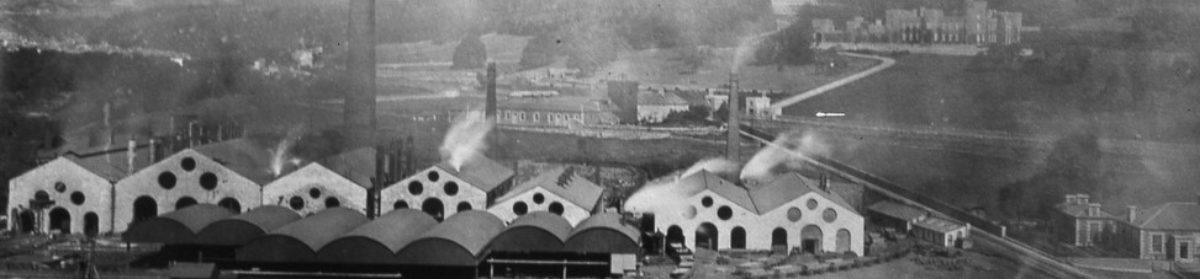
Here is fairly good evidence as to the time the Ivor Works were built. Why they were so may be difficult to determine, but the lease of the old works was drawing to an end, and the new, being on freehold land, was proof that the works might be carried on if terms for renewal could not be come to.

There 14 blast furnaces at the old works with six blast engines for supplying them. The las of these, the No. 6, was on the yard at the top of the furnaces, as there was no room with the others on the lower yard. There was also the son, Ivor, to whom the translation of the Mabinogion had been dedicated, whose name could be used and possibly perpetuated thereby. Canford Manor was purchased about this time, but did anyone then think Ivor Bertie Guest would become Lord Wimborne?
The Ivor furnaces were amongst the first in South Wales that were erected so as to require the materials to be lifted to their top. This now used, but the recent ones are all built cupola fashion, that is (with the upper part at least) circular, but Ivor furnaces were truncated pyramid fashion.
Mr Thomas Wales, who afterwards became the Government Inspector of Mines, was the coal agent. He was succeeded by George Heppel, who afterwards went to Plymouth. Mr George Martin was also taken as the mine agent. His term of service was a long one. Some few years ago I was in Llangammarch Wells for a few hours, and having finished the purpose of my visit, turned into the churchyard, when to my surprise the resting-place of one who was known to me in 1838 was seen. Mr Samuel Truran was in charge of the blast engines and Mr Dan Williams the engineer of the forge etc.

There was an exodus of Dowlais men to Cwmavon. Frederick Evans; David Harris, forge carpenter; Lamphier, who has been mentioned, and others; but Dowlais has supplied other works also, Rhymney to wit, for Mr Josiah Richards was one, and by an accident, in fact a fall in the engine house, was killed. John P Roe went with him as draughtsman, and succeeded to his position after Mr Richards’ death.
It may not be generally known that William Thompson of Penydarren, was then a part proprietor of Rhymney Works, and being a Governor of the Blue Coat School in London, was the cause of Mr E Windsor Richards being educated there.
Maynard Colchester Harrison was the forge clerk, and Sydney Howard went first to Cardiff and then to London in the same service. Mr Lewis Lewis, who in later years retired to Treodyrhiw, was looking after the stables etc., and there was lodging with him John C Wolrige, who afterwards went to Plymouth, and Edward Jones (called Liverpool Jones), who became manager at Hemmetts at Bridgwater, and afterwards manager of the Patent Shaft and Axle Works, Wednesbury.
There were many others. One was Mr Wm. Jenkins, manager of Consett subsequently (his father was the storekeeper in the works and clerk in the church), and one Goodall, brother to the artist of that name. For a time after he came he used to dream so much – cross-adding the colliers’ pay was no joke – that he was doing it in his sleep.
There had been one at Dowlais I never remember, It was he who put up what was then the foremost mill of the time. His name was William Gardner, and the big mill was put up by him, but from all I ever learnt, he it was who brought the false rider into good use. Simple as this is, it was exceedingly advantageous. To explain it, allow my saying it is placing of very cheap and simple casting to break and so save expensive damage to other parts.
To be continued at a later date…..