Merthyr Tydfil and District has produced its fair share of prominent football referees: Leo Callaghan (1924-1987), Iorwerth Price Jones (b.1927), and Howard King (b. 1946) come to mind, men who managed the ‘middle’ and ran the ‘line’ in English League and international football matches. To reach that status they had to ‘cut their teeth’ as members of referees’ associations, where over the decades men and now women have given up their free time to officiate at local league and tournament matches.
One such referee was my Grand-uncle Glyndwr Jones (1913-1960), a keen footballer in his youth, who also played for Hills Plymouth Cricket Club well into middle age. ‘Uncle’ Glyn’s reward for his services to refereeing was to be selected to officiate at an international schoolboy U15/16 match between Scotland and Northern Ireland at Celtic Park, Glasgow. Born in Troedyrhiw, Glyn followed his four older brothers working underground and at the time of his selection for the international match he was working as a colliery official at Merthyr Vale Colliery.
Shortly before his trip to Glasgow, Glyn attended an evening at Merthyr Vale and Aberfan Social Democratic Club, there club members, officials of the NCB Colliery Merthyr Vale, and other friends gathered to present him with a travelling bag and a sum of money. The presentation was made by Mr W. J. Williams JP, headmaster of Pantglas Secondary School and vice-president of the Welsh Schools Football Association. Mr Williams said that:
“Mr Jones has served Welsh schools’ football freely for many years as a referee to Pantglas School, Merthyr Schools League and the Welsh Schools Football Association, and he had long been recognised as a first-class referee who was particularly qualified to take charge of schoolboy football, he had always given his services without any remuneration or reward.”
Receiving the gifts Uncle Glyn said he “would endeavour to live up to Merthyr Vale and Aberfan’s fine record of sportsmanship.” Reporting on his selection and the evening’s presentation, the press commented that it was a “rare honour.”
The match took place on Saturday, 23rd of May 1953, the match programme titled it as the ‘Schools Coronation International’ and Scotland won four goals to none. The following season Uncle Glyn was further rewarded when he officiated at the Welsh Schools Cup Final.
Sadly, Glyn died at an early age in May 1960, aged forty-six, several referees’ representing the Merthyr Referees’ Society, including Leo Callaghan, attended his funeral.
Uncle Glyn with Merthyr Tydfil Police football team 1952/53 season, Troedyrhiw Welfare ground
The article transcribed below appeared in the Merthyr Express 80 years ago today (8 June 1940).
Merthyr Welcomes Evacuees
Sixteen Hundred Arrivals
“You will get a square DEAL here, FOLK-stone”. This clever slogan on a banner at the main entrance to Merthyr Railway Station greeted 1,600 children evacuated from Deal and Folkestone when they arrived at Merthyr on Sunday.
Several thousand people lined High Street and Church Street to welcome the evacuees, who were accompanied by their teachers.
The children were met by Merthyr’s Mayor (Mr. J.W Watkin J.P.) and the Mayoress. Others present at the station were the Deputy Mayor (Mr. A.J. Brobyn), Ald. Wm Powell, Ald. Sam Jennings, Ald. David Jones J.P., Ald. John Williams, Ald. T. Edmund Rees, Councillors Andrew Wilson J.P., J. E. Jones J.P., B. J. Williams (chairman, education committee), Lewis Jones, F. J. Bateson J.P., T. J. Evans, John Harris, Mrs. Mary Thomas J.P., F. A. Phillips J.P., David Parry J.P, and D O’Driscoll; the Town Clerk (Mr. Edward Roberts) and Mrs. Roberts, Canon J. Richards Pugh (Rector of Merthyr), the Rev. Emlyn Davies (president, Merthyr Free Church Council), Mr W. T Owen M.A. (director of education), Dr. T. H. Stephens (medical officer of health), the chief constable (Mr. T A Goodwin), the Rev J. T. Rogers, the Rev H. Davies, Mrs Margaret Gardner M.B.E., Mr A. P. Thomas J.P., Mr T. E. Lewis (station-master), Mr J. Crossland (borough treasurer), Mr. G. A. Cook (public assistance officer), Dr. King (H.M. inspector of schools), Mr. T Longville Bowen (editor, Merthyr Express), Mr. David J. Owen (chief billeting officer), Mr. Israel Price, Mr. T. S. Evans (deputy food controller), Major T. R. Evans (A.R.P. officer) and others.
After the playing of “Hen Wlad fy Nhadau” by the Salvation Army Band at the Station approach, the children – many of the younger ones carrying dolls and toys, and all with their gas masks – were led by the Mayor and officials to the Miners’ Hall.
In extending a welcome on behalf of the townspeople, the Mayor expressed the hope that the children would be happy and well cared for at their new homes.
Coun. B. J. Williams and Mr. David Owen were in charge of the dispersal of the children from the Miners’ Hall.
After being allocated to the various wards, the children were taken to the St. David’s Hall, where they were medically examined by 14 local doctors. When the examinations were completed, buses were waiting to take the evacuees to the dispersal centres in the various wards. At these dispersal centres they were provided with a meal, and later they were conveyed to their new homes.
On Monday, Tuesday and Wednesday Merthyr’s schools were closed while arrangements were being completed for the education of the evacuees, who are drawn from secondary, technical, elementary and infants’ schools. Throughout the borough the evacuees could be seen fraternising with the local children and “exploring” their new surroundings.
The slogan already referred to was thought out by Mr William Morgan, of Twynyrodyn, one of the ward billeting officers.
Troedyrhiw
Bridge Street, Troedyrhiw, was decorated with flags and bunting to greet Pentrebachthe children from Deal when they arrived at 9.30 pm, and crowds of people lined the streets to welcome them. The children, numbering 96, and varying in ages from four to fourteen, marched to the Welfare Hall, where they were provided with a meal.
The Rev. J. C. Bowen, during the proceedings, introduced the Rev. T Rees (vicar), who spoke to the children and said they were now among people who were kindly disposed to them, and were united to make them happy. On behalf of the people of Troedyrhiw, and also of the churches and chapels, he extended to them a warm welcome. Great credit is due to the chief billeting officer, Mr. D Rowlands, and his staff of assistant billeting officers for the smooth working of the arrangements for billeting the children. There was evidence of fine teamwork, which included the chairman, Coun. B. M. Davies; Mr. M.Morgans, secretary; and Mr. G. Bryn Jones J.P., treasurer. Valuable services were also rendered by the police and special constables, under the direction of Sergt. Pugh; also by the ambulance division (Capt. David Jones); the Auxiliary Fire Service, with Mr. Harry Lucas, officer in-charge; and the committee of the Welfare and Boys’ Club (chairman, Mr J. J. Palmer); and Mr Fred Bristowe (Boys’ Club secretary).
The members of the committees were busy on Monday writing letters to the parents of each evacuee child.
Evacuees arriving in Merthyr
Abercanaid
Although the contingent of the evacuee children, numbering 65, for the Abercanaid and Pentrebach area, from Deal, arrived at a late hour on Sunday, the villagers crowded the streets to give them a welcome to the area. The chief billeting officer (Mr. D. W. Davies) had the arrangements so admirably planned, that within an hour of their arrival the children were in their new homes. The billeting and welfare committee were all out to attend to the provision of a meal at the Abercanaid schools, and parents of the children have been informed of their safe arrival, and with the assurance that they will be well cared for during their stay. Splendid services were rendered by the special constables, under the direction of P.C.’s Caleb Evans and R. Davies.
Merthyr Vale
Children evacuated from Deal arrived at the Gordon-Lennox Hall, Merthyr Vale, close on 9 p.m. Outside the hall hundreds of local residents gave them a rousing welcome. About 210 children, with their teachers and a few adults, were handed over to a competent staff of workers, drawn chiefly from the teaching profession, and the difficult task of placing the children in their new homes began. All the clergy and ministers of the village, together with local members of the St. John Ambulance Brigade and the local police (with Inspector Young in charge) worked as one, and many of the children brought letters of introduction from their clergy to those of their new home. Praise must be accorded the women helpers who served the children with a meal. All worked together, and tribute must be paid to Mr. W. J. Williams, headmaster of Pantglas Boys’ School, and Mr. A James, headmaster of Merthyr Vale Boys’ School, through whose energy the children were all placed in good homes.
Many thanks to Tracy Barnard for transcribing this article.
Following on from the last couple of posts, even though war was not declared until 3 September 1939, the threat of war had been hanging over everyone since the previous year.
As early as January 1939, the government were supplying the population with gas-masks as can be seen in the article below, courtesy of Mike Donovan, which appeared in the Merthyr Express on 28 January 1939.
Following on from the tribute to Josh Powell in the last post, his family have kindly given me permission to transcribe the following piece which appeared in the book ‘All Change’ which Josh published in 1983.
Afon Taf High School was officially opened on Friday 5 July 1968 by the Right Honourable Edward Short, M.P. Many people had been eagerly awaiting this day, and as we filed, two by two, into the packed hall and joined the dignitaries on the stage, one sensed the importance of the occasion.
We wore our best clothes but they were hidden by our long, voluminous gowns (it had been ordained that gowns should be worn in school at all times). Actually, comprehensive education had reached the Valley ten months earlier when the staff and pupils at Quakers Yard Grammar; Pantglas; Treharris and Troedyrhiw Secondary Modern Schools had entered the magnificent new building which had cost three quarters of a million pounds.
I still taught Mathematics and General Science to the lower streams, but on the brochure I was given the pompous title – Sports Host. It simply meant that it was my duty to welcome visiting teams. During that first year I arranged all fixtures in rugby, soccer and hockey, but the weather made it a futile exercise. It rained and rained and rained and the vast playing fields were submerged – Viv, Bill and Terry, the groundsmen, dug drains and deep sump holes in vain and most games were cancelled. When play was possible, the teams were given a hot meal in the canteen or sandwiches and tea in the pavilion.
Mathematics had always been my first love but now there were so many changes – Modern Maths; Decimalisation of Money; Metrication of Weights and Measures; and the use of pocket calculators was the last straw. I sympathised with those pupils who had a natural flair for figures and were now being denied the satisfaction of demonstrating their prowess.
The most enjoyable year I spent in Afon Taf was the one when Mr David Howells, our headmaster, suggested that the boys might enjoy gardening during their science lessons. I am no gardener but that proved no obstacle as the soil was very fertile and a new greenhouse was erected on the plot. However, I questioned his judgement when he entered the Troedyrhiw Chrysanthemum Show. Fortunately Mr Porter, a local expert, came to our rescue and we were able to put on a creditable display.
As a reward for their efforts in the garden, I arranged games for the boys against Greenfields Remedial School. Mr Weldon Davies, the headmaster of Greenfields, was a keen sportsman and he made these football matches seem like Internationals and the cricket games became Test Matches. It enabled me to observe qualities in my boys that were normally well concealed – although they were superior both physically and mentally, they never took advantage and invariably the weaker boys were victorious.
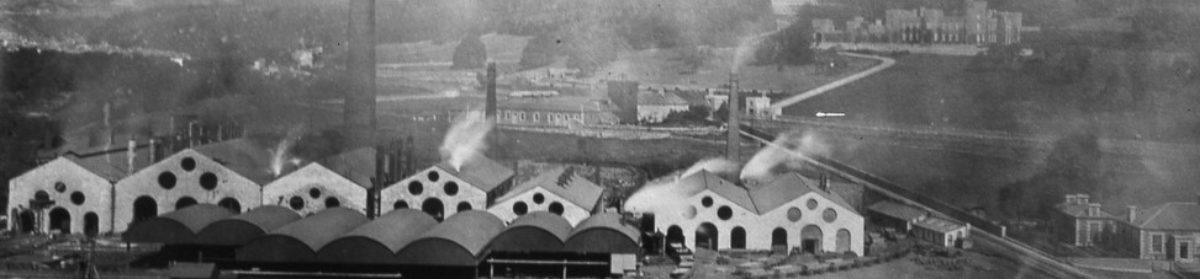


 Following on from the tribute to Josh Powell in the last post, his family have kindly given me permission to transcribe the following piece which appeared in the book ‘All Change’ which Josh published in 1983.