by Brian Jones
Prior to the early 19th century public houses, coaching inns, hotels and hostelries sold beer of variable quality in vessels of various sizes and without restrictions on opening times. Governments did not interfere in the trade however the “Gin Riots” in England, particularly in London, of the early 18th century prompted legislation spread over many decades in order to standardise units of measures, pub opening times and the legal definition of beers, wines and spirits. Premises had to be licenced, pub landlords needed to apply for licences and it was necessary for them to keep their pubs in good order for fear of losing their licence. Licensed Victuallers, or pub landlords, became more professional and local licensed victualler Associations were formed. Some important Acts of Parliament were:-
- 1824 British Weights and Measures Act which defined the imperial measurements for (amongst others) the pint and half pint.
- 1830 Beerhouse Act which sought to encourage the establishment of pubs with more supervision plus the promotion of beer sales as a more wholesome beverage than gin and other spirits. This Act resulted in a significant increase in the number of public houses.
- 1921 The Licensing Act made permanent the World War I restriction on alcohol sales, establishing standard opening hours for licensed premises.
- 2003 Licensing Act aimed to pull a host of previous legislation together and covers the production, advertising, sale and taxation of products based on their alcohol by volume (ABV) Alcohol is now defined if it exceeds 1.2% ABV.
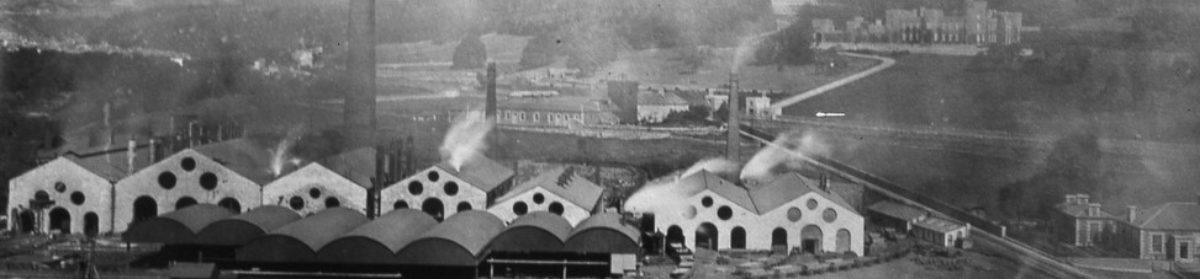
In 1835 ironworks were the major employer in the locality whilst the coal industry still remained relatively small scale. The population was less than 14,000 and “Pigot’s Directory” described Merthyr as a market town. His listing of the local businesses has the characteristics of a growing urban population with bakers, blacksmiths, booksellers, boot makers, hardware dealers, hairdressers, tanners etc. The directory also lists over 50 pubs and retailers of beer. Nearly all of the pubs no longer exist with a few exceptions such as The Crown and The Vulcan, both in the High Street, the Wyndham in Glebeland Street and the Glove and Shears (now a fast food outlet) adjacent to the Labour Club. It is remarkable that these premises still exist after nearly 200 years!

The local pubs in the era of the iron aside from selling beer, also served as centres of trade and mischief. Most of the ironworkers were not employed by the Ironmasters but by contractors, and their gangmasters would pay workers in the pubs, initially in tokens, and after the Truck Act of 1819 in coin of the realm. These men were captive customers and in the decades that followed drunkenness became a significant social problem. Local press was littered with stories of assaults, thefts and public indecency whilst under the influence of alcohol, and such was public concern that alcohol became political in nature. It transpired that the Beerhouse Act of 1830 had been too lax and a rift emerged between the political parties; the Conservative Party represented Brewers and Licensees and the Liberal Party represented those groups seeking to reduce the effects of “demon drink”. In Wales this came to a head in 1881 when pressure from Non-Conformists forced the prohibition of the sale of alcohol on Sundays. In time the national Liberal Party supported a 3 year Royal Commission into Liquor Licensing because of concerns about alcohol consumption, public order and social progress. In 1908 a Licensing Act sought to reduce pub licenses and opening hours and a later Act in 1921 reinforced changes in the laws.
Deep Coal mines were sunk in the 1880s and a surge in the transport of coal by the improved rail transport, coincided with immigration into the coalfield and a second rapid increase in population. Tom Hier produced a significant piece of work set out in the Alan George archives, He listed in alphabetical order more than 500 pubs in the Merthyr locality and these establishments became important economic and social centres The list starts with Aberfan Hotel and finishes with the Zebro in Mary Street, Dowlais and spans the economic history of the locality from farming to the Iron works era, through the railway age and then coal mining. Here are a few examples of the number of pubs with similar names:-
- 12 Plough /Farmers Arms
- 7 Rolling Mill/Puddlers Arms/Blast Furnace
- 12 Railway/ Locomotive /Station
- 12 Miners/Colliers Arms
There were also a small number of pubs with curious names which mirrored the makeup of the population. Greyhound racing had been a popular pastime and there were at least 10 pubs named the Greyhound. The Irish communities of both Merthyr and Dowlais had their own Shamrock pubs at Bethesda Street and Cross Street respectively whilst the leather tanners at “The Skinyard” near Jackson Bridge had the Tanyard pub in Bethesda Street.

Throughout the 19th and into the 20th century the beer trade expanded however most breweries confined their sales to premises within a relatively short distance because the mode of transport was a limiting factor. Beer wagons were drawn by sturdy horses who could manage heavy loads on the flat or slightly sloping ground but not the steep climbs from one valley to the next one. That was to change at the end of World War I with the manufacture of petrol driven lorries. Prior to 1914 The Rhymney Brewery company had bought out local breweries however they were now able to expand their transport fleet and this enabled them to further economise by closing the local brewers and concentrate production at their brewery in Rhymney. In addition their sales outlets increased with the acquisition of freehold premises and now they owned more than 70 pubs in the Merthyr locality and the “Hobby Horse” reigned supreme adorning pubs such as:-


To concentrate on the ownership of pubs as part of the real estate owned by the breweries can diminish their importance as part of the social fabric of 19th and 20th century communities. It was not all about beer sales and beer drinking! In the first 100 years after the opening of the four local ironworks pubs were the centres for trade, conversation, smoking and music. Welsh was the dominant language and the Welsh harp was the principal instrument played. The singing voice accompanied the 3 string harp in the men only pubs often described as “spit and sawdust” places. Clay pipes would be given to customers and sometimes these would bear the name of the pub.
In the next 100 years Government legislation and “good order” gained the upper hand. The increased efforts of local government, licensees and the police saw pubs change their character, more English was spoken, women were allowed to enter “The Snug” but not the bar! The pub no longer became the working man stronghold and respectability saw increased use by the middle and professional classes. By way of example Cyfarthfa Castle Grammar school teachers met in the Lamb Inn in Castle Street each Friday evening and the Football Referees Association held their meetings tin the Narrow Gauge, Glebeland Street. The laws of Association and Rugby football had been codified and clubs were formed in pubs especially after World War II. Some examples are a rugby team at the Lamb and a football team at the Iron Horse, Galon Uchaf. Pub darts was popular with darts leagues whilst table games included cribbage, dominoes and cards.

Selling alcohol, keeping good order and resolving disputes were the job of both landlords and landladies however they also raised families and a brief note is made of some of these. Thomas Stevens served in “B” Company at the battle of Rourke’s Drift (1879) and his family kept the Robin Hood pub in Dowlais. Aladdin Gibb (1874-1939) followed his more famous father as an accomplished player of the Welsh harp and he was the landlord at the Rose and Crown in the Quar and later the Brecon House, Brecon Road. Some ex-professional footballers looked to retire to life behind the bar. Shenkin Powell (of the thunderous shot) played for Merthyr Tydfil after World War II and he was the landlord of the Brunswick in Church Street. The father of Lynn Mittell MBE kept the Royal Oak pub in old Caedraw, sited near to St. Tydfil’s Church, it was demolished in the 1960’s as part of the redevelopment of Caedraw.

The pub trade of the 21stcentury bears no resemblance to that of the previous 200 years. Pubs are no longer the centres of public life, considerably fewer in number and now cater for the younger generation with less draught beer, more bottle and draught lager produced by a few national brewers. Supermarkets now sell a substantial volume of liquor for consumption in the home. Catering is a major part of the trade and gone are the days of pork scratchings, peanuts and pickled eggs. Those of us from the post 1945 generation remember the significant part that pubs played in the social and economic life of the youth, middle aged and older population,. All of that was played out beneath the sign of the man on a barrel sometimes identified as a jockey on a “Hobby Horse”.