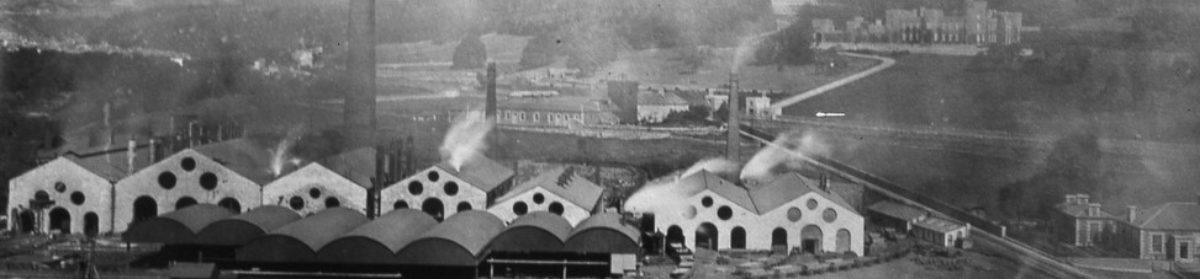
Beer, Brewing and Public Houses in the Merthyr Tydfil Locality – part 2

by Brian Jones

Prior to the early 19th century public houses, coaching inns, hotels and hostelries sold beer of variable quality in vessels of various sizes and without restrictions on opening times. Governments did not interfere in the trade however the “Gin Riots”  in England, particularly in London, of the early 18th century prompted legislation spread over many decades in order to standardise units of measures, pub opening times and the legal definition of beers, wines and spirits. Premises had to be licenced, pub landlords needed to apply for licences and it was necessary for them to keep their pubs in good order for fear of losing their licence. Licensed Victuallers, or pub landlords, became more professional and local licensed victualler Associations were formed. Some important Acts of Parliament were:-

  • 1824 British Weights and Measures Act which defined the imperial measurements for (amongst others) the pint and half pint.
  • 1830 Beerhouse Act which sought to encourage the establishment of pubs with more supervision plus the promotion of beer sales as a more wholesome beverage than gin and other spirits. This Act resulted in a significant increase in the number of public houses.
  • 1921 The Licensing Act made permanent the World War I restriction on alcohol sales, establishing standard opening hours for licensed premises.
  • 2003 Licensing Act aimed to pull a host of previous legislation together and covers the production, advertising, sale and taxation of products based on their alcohol by volume (ABV) Alcohol is now defined if it exceeds 1.2% ABV.

In 1835 ironworks were the major employer in the locality whilst the coal industry still remained relatively small scale. The population was less than 14,000 and “Pigot’s Directory” described Merthyr as a market town. His listing of the local businesses has the characteristics of a growing urban population with bakers, blacksmiths, booksellers, boot makers, hardware dealers, hairdressers, tanners etc. The directory also lists over 50 pubs and retailers of beer. Nearly all of the pubs no longer exist with a few exceptions such as The Crown and The Vulcan, both in the High Street, the Wyndham in Glebeland Street and the Glove and Shears (now a fast food outlet)  adjacent to the Labour Club. It is remarkable that these premises still exist after nearly 200 years!

Courtesy of the Alan George Archive

The local pubs in the era of the iron aside from selling beer, also served as centres of trade and mischief. Most of the ironworkers were not employed by the Ironmasters but by contractors, and their gangmasters would pay workers in the pubs, initially in tokens, and after the Truck Act of 1819 in coin of the realm. These men were captive customers and in the decades that followed drunkenness became a significant social problem. Local press was littered with stories of assaults, thefts and public indecency whilst under the influence of alcohol, and such was public concern that alcohol became political in nature. It transpired that the Beerhouse Act of 1830 had been too lax and a rift emerged between the political parties; the Conservative Party represented Brewers and Licensees and the Liberal Party represented those groups seeking to reduce the effects of “demon drink”. In Wales this came to a head in 1881 when pressure from Non-Conformists forced the prohibition of the sale of alcohol on Sundays. In time the national Liberal Party supported a 3 year Royal Commission into Liquor Licensing because of concerns about alcohol consumption, public order and social progress. In 1908 a Licensing Act sought to reduce pub licenses and opening hours and a later Act in 1921 reinforced changes in the laws.

Deep Coal mines were sunk in the 1880s and a surge in the transport of coal by the improved rail transport, coincided with immigration into the coalfield and a second rapid increase in population. Tom Hier produced a significant piece of work set out in the Alan George archives, He listed in alphabetical order more than 500 pubs in the Merthyr locality and these establishments became important economic and social centres The list starts with Aberfan Hotel and finishes with the Zebro in Mary Street, Dowlais and spans the economic history of the locality from farming to the Iron works era, through the railway age and then coal mining. Here are a few examples of the number of pubs with similar names:-

  • 12 Plough /Farmers Arms
  • 7 Rolling Mill/Puddlers Arms/Blast Furnace
  • 12 Railway/ Locomotive /Station
  • 12 Miners/Colliers Arms

There were also a small number of pubs with curious names which mirrored the makeup of the population. Greyhound racing had been a popular pastime and there were at least 10 pubs named the Greyhound. The Irish communities of both Merthyr and Dowlais had their own Shamrock pubs at Bethesda Street and Cross Street respectively whilst the leather tanners at “The Skinyard” near Jackson Bridge had the Tanyard pub in Bethesda Street.

The Tanyard Inn. Courtesy of the Alan George Archive

Throughout  the 19th and into the 20th century the beer trade expanded however most breweries confined their sales to premises within a relatively short distance because the mode of transport was a limiting factor. Beer wagons were drawn by sturdy horses who could manage heavy loads on the flat or slightly sloping ground but not the steep climbs from one valley to the next one. That was to change at the end of World War I with the manufacture of petrol driven lorries. Prior to 1914 The Rhymney Brewery company had bought out local breweries however they were now able to expand their transport fleet and this enabled them to further economise by closing the local brewers and concentrate production at their brewery in Rhymney. In addition their sales outlets increased with the acquisition of freehold premises and now they owned more than 70 pubs in the Merthyr locality and the “Hobby Horse” reigned supreme adorning pubs such as:-

Eagle Inn (right). Courtesy of the Alan George Archive
The Aberfan Hotel. Courtesy of the Alan George Archive
The Glamorgan Arms in Abercanaid. Photo courtesy of the Alan George Archive

To concentrate on the ownership of pubs as part of the real estate owned by the breweries can diminish their importance as part of the social fabric of 19th and 20th century communities. It was not all about beer sales and beer drinking! In the first 100 years after the opening of the four local ironworks pubs were the centres for trade, conversation, smoking and music. Welsh was the dominant language and the Welsh harp was the principal instrument played. The singing voice accompanied the 3 string harp in the men only pubs often described as “spit and sawdust” places. Clay pipes would be given to customers and sometimes these would bear the name of the pub.

In the next 100 years Government legislation and “good order” gained the upper hand. The increased efforts of local government, licensees and the police saw pubs change their character, more English was spoken, women were allowed to enter “The Snug” but not the bar! The pub no longer became the working man stronghold and respectability saw increased use by the middle and professional classes. By way of example Cyfarthfa Castle Grammar school teachers met in the Lamb Inn in Castle Street each Friday evening and the Football Referees Association held their meetings tin the Narrow Gauge, Glebeland Street. The laws of Association and Rugby football had been codified and clubs were formed in pubs especially after World War II. Some examples are a rugby team at the Lamb and a football team at the Iron Horse, Galon Uchaf. Pub darts was popular with darts leagues whilst table games included cribbage, dominoes and cards.

The Lamb Inn. Photo courtesy of the Alan George Archive

Selling alcohol, keeping good order and resolving disputes were the job of both landlords and landladies however they also raised families and a brief note is made of some of these. Thomas Stevens served in “B” Company at the battle of Rourke’s Drift (1879) and his family kept the Robin Hood pub in Dowlais. Aladdin Gibb  (1874-1939) followed his more famous father as an accomplished player of the Welsh harp and he was the landlord at the Rose and Crown in the Quar and later the Brecon House, Brecon Road. Some ex-professional footballers looked to retire to life behind the bar. Shenkin Powell (of the thunderous shot) played for Merthyr Tydfil after World War II and he was the landlord of the Brunswick in Church Street. The father of Lynn Mittell MBE kept the Royal Oak pub in old Caedraw, sited near to St. Tydfil’s Church, it was demolished in the 1960’s as part of the redevelopment of Caedraw.

Royal Oak Inn. Courtesy of the Alan George Archive

The pub trade of the 21stcentury bears no resemblance to that of the previous 200 years. Pubs are no longer the centres of public life, considerably fewer in number and now cater for the younger generation with less draught beer, more bottle and draught lager produced by a few national brewers. Supermarkets now sell a substantial volume of liquor for consumption in the home. Catering is a major part of the trade and gone are the days of pork scratchings, peanuts and pickled eggs. Those of us from the post 1945 generation remember the significant part that pubs played in the social and economic life of the youth, middle aged and older population,. All of that was played out beneath the sign of the man on a barrel sometimes identified as a jockey on a “Hobby Horse”.

My Dad Makes Sweets

by Tiffèny Davies (née Bray)

When I first started school, my teacher told my mother that I was the only one in my class who knew what their father did for a living!  “My Dad makes sweets!”, I’d said.   My mother told her, it was because I saw him at work, as the factory was in an old water mill, just off Merthyr Tydfil High Street, across the garden from our house and we would often pop in to see him on our way back from town.

My father at work in the factory

Frederick William Bray, my Great Grandfather, who established F W Bray and Sons, started his business in Glyn Terrace, Merthyr Tydfil.

F W Bray & Sons shop at Glyn Terrace. Photo courtesy of the Alan George archive

Frederick had a sweet factory at the back of the house and he would load his horse drawn cart full of jars of sweets and deliver to market traders as well as running his own stall in Aberdare market. In 1904, Frederick married, Mary Ann Vining, the daughter of a china merchant based on Pontmorlais who also had large china stalls in Merthyr and Dowlais Markets as well as a shop on Pontmorlais.

In 1934, Frederick and Mary Ann moved into Pontmorlais and established a sweet shop, continuing to make sweets in a building at the bottom of Old Mill Lane and eventually taking over the Old Mill that had, until then, been used by the Vining family in which to store China. The Vinings had bought the Old Mill in 1922 after the Millers failed to return from the First World War.

Frederick and Mary Ann had three children, Thomas, Sydney and Phyllis. Both sons joined the family business, becoming Master Sugar Boilers and also helped to deliver to all the small retail shops in the surrounding valleys.

During the Second World War my Grandfather, Thomas, served as a cook with the Royal Engineers while Sydney and Phyllis worked in the local munitions factory, which meant that there was little time for sweet making. I am told, that in order to keep up the supply of sweets, Mary Ann contacted the local Member of Parliament, S O Davies, on two occasions, to request Thomas’ return from the frontline. It is said that S O Davies would take a bag of sweets up to Parliament, to Winston Churchill’s War Cabinet.

F W Bray & Sons shop in Pontmorlais in the 1940s. Photo courtesy of the Alan George Archive

In 1937, Thomas married Anne Berry Powell who had been working as a Night Sister in the General Hospital. After the war, they lived above their own sweet shop at Park Place, Merthyr Tydfil. While Thomas travelled the valleys, visiting the small shops, delivering and taking orders, Sydney made sweets.

When I was born in March 1963, my Father, Fred Bray, was already working in the well-established sweet making business which employed around 25 people; in the factory, the shop on Pontmorlais, market stalls in Merthyr and Aberdare as well as a newsagents on Glebeland Street, Merthyr.

F W Bray & Sons stall at Merthyr Market. Photo courtesy of the Alan George Archive

They manufactured a range of hard boiled sweets, as well as whole sale and retail of ranges from across the confectionary spectrum. Sales representatives from brands such as Cadbury’s, Taveners, Rountrees, Walkers, Milady and even the man from Mars, were frequent visitors. To a young child, it was really exciting to be around when a travelling sales representative was visiting, they always had a case full of colourful delights out of which I might be handed a sample to try.  Sometimes there would even be promotional toys – I acquired a clockwork dalek, cuddly chipmunk (that advertised chipmunk crisps) and even a digital watch that came with Bazooka bubblegum!   I remember being closely watched as I sampled a packet of popping and fizzing, space dust which I thought was great fun and, on another occasion, Uncle Sid handed me a packet of Wotsits, that he’d been sampling, before dashing to the sink to wash out the gooey mess from his false teeth!  Needless to say, the Wotsits were a hit with the kid, and the sales representative got an order!

It would be all hands on deck to unload deliveries from the lorries of large companies and stock our warehouse ready for distribution to shops across the valleys. Our adverts read “Home Made Sweets with Glucose – Good For You!”  We had a burgundy coloured Commer van, emblazoned with the family name – F W Bray and Sons – kitted out with shelves to hold the glass sweet jars and boxes, that my Grandfather, Thomas, used for deliveries to all the small shops, all over the valleys.   As a child, it was always a novelty to sit, up front, with him in the “big van”.

The advent of the supermarket eventually meant that confectionary was being sold cheaper by them than we could buy directly from the manufacturer and, as a result the wholesale of other brands dwindled. Focus shifted to the Bray’s lines and links with the National Museum of Wales, doing sweet making demonstrations at events and fairs.

My mother and father demonstrating sweet making

As I grew older, I have memories of helping in the factory, washing jars, pasting labels, mixing the Braymix and adding colour and flavour to the sherbet. During one school summer holiday, I even operated the cut and twist wrapping machine. I sat for hours, putting sweets into holes and watching them go round, the machine picking up our branded cellophane, chopping it and spinning pincers twisting the ends before dropping them down a shute into a tray. I must say, the novelty quickly wore off!

Although, my Father told us to break away from the business, we could not help but be drawn in and we did get involved, especially when it was all hands on deck! I nagged my Father to allow me to work as Saturday staff and my sister, Fiona and I worked in the Merthyr Market Stall, my brother, Jason, who had a morning paper round, occasionally helped out in the shop on Pontmorlais.

Until 1994, when my Parents retired, they ran the business together, changing the structure to sweet making and travelling to events in order to do demonstrations, at mostly Welsh Heritage Sites. The wholesale business, shops and stalls were now gone. The watermill that used to store china, and then became a sweet factory, is now a garage.

My parents Fred and Pam Bray

My father always said that the sweet making business would end with him and advice was to break away. On the 8 of September 2024 at my brother, Jason’s installation as Dean of Llandaff Cathedral, I remember those words, and how things have worked out. The business did end when my father retired in 1994 and he handed machinery to St Fagans Welsh National Museum of History and his recipes, glass jars and labels handed to relatives in Bray’s of Cardiff. I sometimes see some of our lines of hard boiled sweets in the supermarket and Bray’s sweets were sold at St Fagans from the original glass jars with our labels.

Me at St Fagans

A Great Storm at Merthyr

100 years ago today, the Merthyr Express published the following pictures showing the damage caused to the Salvation Army Citadel earlier in the month.

Merthyr Express – 24 January 1925

The New Year in 1925 was ushered in with terrific storms which lasted for several weeks.

The bad weather began over the Christmas period and affected most of Wales and Southern England. On New Year’s Eve the storm intensified with high winds, thunder and lightning, torrential rain and hail. Lightning struck the winding plant at No 1 Pit at Deep Navigation Colliery in Treharris, damaging the the electric motor and compressor. Luckily no-one was injured, but several miners were trapped underground, eventually escaping via No 2 pit where the winding gear was steam powered. The plant was again hit by lightning on Sunday 4 January, damaging the turbine engine which was being used to supply electricity to the plant whilst the machinery damaged on New Year’s Eve was being repaired.

That same weekend saw the full force of the storm affecting other parts of Merthyr. Dozens of houses had slates blown off their roofs, and a large portion of the roof at Cyfarthfa Stables was torn away.

The worst damage was done when the Morlais Brook overwhelmed the culvert that carried it underneath the road next to the Salvation Army Citadel. The culvert collapsed and severely damaged the foundations of the building.

As a result, the Citadel, which had formerly been Morlais Chapel had to be demolished, and a new building was erected in its place.

Keeping up with the Joneses: A Family of Merthyr Artists – part 1

by Christopher Parry

William Edward Jones made himself unique among the portrait painters that have settled in Merthyr Tydfil, because not only was he exceptionally talented, but he also was father to six children, several of which were named after famous renaissance artists, who became artists themselves.

William Edward Jones was born in Newmarket, Flintshire, in 1825. He was the son of James Jones, an Ironmonger, but it is unclear the path William took to become an artist instead of an Ironmonger. What is clear is he was ‘a “born” painter, gifted with an intuitive apprehension of the principles of his art, as well as great capacity for applying them…’ Though it is unknown if he had any formal training as an artist, by the age of 24, he had moved to Wrexham and was working as a portrait artist. He then went to Liverpool and eventually to London. While in London he displayed artwork at the Royal Academy and became a well-regarded portrait painter, but competition there was fierce. A chance meeting with two men that were bound for Merthyr Tydfil made William realise that maybe he could go to this iron metropolis and make a name for himself.

In 1853, he arrived in Merthyr Tydfil and it was not long before he established a portrait painting business on Glebeland Street, Merthyr Tydfil. 18, Glebeland Street would be his residence and studio for the rest of his life.

One of his first notable commissions seems to be of Lord Aberdare, Henry Austin Bruce, in 1853, and from there steady commissions would continue.

Henry Austin Bruce, c 1853, William Jones, Peoples Collection Wales, LLGC

By 1856, William had accepted what would be his most impressive portrait yet, a portrait of John Evans, the Dowlais Works Manager. Evans was retiring and those who admired him at Dowlais decided to commission a portrait. The portrait was unveiled at a Temperance Choir concert in the Dowlais Schools in May 1856. The portrait of Evans is one of only two known portraits painted by William that are still in Merthyr Tydfil. It hangs on the walls of Cyfarthfa Castle and is a huge canvas with astounding details, such as a painting of Dowlais Works on the wall in the background, along with engineering documents strewn across the table in front of John Evans. The portrait is one of two created by William in 1856, the other is a portrait of John Evans brother, Thomas Evans.

John Evans, c 1856, William Jones, Courtesy of Cyfarthfa Castle Museum & Art Gallery

The portrait of Thomas, who was an agent and manager at Dowlais also, was commissioned by those in Dowlais who were saddened by his passing in 1846. This was a problematic commission for William, as he had never seen Thomas and no reference to what he looked like existed. Those who knew Thomas gave William descriptions and the rest was down to the artist’s skill to create a perfect likeness. When the painting was complete ‘no one having formerly known Mr. Evans, can mistake who the painting is intended to represent’. The painting was unveiled in August 1856, and was transferred to the possession of the local council by the early 1900s. The portrait of John fell into the ownership of the council too, eventually being one of two paintings that hung in the council chambers until 1910, the other being a portrait of Henry Richard by William Gillies Gair. The portrait of Thomas Evans is heavily damaged but remains in Merthyr Tydfil.

William would go on to create a painting titled ‘The Last Bard’, which won him awards at the National Eisteddfod in 1859. In 1863, he was commissioned to paint the Mayor of Neath, Evan Evans, which was praised for its ‘fineness of execution and accurate delineation of feature…’ William would even produce pencil drawings, most notably he would capture the chaos of the moment disaster struck in 1874, when runaway carriages collided with a train and destroyed part of Merthyr’s Central Station.

Scene of the terrible accident at the Vale of Neath Station – c 1874, William Jones, Courtesy of Cyfarthfa Castle Museum & Art Gallery.

William was a Freemason and was commissioned frequently to paint other members, which meant he was solidly painting throughout the late 1850s, right until the late 1870s. There is currently no overall known number of how many portraits William created when he was living in Merthyr Tydfil. Many portraits had been commissioned for people outside of the town, for widowers of Freemasons, industrialists that moved on from the town and so on. In the aftermath of William’s death in 1877, there was an auction of work from his studio and one advertisement stated that there were over one hundred pieces for sale.

Merthyr Telegraph – 2 November 1877

The paintings have undoubtedly gone everywhere across Britain and further afield, so they are now incredibly difficult to trace. Dr Fred Holly, in an article appearing in Merthyr Historian: Volume 6 has made the best attempt to collect information on the artwork that survives, but even that list is miniscule compared to the actual art William created in his heyday.

On July 2, 1858, William married Elizabeth Wilkins, daughter of William Wilkins, who lived on Morlais Street, in the Glebeland. William Wilkins was a Hotel Keeper, who managed the Temperance Hotel, which was also in the Glebeland at Merthyr Tydfil. William and Elizabeth would have six children in all. The eldest, William Angelo, named after the famous renaissance artist. Then James Raphael, named after another Italian artist. Francis Lawrence followed, named after Thomas Lawrence, the English portrait painter. The only daughter then followed, Rosa, named after the French artist Rosa Bonheur. Then Leonardo Devinci (spelt with an E not A) Jones; another nod to beloved Italian artists. Finally, Ernest probably named after the French artist Ernest Meissonier.

The 1870s, when many of them were coming of age, must have been a devastating time for the children as Elizabeth died in 1870. Her father William Wilkins moved into 18, Glebeland Street to help William, but he then passed away in 1873. William then, while putting the finishing touches on a portrait, died in 1877.

To be continued……

The Mystery of Dr Gabe – part 1

by Lynette Rees

Doctor Gabe, who is reputed to be one of the first doctors on the scene of the final Jack the Ripper murder of Mary Jane Kelly, is one of the persons mentioned, apart from Mary herself, who I find most intriguing of all in the case. Not just because he was born and bred in my home town of Merthyr Tydfil, but because of his movements during that period of time.

Gabe, was reported as living in Merthyr Tydfil, where his father was reputed to be the landlord, Rees Gabe. Now this is where the confusion and mystery begins…there appears to be a Doctor John Bernard Gabe listed as being Rees Gabe’s son of Merthyr. John Bernard Gabe did exist as I’ve found a newspaper clipping of his death, complete with a photograph, [see above].

In the article in the newspaper called ‘The Cambrian -10th July 1908‘,  it says that John Bernard’s father was Rees Gabe, but it appears to say John Bernard previously resided in Cefn [there is a Lord Raglan pub which is still operational in Cefn Coed, Merthyr Tydfil.. I have found mention of 3 such pubs, one in Glebeland Street, Cefn Coed and Dowlais] But which one was it really? I’ve also found an article in a Welsh newspaper where Rees Gabe from the Lord Raglan Glebeland Street, had bales of hay stolen and had taken someone on in court for the offence.

Not only is the pub an enigma, so is Doctor Gabe as there is a Doctor John Bernard Gabe mentioned and more often Doctor John Rees Gabe in connection with the case of Jack the Ripper. Now, John Rees makes complete sense as being the son of Rees Gabe as names were often handed down to sons. Yet, on the Census there is only a boy called John and a boy called Joseph that could be brothers who were doctors. There are three other brothers, William age 13, Benjamin 7,  and 1-year-old Henry.

Joseph’s age fits best the year John Rees Gabe was born which was said to be around 1852 [he might have been almost 9 when the census was taken so could have been born in 1852.] So was that name changed at some point from Joseph to John?

Also curious is the fact that John Bernard isn’t on that census, though the newspaper report says Rees Gabe was his father. If he was 55 years of age in 1908 when he died, then he was born circa 1853. So was he Joseph? Was there only one year between John Bernard and John Rees? It doesn’t make sense. Of course the one called John on the census there was 6 at the time, which would have made his birth year around 1855, that doesn’t tie in with any dates either.

1861 Census return for the “Lord Raglan”, Merthyr Tydfil

  • Rees Gabe (Head), 38, born Llangathen, Carmarthenshire. Innkeeper
  • Anne (Wife), 35, born Llangathen, Carmarthenshire. Innkeeper
  • Mary Anne (Daur), 11, born Merthyr. Scholar
  • William (Son), 13, born Merthyr. Scholar
  • Joseph (Son), 8, born Merthyr. Scholar
  • Benjamin (Son), 7, born Merthyr. Scholar
  • John (Son), 6, born Merthyr. Scholar
  • Elizabeth (Daur), 6, born Merthyr. Scholar
  • Henry (Son), 1, born Merthyr
  • Anne Williams (Servant), born Carmarthen Town. House Servant
  • Mary A Williams (Servant), 15, born Pontypool, Monmouthshire. House Servant

I’ve also discovered a Doctor J. Gabe who worked as a medical officer at St, Tydfil’s infirmary/workhouse in Merthyr Tydfil. A newspaper article mentions him one night working with ‘his brother’. So did Rees Gabe the publican have two sons who were doctors? One called John Bernard and one called Joseph Rees [who later changed his name to John Rees when he arrived in London?]

The Doctor J. Gabe who worked as a Medical Officer at the workhouse/ infirmary seemed to be a colourful character who got involved in certain inquiries held by the hospital board where he came under suspicion of various misdeeds. One was about giving a ward sister a lot of grief, who seemed to dislike him intensely! He was often spoken of as having an extremely bad temper by staff at the infirmary.

To add to his mystery, several Ripperologists have mentioned that Mary Jane Kelly, was at one time living in Merthyr Tydfil herself. Mary was said to have married young to a man with the surname ‘Davies’, but sadly her husband got killed in a pit disaster. [This information is derived from an account by Joseph Barnett, her London lover, who told police this information after her death]. There is a 16-year-old ‘Mary Jane Davies’ listed as residing at the Brunswick Hotel in Thomas Street, not that far away from St. Tydfil’s Infirmary.

Mary, although described as ‘Irish’ is known to have spoken the Welsh language. Her father was said to have worked at the ironworks [again this information came from Joseph Barnett].

To be continued…..

Many thanks to Lynette for allowing me  to use this. To read the original article please see

The Mystery of Doctor Gabe from Merthyr

Memories of Old Merthyr

We continue our serialisation of the memories of Merthyr in the 1830’s by an un-named correspondent to the Merthyr Express, courtesy of Michael Donovan.

Mr William Davies was the forge and mill manager at Cyfarthfa, and Mr John Jones, the furnace manager at Ynysfach. Mr Wiltshire was the vet or farrier (for the Veterinary College had not so many members then), but others also occur to me in other spheres of labour.

John Pritchard was the weigher on the top of the yard (approaching Gellideg). He was the father of the Dr Pritchard many of your readers may recall, living in High Street, opposite Glebeland Street. There was also a weigher at Ynysfach yard some few years later whose name I wish to mention; it was John Morgan, and his contributions to the mathematical part of the Gentleman’s Magazine of that time is ample evidence of his knowledge.

Possibly some of the descendents of those mentioned yet exist, and may read this – some can be recalled. Mr Davies, the mill manager had two daughters, one became Mrs John James (draper). Mr James married a Miss Kirkhouse, Llwyncelyn, an elder sister (half sister really) of the Rev Howell Kirkhouse. I do not think they had a family; nor can I recall either of Mr Jones’ brothers – William, who went to North Wales; or Charles, who went to London – having any; perhaps he (Charles) made up for it by becoming the secretary of the Welsh Girls’ School at Ashford.

William Crawshay II by an unknown artist. Courtesy of Cyfarthfa Castle Museum & Art Gallery

At the present time, when ‘combines’ for trade purposes are rife, and ever and anon a paragraph appears respecting what Mr Robert Thompson Crawshay said he would have done of the workmen had fallen in with his views, perhaps it may be appropriately state what Mr Wm. Crawshay did do in order to meet the varying conditions of demand for produce.

No matter what the marketable produce may have to be – whether bars, rails, sheets or slit rods – all were made from puddled bars rolled to 3 and 3½ inches wide and one-half to five-eighths thick; these were all cut when hot to suit the length of the ‘pile’, as a rule these may be about 18 inches only. After being cut to the length they were taken to an open place – there was one in front of what was afterwards erected and called the Pandy Mill – where they were packed up in the form of a shed, with the roof on, say 16 feet or 18 feet long, 12 feet wide, and 10 feet to the commencement of the slope forming the roof. The weight of one of these ‘houses’ would be about 500 tons. In very bad times, many of these would be built; I think as many as twenty have been seen at one time at the spot indicated, besides others elsewhere, so that there was a stack of 20,000 tons ready for working off when the demand required.

The value of a ton of puddled bars varied from £3 up, so that if 20s were added to the value, there was a virtual profit of about 30 percent on the full amount. Tin-plate manufacturers work for stock occasionally, and the pig-iron manufacturers can deposit their produce and obtain an advance thereon, but rail makers, or bar-iron makers cannot do so to a great extent. In the one case, because of the section, on on the other, the difficulty of avoiding the oxidation. Is it any wonder that the Crawshays are wealthy?

“Cyfarthfa Ironworks at Night” (1825) by Penry Williams. Courtesy of Cyfarthfa Castle Museum and Art Gallery

To be continued at a later date.

J. D. Williams – jeweller

by Carl Llewellyn

One of the most iconic buildings in Merthyr Tydfil’s High Street is Milbourne Chambers. Situated on the corner of High Street and Glebeland Street, presently the shop premises is empty but was formerly an established hairdresser’s named “Ladybirds”. For a majority of the towns-people though, they still refer to the premises by the name of the previous establishment, “H. Samuel” – jeweller, watchmaker and goldsmith, but what of the shop history and its association with the jewellery trade?

In this particular case the “H. Samuel” premises were formally rented by J.D. Williams’s jewellery business. The formation of J.D. Williams’s business began in 1856, when James David Williams returned to Merthyr Tydfil; he was the son of the Rev Benjamin Williams who was minister of Tabernacle Baptist Chapel, Merthyr.

After leaving school he was apprenticed to Job James, ironmonger, of Merthyr. When his apprenticeship was completed he moved to Soham, Cambridgeshire, to take up the management of an ironmongery establishment there, before moving to the city of Cork, where he obtained an introduction to the watch and jewellery business. It was not long before he secured an advancement from the position of an assistant to that of the buyer.

In 1856 he returned to Merthyr, where his family was well known and remembered, and commenced a business in November 1856 as a watchmaker and jeweller at premises in Market Square, which adjoined the old Merthyr Telegraph, and General Advertiser For the Iron Districts of South Wales.

Due to his admirable aptitude, both as a buyer and seller,  he quickly extended the business which he commenced in a smaller shop. He searched for more commodious premises, and finally, by April 1858 he purchased new business accommodation at No 129 High Street, which he continued to occupy to the end of his days when he died on 24 February 1890 aged 62 years old. After his death the business was taken over by his only son Frederick Carlyle Williams, who continued the business under his father’s name.

J. D. Williams shop at 129 High Street. Photo courtesy of the Alan George Archive

In 1903 the Post office officials decided to build and relocate the Merthyr Post Office. Merthyr’s first postmaster was William Milbourne Davies, whose descendants were the owners of Post Office building and its land.

Due to the dilapidated state of the Post Office and the adjoining buildings, one of Davies’ descendants, Miss Mary Davies, decided to build a new block of buildings on the site, with the upper part of the building being used for living accommodation and offices. The building was to be named Milbourne Chambers in memory of William Milbourne Davies. Part of the building design included a shop premises, so as it was the intention of  Frederick Williams to expand and relocate his business, the opportunity manifested itself him to negotiate with the owners of Milbourne Chambers and he began a shop underneath the building and adjoining workshops.

The Merthyr Express dated 16 July 1904 recorded the pending opening opening of J.D. Williams & Co:-

There was a heavy copper name plate above the shop which gave a grand spectacle. There were handsomely appointed offices at the rear, and still further back, on Post Office lane, were elaborately equipped workshops, used for manufacturing, repairing and reconstructing items in the jewellery and watch making trade.

A word must be said about the clock. It was manufactured in the work shop, and it is a full sized one so far as the hands and dial are concerned, but no trace of the works can be seen. The clock is situated on top of the building, which faces Lower High Street, and proved over the years to be an impressive acquisition. The dial is five feet in diameter, and illuminated all through the night. The name of J.D Williams stood boldly on a handsome scroll with wrought iron sides – this was also illumined all through the night.

J. D. Williams new shop on the corner of the High Street and Glebeland Street.

On the day J.D Williams & Son, Jewellers opened at the new premises, Mr Walter West joined Mr F.C. Williams as a partner in the business.

By 1907 J.D Williams & Son, Jewellers had been sold to the H. Samuel chain of jewellery shops. The Samuel’s jewellery business was owned by Walter Samuel (1829-63). He married Harriet Wolfe in 1852, and after Walter’s death Harriet took over the family clock and watch business in Liverpool started by her father-in-law Moses Samuel. The first of the H. Samuel  Stores (“H” for Harriet) were opened in Preston in 1890, before long there were branches throughout Wales and England.

In 1907 the Merthyr Express dated 6 July 1907, advertised the new Samuel’s store:

The H. Samuel sign above the shop consisted of three panels, with lettering on each board, GOLDSMITH, H.SAMUEL & JEWELLER, but  by the 1960’s the signs were replaced by florescent lettering highlighting the name H. Samuel. For approximately 90 years H. Samuel served the town as one of the foremost jewellers, but in 1999 the business was finally transferred to 6 Graham Way in the St Tydfil’s Shopping Centre. Since H. Samuel moved, the premises in the High Street became a second hand furniture store, before becoming “Ladybirds”.

Fire at Merthyr

110 years ago today a serious fire occurred in Merthyr Town Centre. The report, transcribed below, appeared in the Merthyr Express on 24 December 1910.

FIRE AT MERTHYR

SERIOUS CONFLAGRATION NARROWLY AVERTED

On Friday evening last a fire broke out in one of the offices comprising part of the premises of Messrs. H. W. Southey & Sons and the offices of the Merthyr Express in Glebeland-street, Merthyr, which, but for its timely discovery, might have resulted in one of the most disastrous conflagrations in the history of the town.

It occurred in the front room of a suite occupied by Mr. H. Cowie, the local representative of the General Accident Assurance Co., and was first noticed almost simultaneously by P.S. Jones and a youth named Harris, who were passing in the street at 7.45 p.m. P.S. Jones rushed into the Western Mail office, which is almost opposite, and requested Mr. Williams to phone to the police station, which he did. Harris ran into the book shop and alarmed the assistant, and then dashed off to the police station, where, fortunately he met P.S. Hunter at the door, and assisted to bring up the hose and reel. So prompt was the action of the police that within one minute they were on the scene with hose and reel. Meanwhile P.S. Jones had warned them in the stationery shop. A singular thing had happened not a minute before. The gas-lights in the shop went out, and the assistants were investigating the cause when the sergeant came in.

Mr. Harry Southey was in his office at the time and he rushed upstairs to ascertain where the seat of the fire was.

By this time Mr. Cowie’s room was a glowing furnace. The fire was raging under the desk which ran along the front, and the flames were licking everything. He burst open the door ind with some of the office staff threw “Kylfire” compound into the room, which deadened the fire, and then contrived to smash two or three panes in the window which gave vent for the smoke and flames into the open air. The police had got ready for plying water through the windows, but Mr. Southey explained that they could not reach the seat of combustion from the Street. Another length of hose was then brought up, and the pipe taken through the passage and up the staircase on to the landing. The heat there was now so intense that three of the constables had to be taken out of it. Happily the nozzle was got to the door of the room, and once the powerful douche from the high pressure to the mains was brought to play upon the fire it was under control in a few minutes, and in less than a quarter of an hour was completely extinguished. The condition of the room then revealed what a providential escape the whole premises had had.

The front of the room was occupied by a long desk, and beneath this was a great mass of papers of one kind and another, loose and on files. It was thought at first that the fire was due to a short circuit in the electric wires, under the floor, but this was shown to have been impossible. The condition of the burnt wood and furniture indicated that this mass of papers was the seat of the origin of the fire. How the ignition took place no one can tell. The last person to leave was a young woman typist, at five o’clock, and she states that there was no sign of fire then. Yet there can be little or no doubt that the fire started amongst those papers, and for a couple of hours or more it must have smouldered slowly, steadily progressing in strength sufficient to char deeply all the adjacent wood furniture, until it burnt through the floor at a spot exactly over the gas pipe which supplies these rooms. This pipe was melted and then occurred the outrush of gas which extinguished the lights below and concurrently caused an outburst of flame in the room which simply filled it with fire and the bright blaze attracted attention in the street.

The discovery was made at a very critical moment. Had the fire been left unchecked much, longer it would have reached the pitch-pine ceiling of the shop and the consequences must have been disastrous indeed. As it was the damage by fire was considerable, but that by water to the new Christmas stock with which the windows were crowded, was far heavier. The shop had to be closed for business on Saturday. We cannot speak too highly of the admirable promptitude and conduct of the police, under Inspector Phillips and P.S. Hunter, in coping with the fire which they subdued so swiftly.

The premises and stock were covered by Insurance in the Legal Insurance Company, Ltd.. of which Messrs. J. M. Berry and Sons and Mr. W. J. Pritchard are the local agents. The district manager, Mr. H. O’Leary, Cardiff, was very prompt in attending to the notice of the occurrence sent him. The assessor was sent to Merthyr on Saturday morning, and, after carefully investigating the circumstances and the nature and extent of the damage sustained, he settled the amount of the claim before he left, and to our satisfaction. We had previously found the Company very prompt in meeting their obligations in a case of injury, to a workman, under the Employers’ Liability Act, and it gives us much pleasure to make this acknowledgment of their fair treatment of insurers who are unfortunate enough to have to present their claims.

I remember that…..

by Laura Bray

1. The ‘top swings’ in Cyfarthfa Park.

2. Catching the bus to the ‘Ring Lamp’ stop.

The ‘Ring Lamp’ at the junction of Gwaelodygarth and the Avenue. Photo courtesy of http://www.alangeorge.co.uk/index.htm

3. Buying sweets from Weekes’ shop in Pontmorlais.

4. Depositing 2p pieces into the phone box outside Merthyr Railway                     Station, ringing for a lift home.

5. The old ironmongers in Glebeland Street where you could buy just two           nails if that’s all you wanted.

Glyn & Kate Jones of Glyn Jones’ Ironmongers in Glebeland Street. Photo courtesy of http://www.alangeorge.co.uk/index.htm