by Carolyn Jacob
In January 1971 John Williams remembered James Keir Hardie in a Merthyr Express article called ‘The cloth-capped charismat’. There were only a few local people left who had seen James Keir Hardie in person. John recalled him as being of medium stature with white hair and beard. What made him stand out was that he walked firmly and always held his head. He looked dignified and serene. He was usually dressed in a tweed suit and soft collar. When he was but a small boy, John Williams remembered seeing him walking down Wind Street, Dowlais.
Famous people came to Merthyr Tydfil to support Keir Hardie’s election campaigns in 1906 and 1910. George Bernard Shaw was the principal speaker at Keir Hardie’s meeting in the Drill Hall. He was reported to have said: ‘If he met a working man who was not going to vote for Keir Hardie he would not talk to him, but he would put him in a museum as a curiosity.’
Merthyr Express, 8 January, 1910.

In 1912 the Independent Labour Party had their annual conference in Merthyr Tydfil, and the Suffragettes also had their important meeting here.
‘It is greed, cruelty, selfishness and the exploitation of man by man which a world-wide Socialist movement must unite to end’.
Keir Hardie in the Merthyr Miners’ Hall, 1908, following a recent trip to India.
He was committed to international socialism and toured the world arguing for equality. Speeches he made in favour of self-rule in India and equal rights for non-whites in South Africa resulted in riots and he was attacked in newspapers as a troublemaker. After his visit to India he spoke about the exploitation of women and child labour and the huge profits which are made on the back of their labour. He pleaded for the workers to rally against injustice and oppression the world over.
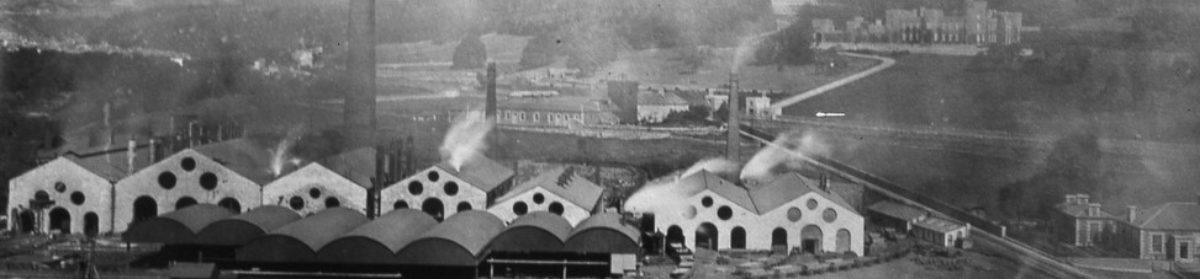
He later found injustice closer at home, the Dowlais Works strike of 1911, and he used it to emphasise the need for class unity in face of the industrial unrest sweeping Britain. Dowlais was notorious for its anti-unionism and shocking work conditions. Keir Hardie saw to it that Dowlais got no government contracts until the strikers were reinstated but the moulders were not taken back. He seized the opportunity provided by the Royal Visit to Dowlais in 1912 to write an Open Letter to the King and ensure that the moulders were reinstated in their employment. Nothing could be allowed to upset a Royal Visit.
‘The barber’s shop in which I worked was down by the Fountain, where Keir Hardie made some of his best speeches …… When I was thirteen or fourteen I joined the Independent Labour Party and Hardie became the first Socialist candidate, and I remember that he used to share the constituency of Aberdare and Merthyr with D.A. Thomas, who later became Lord Rhondda’.
Arthur L. Horner, Merthyr as I Knew it
21 years ago:- ‘It was tenaciously upheld by the public authorities, here and elsewhere, that it was an offence against laws of nature and ruinous to the State for public authorities to provide food for starving children, or independent aid for the aged poor. Even safety regulations in mines and factories were taboo. They interfered with the ‘freedom of the individual’. As for such proposals as an eight-hour day, a minimum wage, the right to work, and municipal houses, any serious mention of such classed a man as a fool’.
Keir Hardie’s , ‘Sunshine of Socialism Speech’ , 11 April 1914
He campaigned for such extreme and radical issues as home rule for Wales, old age pensions, votes for women, the nationalism of basic industries and the abolition of the House of Lords. The Merthyr Express of August 1907 reported that Keir Hardie had gone to America for his health. During a lecture he delivered on Socialism in Winnipeg, not only did someone run off with his hat but his vest and tobacco pouch also disappeared!
Although he shone on the public platform, it has been said that he was no politician as compromise was not in his nature. He preached that poverty was not inevitable but sprang from man-made conditions. Hardie declared that what was bad in the social system was not to be endured but abolished. However, he did enjoy some entertaining moments in Merthyr Tydfil. His 1910 election success was celebrated by a dance and reception at Cyfarthfa Castle at which he sang.
‘The man and his gospel were indivisible”. His simple heroism made our party and our world’.
Bruce Glasier

To be continued….