From the Merthyr Telegraph 140 years ago today….

In Association with the Merthyr Tydfil & District Historical Society
From the Merthyr Telegraph 140 years ago today….
John Simkin’s article about Richard Trevithick continued from the previous post…
Trevithick was now employed by Christopher Blackett, who owned the Wylam Colliery in Northumberland. A five-mile wooden wagonway had been built in 1748 to take the coal from Wylam to the River Tyne. Blackett wanted a locomotive that would replace the use of horse-drawn coal wagons. The Wylam locomotive was built but weighing five tons, it was too heavy for Blackett’s wooden wagonway.
Trevithick returned to Cornwall and after further experiments developed a new locomotive he called Catch Me Who Can. In the summer of 1808 Trevithick erected a circular railway in Euston Square and during the months of July and August people could ride on his locomotive on the payment of one shilling. Trevithick had plenty of volunteers for his locomotive that reached speeds of 12 mph (19 kph) but once again the rails broke and he was forced to bring the experiment to an end.

Without financial backing, Richard Trevithick had to abandon his plans to develop a steam locomotive. Trevithick now found work with a company who paid him to develop a steam dredger to lift waste from the bottom of the Thames. He was paid by results, receiving sixpence for every ton lifted from the river.
Trevithick found it difficult to make money from his steam dredger and in 1816 he accepted an offer to work as an engineer in a silver mine in Peru. After some early difficulties, Trevithick’s steam-engines were very successful and he was able to use his profits to acquire his own silver mines. However, in 1826 war broke out and Trevithick was forced to flee and leave behind his steam-engines and silver mines. After a unsuccessful spell in Costa Rica, Trevithick moved to Colombia, where he met Robert Stephenson, who was building a railway in that country. Stephenson generously gave Trevithick the money to pay for his journey back to England.
Although inventors such as George Stephenson argued that Trevithick’s early experiments were vital to the development of locomotives, in February 1828, the House of Commons rejected a petition suggesting that he should receive a government pension. Trevithick continued to experiment with new ideas. This included the propulsion of steamboats by means of a spiral wheel at the stern, an improved marine boiler, a new recoil gun-carriage and apparatus for heating apartments. Another scheme was the building of a 1,000 feet cast-iron column to commemorate the 1832 Reform Act.
All these schemes failed to receive financial support and Richard Trevithick died in extreme poverty at the Bull Inn, Dartford, on 22nd April, 1833. As he left no money for his burial, he faced the prospect of a pauper’s funeral. However, when a group of local factory workers heard the news, they raised enough money to provide a decent funeral and he was buried in Dartford churchyard.
To read more of John Simkin’s excellent essays, please visit:
http://spartacus-educational.com
courtesy of John Simkin
 Richard Trevithick, was born in Illogan, Cornwall, in 1771. Richard was educated at Camborne School but he was more interested in sport than academic learning. Trevithick was six feet two inches high and was known as the Cornish giant. He was very strong lad and by the age of eighteen he could throw sledge hammers over the tops of engine houses and write his name on a beam six feet from the floor with half a hundredweight hanging from his thumb. Trevithick also had the reputation of being one of the best wrestlers in Cornwall.
Trevithick went to work with his father at Wheal Treasury mine and soon revealed an aptitude for engineering. After making improvements to the Bull Steam Engine, Trevithick was promoted to engineer of the Ding Dong mine at Penzance. While at the Ding Dong mine he developed a successful high-pressure engine that was soon in great demand in Cornwall and South Wales for raising the ore and refuse from mines.
Trevithick also began experimenting with the idea of producing a steam locomotive. At first he concentrating on making a miniature locomotive and by 1796 had produced one that worked. The boiler and engine were in one piece; hot water was put into the boiler and a redhot iron was inserted into a tube underneath; thus causing steam to be raised and the engine set in motion.
Richard Trevithick now attempted to produce a much larger steam road locomotive and on Christmas Eve, 1801, it used it to take seven friends on a short journey. The locomotive’s principle features were a cylindrical horizontal boiler and a single horizontal cylinder let into it. The piston, propelled back and forth in the cylinder by pressure of steam, was linked by piston rod and connecting rod to a crankshaft bearing a large flywheel. Trevithick’s locomotive became known as the Puffing Devil but it could only go on short journeys as he was unable to find a way of keeping up the steam for any length of time.

Despite these early problems, Trevithick travelled to London where he showed several leading scientists, including Humphrey Davy, what he had invented. James Watt had been considering using this method to power a locomotive but had rejected the idea as too risky. Watt argued that the use of steam at high temperature, would result in dangerous explosions. Trevithick was later to accuse Watt and his partner, Matthew Boulton, of using their influence to persuade Parliament to pass a bill banning his experiments with steam locomotives.
In 1803 a company called Vivian & West, agreed to finance Trevithick’s experiments. Richard Trevithick exhibited his new locomotive in London. However, after a couple of days the locomotive encountered serious problems that prevented it pulling a carriage. Vivian & West were disappointed with Trevithick’s lack of practical success and they withdrew from the project.
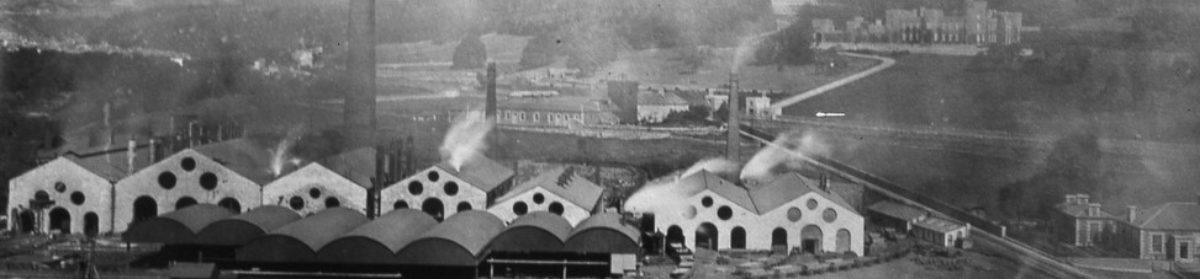
Richard Trevithick soon found another sponsor in Samuel Homfray, the owner of the Penydarren Ironworks in Merthyr Tydfil.

In February 1804, Trevithick produced the world’s first steam engine to run successfully on rails. The locomotive, with its single vertical cylinder, 8 foot flywheel and long piston-rod, managed to haul ten tons of iron, seventy passengers and five wagons from the ironworks at Penydarren to the Merthyr-Cardiff Canal. During the nine mile journey the Penydarren locomotive reached speeds of nearly five miles an hour. Trevithick’s locomotive employed the very important principle of turning the exhaust steam up the chimney, so producing a draft which drew the hot gases from the fire more powerfully through the boiler.

Trevithick’s Penydarren locomotive only made three journeys. Each time the seven-ton steam engine broke the cast iron rails. Samuel Homfray came to the conclusion that Trevithick’s invention was unlikely to reduce his transport costs and so he decided to abandon the project.
To be continued…..
To read more of John Simkin’s excellent essays, please visit:
http://spartacus-educational.com

***Many thanks to Mary Owen for pointing out that the David Francis who is the proprietor of the business in this advert is none other than the father of J O Francis, the great Merthyr playwright, who has featured previously on this blog (http://www.merthyr-history.com/?p=101).
The following list of grocery prices appeared in the Monmouthshire Merlin 172 years ago today (6 June 1846).
Merthyr Market –
Beef, 6d. to 7d. per lb
Mutton, 6½d. to 7d.
Veal, 6d. to 7d.
Lamb, 7d. to 7½d.
Pork, 6d. to 6½d.
Bacon, 6d. to 8d.
Butter, 1s. to 1s. 1d.
Salt, 10d. to 11d.
Skim cheese, 6d. to 7½d.
Ducks, 2s. to 2s. 6d. each
Fowls, 1s. 3d. to 1s. 9d.
Cabbages, 1 ½d. to 3d.
Potatoes, from 6lb. to 8lb. for 6d.
New potatoes, 4d. to 6d. per lb.
Cucumbers, 3d. to 1s. each.
A very fine sample of the last named article was produced for sale by Mr. Hoare of this town, and being just gathered from the frames, they had a beautiful appearance, many of them measuring nearly two feet in length.
Prices at the railway station –
Hay, from £3. 10s. to £4. 10s. per ton
Straw, 2d. per boulting of 7lb., or 100 of ditto for 14s.
Potatoes, from 6s. 8d. to 7s. 6d. per cwt.
From the South Wales Daily News 140 years ago today….

Merthyr has last so many of its important buildings and landmarks in the name of ‘progress’. In a new regular feature, I hope to highlight some of the marvellous places that have disappeared into the ether.
We start with Treharris Public Hall. The following article is taken from the marvellous website http://www.treharrisdistrict.co.uk, and is transcribed here with the kind permission of the webmaster, Paul Corkrey.
Treharris Public Hall
 During 1891, the growing population of Treharris and its districts, meant there was a growing need for a large public hall to be built, to benefit the people. The cost of the project was the main concern and it was decided to hold concerts to raise funds and shares were to be sold to enable it to be a reality.
One such concert took place in August 1891. A huge marquee capable of seating an immense number of persons was obtained and erected near Bargoed House. Through the kindness of Deep Navigation Colliery manager, Mr Stewart, the marquee was illuminated most effectively with electric light. Mr Alan Wyn conducted the Treharris Choral Union, in an excellent performance of Haydn’s “Creation”, a large crowd attended and good funds were secured to get the project moving.
On 3 October 1891, The Merthyr Express reported that practical steps had been made towards having a public hall built in Treharris. A meeting had been held In Perrott Street, at the Tabernacle Vestry, the colliery manager (Mr Stewart) presided, with all classes of people represented. The meeting decided to canvas for shares and a large number have been taken. Mr W Cuthbert Thomas was appointed secretary. It was proposed to erect the new public hall on the square, at a cost of about £2,000.
 A further meeting took place three weeks later and a committee was appointed to deal with the site and further matters.
The Merthyr Express, November 21 1891 further reported that to show interest, the Colliery Company, wanted to take an interest in the welfare of their workmen, and promised to give £50 a year for 5 years, towards the hall, about to be built. This is in addition to subscribing towards 250 shares in the hall company and letting the ground, which is in the very centre of the village and is most valuable, at the nominal rent of 5 shillings per annum.
Two concerts were held in October 1892, to raise further monies for the public hall, the first was presided over by Mr Stewart the colliery manager, whilst the second was under the presidency of the Rev D Phillips. They were both held at the Tabernacle Chapel and both raised goodly sums.
May 1893, was an exciting time for the District and the huge building constructed on the square was now completed and ready to be opened…the Merthyr Express reported “that the directors of the Public Hall Company should be congratulated on having secured a handsome and commodious building, in return for their outlay. The formal opening is planned for Whit Monday and tickets for admission are keenly sought.”
A public procession was arranged with Brass bands, it started at 1pm prompt and many hundreds lined the streets and joined the procession.
Other reports suggest the final cost of the Public Hall was around £3,300, but it included a Library, committee rooms and reading rooms. The library had over 1400 books, some in Welsh, it was financially supported by contributions from miners wages.
The Miners Workmens Hall served the community for almost 100 years. It was a community building and was used for great events, with huge crowds attending. It was a Theatre and became known as the “Palace”, a popular cinema for many years. It later fell into disrepair and was used as a bingo hall, snooker club and even as an indoor market (for one week).
The building was a typical Workmen’s’ Hall design with two shops at its base, either side of the entrance and facing the square. In 1920 one shop unit was a grocery store and the other housed a branch of Barclays Bank.

By 1937 it was the Palace Theatre, and had a 28 feet wide proscenium and a 20 feet deep stage. There were three dressing rooms. At that time the Palace Theatre was equipped with a Klang-Tobis sound sytem. By 1954, an RCA sound system had been fitted. By 1963, Cinema scope had been installed, with a screen within the original 28 feet wide proscenium. There were now four dressing rooms. The Palace Cinema was still open in 1966, but had closed by 1980.
The demolition of the Palace Cinema commenced on the 25th of January 2000. The site has been acquired by the Merthyr Tydfil Housing Association who are proposing to construct flats on the site. That was later discounted a green area was put there before further redevelopment in 2013.
During 1996, there were plans to try to save the building, now under private ownership, many of the villagers did not want to lose the historic building. Unfortunately, it was not to be and by 2000 the building was totally demolished, a sad end to the Hall, a landmark building, which could have been preserved for future generations.

As today is Whitsun Monday, I thought it would be interesting to see how Merthyr celebrated Whitsun in time gone by. Here is an article about the Whitsun holiday 145 years ago transcribed from the edition of South Wales Daily News of 4 June 1873.
WHITSUN HOLIDAYS IN MERTHYR
The town of Merthyr presented quite a gay and holiday appearance on Monday. The streets were lined with people, all bent on pleasure, and wearing thoroughly holiday aspect. The Brecon and Merthyr and Great Western Railway Companies ran special trains, and at Dolygaer there was a picnic, where amusements of all kinds were provided.
Yesterday “all the world and his wife” went to Caerphilly to hear that now world-renowned Welsh choir, accompanied by that only less celebrated Cyfarthfa Band. It is to be regretted that the weather was so unfavourable as the threatening state of the sky in the morning had the effect of deterring many would-be visitors to the delightful old castle and grounds. But in spite of all this, the excursion trains on the Great Western were crowded. Every facility had been given of the most satisfactory arrangements made for a most enjoyable excursion.
There had been originally some difficulty with respect to the young people of Merthyr having a day’s holiday at all, but the tradesmen most generously gave a holiday. This must be looked upon as most handsome conduct, for in many instances the concession was made at a great sacrifice and personal inconvenience. It seems that in the first place there was a movement on foot for closing generally on Monday, being a bank holiday, but many of the tradespeople objected, and it was suggested that Tuesday would be more convenient. However, one of the principal firms in the town opposed this for business reasons, and there seemed a fair chance of there being no holiday at all. The firm was perfectly willing to have granted the Monday as a public holiday, but felt that considerable inconvenience would arise from closing on Tuesday, particularly as no previous notice had been given.
The representatives of the two daily papers received numerous complaints from all classes of shop-assistants, pointing out the hardships under which they were labouring – that while many towns were giving two days holiday and all the rest one – it seemed excessively unfair that in Merthyr there should be no holiday at all. Knowing the generosity of the Merthyr tradesmen generally on such points, the representatives of both the papers waited on the firm in question and explained the complaints which they had received. On the matter being placed before them in a true light, the heads of the firm at once, in the most handsome manner, signified their willingness to consider the point, although at great personal inconvenience. Upon this being made known to the rest of the employers, a general holiday was declared, and in the afternoon bills appeared in all the windows, “This establishment will be closed to-morrow, Whit-Tuesday.”
The movement was taken up by the leading firm of grocers, which resulted in its being followed by the ironmongers, stationers, and others, so that yesterday was a holiday in Merthyr, and although many did not, in consequence of the unfavourable weather, take advantage of the opportunity offered, there were many hundreds who did, and in fact the streets were as noticeable yesterday for their emptiness as they were on Monday for their crowds. But the people had a holiday, and it is to be hoped that they enjoyed themselves thoroughly.
We continue our regular look at Merthyr’s chapels with Nazareth Welsh Calvinistic Methodist Chapel in Troedyrhiw.

Sometime during the middle years of the 1800’s, several members of Pontmorlais Chapel decided to start a Sunday School in Troedyrhiw.
The Sunday School was firstly held at the Harp Inn until these premises were given over to the Welsh Independent congregation. The Sunday School then moved to a house in Wyndham Street and finally to the long room of the Heath Conservative Club.
The local Methodists, however, had to travel to Graig Chapel in Abercanaid to worship, so it was decided to build a chapel in Troedyrhiw. Nazareth was built in 1858, the architect being Rev Evan Harris, minister of Pontmorlais Chapel, and the builder was Mr Rees Powell. At first, services were conducted by deacons from Pontmorlais Chapel, but by 1874 membership had grown sufficiently to warrant calling their own minister, and Mr D G Jones was appointed Nazareth’s first minister.
Major renovations were carried out in 1897 to a design by Dr Aaron Davies which gave the chapel its current appearance. The vestry was also built at this time. Further renovations were carried out in 1926 at a cost of £1,411.1s.7d.
The 1904 Religious Revival affected the fortunes of the chapel with dozens of people joining the congregation. By 1917 the chapel had 162 members, with 238 attending the Sunday School which had 27 teachers and 2 superintendents. By the 1960’s however, the congregation and Sunday School attendance had declined drastically, with the children’s Sunday School eventually closing in 1977, and the chapel closing in 2000.
From the Weekly Mail 110 years ago today…
