by Peter Rogers
James ‘Jem’ Mace (8 April 1831 – 30 November 1910) was an English boxing champion, primarily during the bare-knuckle era.
 He was born at Beeston, Norfolk, and although he was nicknamed ‘The Gypsy’, he denied Romany ethnicity in his autobiography. Fighting in England, at the height of his career between 1860 and 1866, he won the English Welterweight, Heavyweight and Middleweight championships, and was considered one of the most scientific boxers of his era.
Most impressively he held the World Heavyweight Championship from 1870 to 1871 while fighting in the United States.
The following article is transcribed from the Merthyr Telegraph of 11 June 1864.
JEM MACE’S VISIT
LOSS OF A VALUABLE HORSE
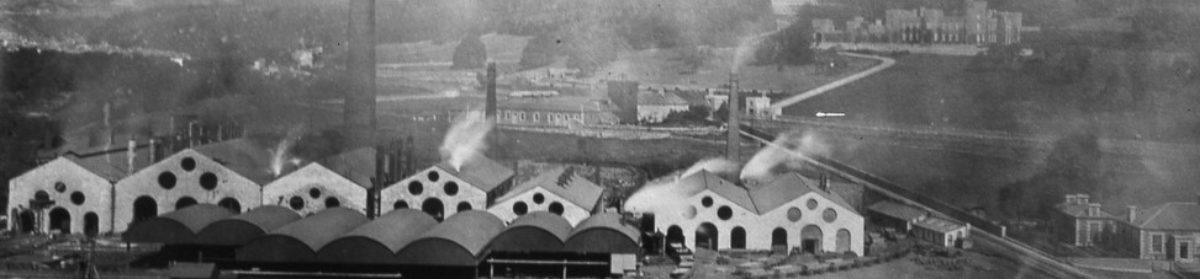
The members of the prize ring – if they happen to be at all distinguished – can certainly make no complaint that their peculiar merits are overlooked, even in quarters by no means vulgar or uninfluential. We had an instance of this last week, when Jem Mace and some others of the bruising fraternity, paid us a flying visit, and delighted the roughs by an exhibition of fistic prowess. Jem, however, bad higher patrons than the boisterous admirers who crowded to see himself and “The Wolf” set-to at the circus, and one gentleman carried his enthusiasm for the champion so far as to invite him to his residence*, order his band out for his entertainment, and we need not add, treated him there with the fullest hospitality. It is with regret that we have to relate that his appreciation of the manly qualities of Jem, should have cost the gentleman in question rather dearly, as he lost in consequence a fine carriage horse, worth some 70 or 80 guineas.
After having entertained his guest, and given honour where he deemed honour to be due – when the hour of Jem’s departure arrived Mr Crawshay, with great consideration, ordered his coachman to drive the pugilistic hero to the circus, where he was to perform. The well appointed vehicle was accordingly got ready, one of the horses harnessed in, and off they went at a truly slapping pace. In due time the champion was brought to his destination, and after a decent interval, the coachman set out to return.
There are malicious stories abroad that he must have offered sacrifice to one of the divinities, as he picked up a ‘navvy’ or labourer on the road, to whom he transferred the reins – and on whose knees – evidently in playful mood, he rather nonchalantly took his seat. The new Jehu was however not very skilful at driving, and soon got off the road upon a tramway, where the wheels of the trap somehow became entangled in the rails, causing the spirited animal suddenly to plunge and grow restive.
The first result of this was to fling the coachman from his perch headlong on the road, but by the good fortune which often attends somnambulists he suffered no serious injury. Not so with the poor horse however -he at once started forth at full speed, but came in contact with a wall, against which he broke the trap, and in the collision received such injuries that to be killed on the spot.
*Cyfarthfa Castle