Many thanks to Mike Donovan who provided the following article that appeared in the Merthyr Express 81 years ago today…

In Association with the Merthyr Tydfil & District Historical Society
Many thanks to Mike Donovan who provided the following article that appeared in the Merthyr Express 81 years ago today…
We continue our series on Merthyr’s chapels with a look at one of the oldest causes in the Borough.
Hen Dy Cwrdd is the oldest chapel in the borough of Merthyr Tydfil. The chapel was originally built in 1747 when the Unitarians split from the congregation at Cwm-y-Glo and built their own small chapel at Cefn Coed.
This original building was built in a clearing in the wood between the Taf Fechan and the Taf Fawr rivers. It was a small barn-like structure, similar to the chapel at Cwm-y-Glo, with very small windows and a thatched roof. Indeed, the thatched roof wasn’t replaced by tiles until 1792.

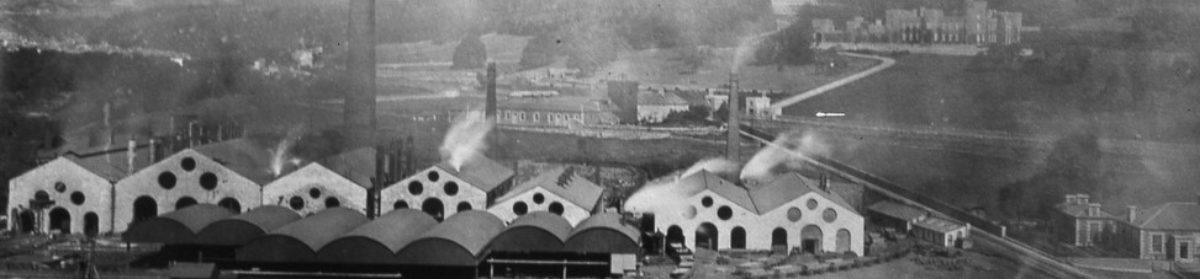
In 1765, Anthony Bacon built the first furnace at Cyfarthfa Iron Works and the wood was stripped of trees, and a small village began to grow in the clearing which became Cefn Coed y Cymer. Just over a century later, amid the rapid population explosion, a new chapel was built to cater for the ever growing congregation. The architect was John Lewis of Vaynor. £434 was collected via subscriptions by the members of the chapel and the new building opened in December 1853.
This chapel was very badly damaged in a storm and major repairs were necessary. The opportunity was taken to carry out various alterations and the chapel was virtually rebuilt in 1894/5 at a cost of £750, and so the present building took shape.
Hen Dy Cwrdd is considered to be an outstanding building and in 1985 it was listed by CADW Grade II, as being of Special Architectural and Historic Interest, and they made a considerable contribution to extensive refurbishment work, and in 1995-7 the chapel was re-erected using the masonry and fittings of the 1895 structure and is an almost exact replica of that building.
The reopening in 1997 coincided with the celebration of the chapel’s 250th Anniversary.

The following letter appeared in the Merthyr Telegraph 150 years ago today….

by Carl Llewellyn
Our Welsh laws refer to the “Tair Helfa Cyfarthfa” or the “Three Barking Hunts. The hunts were so called because the animals could either run fast, climb trees, or find safety in underground burrows, the hunter would bait his prey then send his dogs who would signal the position of the baited prey by barking.
Cyfarthfa has two meanings, either the ‘barking place’ as outlined above, or it could have been so called from the ‘echoes’ the rocky escarpment face of the Cyfarthfa Rocks made. We have been unable so far to trace any reference to the place name Cyfarthfa Rocks before the arrival of Anthony Bacon around 1765.
Another theory of the meaning Cyfarthfa was given by an old inhabitant of the Cyfarthfa district over 200 years ago. He stated that on the site of the Cyfarthfa furnaces there was formally a quarry with a fine echo, if a dog barked in the area it was repeated so strongly that one fancied that a large number of dogs had congregated in the locality.
The etymology of Cyfarthfa, according to Mr. Thomas Stephens, Merthyr poet, bard and chemist is the place of barking dogs – pretty well indicating the character of the place before the days of ironmaking. Game and vermin abounded, and the dogs held high revel there in the dense thickets and impenetrable copses.
Note that cyfar means ‘arable land’; cyfarth means ‘to bark’ or ‘to cough’ as a verb and ‘a barking’ as a noun; cyfarthwr means a ‘barker’ or ‘shouter’; cyfarch means ‘greeting’ or ‘request’ and cyfarchfa means ‘a hailing-place’.
I leave it to you to draw your own conclusions.

In the 1800’s, before the advent of ‘State’ Schools, a number of small schools were set up in Merthyr by individuals. Below are adverts for a few of them……


From the Merthyr Telegraph 150 years ago today…..

The series on Merthyr’s great boxers continues with arguably Merthyr’s greatest champion – Howard Winstone.

Howard Winstone was born on 15 April 1939 in Penydarren, the second of four children. He attended Penydarren and Gellifaelog Junior Schools and, encouraged by his father, showed early enthusiasm and aptitude for following Merthyr’s rich boxing tradition. He started boxing aged eleven, and in 1954 joined the gym opened by the former welterweight champion Eddie Thomas, a short walk from the Winstone family home. He won three Welsh schools titles, and one British title.
After leaving school he worked at a Lines Brothers Toy Factory where on 19 May 1956 his right hand was crushed by a power press, leaving him without the tips of three fingers. As a result of the accident he lost much of the punching power in his right hand and so had to change his style developing one of the fastest left hand jabs in the sport. Far from hampering Winstone’s career, in 1958 he won the Amateur Boxing Association’s featherweight championship, a gold medal (Wales’ only gold) at the British Empire and Commonwealth Games in Cardiff, and the Welsh Sports Personality of the Year Award – an honour he would receive on two further occasions, in 1963 and 1967.
Winstone won 83 of his 86 amateur bouts and hoped to box at the 1960 Olympics, but instead turned professional under Eddie Thomas’s management. He made his professional debut in February 1959 at Wembley Stadium, London, when he beat Billy Graydon on points over six rounds. He then proceeded to win his first 24 professional fights, at which point he was considered ready for a shot at the British featherweight title, and in May 1961 he fought Terry Spinks the holder of the title, and the 1956 Olympic gold medallist at the Empire Pool, Wembley. He out-boxed Spinks, forcing him to retire after ten rounds, and so claimed the British title.
He continued to win all his contests, and in April 1962 he defended his title against Derry Treanor, at the Empire Pool, winning by a technical knockout in the fourteenth round. The next month he defended his title against Harry Carroll in Cardiff forcing him to retire after six rounds.
His first defeat came in November 1962 – his 35th fight after 34 straight wins. He was beaten by Leroy Jeffery, an American featherweight, by a technical knockout in the second round after having been knocked down three times. In January 1963, he defended his British title for the third time, defeating Johnny Morrisey by a technical knockout in the eleventh round, and won the European title the same year, defending the title in May 1964, January 1965, and March, September and December 1966.
Winstone now set his sights on becoming the World Champion. In September 1965 he challenged for the WBA and WBC world featherweight titles held by the Mexican left-hander, Vicente Saldivar. The fight was held at Earls Court Arena, London and Saldivar won on points over fifteen rounds.

He challenged Saldivar again in June and October 1967, but was defeated on both occasions. Following the defence of his title in October 1967, Saldivar announced his retirement leaving his world title vacant. In January 1968, Winstone fought the Japanese, Mitsunori Seki for the vacant WBC world featherweight title at the Royal Albert Hall. Winstone won the contest and finally gained the world title.

In July 1968 he defended his newly won world title against the Cuban, Jose Legra, at Porthcawl, Wales. Although Winstone had beaten Legra twice before, he was knocked down twice in the first round. He continued fighting, but unfortunately he sustained a badly swollen left eye, which caused the bout to be stopped in the fifth round. Having lost the world title in his first defence, Winstone decided to retire at the age of 29.
He continued living in Merthyr Tydfil after retirement. In 1968 he was awarded the MBE. Later, he was made a Freeman of Merthyr Tydfil due to his boxing accomplishments. He died on 30 September 2000, aged 61.
In 2001, one year after his death, a bronze statue of Winstone by Welsh sculptor David Petersen was unveiled in St. Tydfil’s Square, and in 2005, he beat many other local luminaries to be named “Greatest Citizen of Merthyr Tydfil”, in a public vote competition run by Cyfarthfa Castle and Museum as part of the centenary celebrations to mark Merthyr’s incorporation as a county borough in 1905.

by Ken Brewer
I was born in 1937, so my memories begin during the War when I was about 3 years old, and I started school. I clearly remember carrying a cardboard box that contained my gas-mask, and during school lessons the bell would go, and we were all ushered into the yard and instructed to lie lay on our stomachs in case there was an air raid. The classes in those days numbered about 40 pupils due to the influx of evacuees, so the teachers were very busy.

Abercanaid itself was very self-supporting, meeting the needs of the people who lived there. There were two bakers, a butcher and three grocery shops, plus a number of small corner shops. There was also an official ‘layer-out’ for the village, and when we saw the elderly lady in question hurrying along with her little bag, you knew someone had passed away.
What went on in the village, mostly centred around the church and the chapels. St Peter’s was the church, and the chapels were: Sion Independent Chapel, Deml Baptist Chapel and ‘my chapel’ Graig Methodist Chapel. The members of these chapels and church would regularly stage concerts and amateur dramatic performances to entertain the villagers. For the children there was ‘Band of Hope’ and ‘Rechabites’ so we rarely left the village. As children, we didn’t have chance of misbehaving – everyone knew everyone so any misdemeanours would soon reach our parents.
As in most places, the pubs outnumbered the chapels. In Abercanaid we had The Colliers Arms, The Richards Arms, The Glamorgan Arms, The Llwyn-yr-Eos Inn, the Duffryn Arms (also known as the Teapot), and in Upper Abercanaid – The White Hart.

We also had our own Police Station, Library, football ground – The Ramblers, and a Social Centre on the Canal Bank which was built by the villagers themselves. Abercanaid was also served by two Railway Stations – Pentrebach Station on the Merthyr to Cardiff line, and Abercanaid Station on the old Rhymney Line.

If anyone wanted to know where someone lived, you could tell that person, not just the street, but the exact house. Neighbours were so important, and everyone was ready to help in an emergency. During the war everything was in short supply, floor coverings consisted of home-made rag mats or coconut matting. My family were considered posh because we had some carpet mats! The items were actually hand-me-downs; my mother had worked for Price Brothers, the bakers and wholesale merchants in Merthyr, for over 25 years, so when their carpets were beginning to wear, they replaced them, and the old ones were given to my mother. Many times I came home from school to find the carpets missing from the front room – when I asked about them I was always told that “Mrs So-and-so has visitors so she has borrowed the carpets”.
Another incident I recall occurred one Sunday lunchtime. The meat was cooked, and the vegetables were ready, and my grandmother (who lived with us) was making the gravy. There was a knock at the door, and a close neighbour stood there in tears, distraught because her brother and three children had turned up from Cardiff and she didn’t have enough meat to give them for lunch. The result was that she had our meat and we managed on vegetables and gravy! I wonder if such a thing would happen today?
Things were undoubtedly hard at that time in Abercanaid, as elsewhere, but I’m sure the wonderful community in our village helped us to cope a lot better with the deprivations and stresses of the time.

If you want to keep up to date with what is happening on this blog, you can now subscribe.
Just follow the link on the right hand side of the screen, and add your
e-mail address.
You will receive regular messages regarding updates to the site.
