Grade II* Listed buildings

Fifty years ago today a number of Merthyr’s buildings were given a Grade II* listing by CADW. Below is a list of all the Grade II* listed buildings in Merthyr.

Name

Location
Grid Ref.
Geo-coordinates
Date Listed

Notes

Cefn Railway Viaduct

Cyfarthfa
SO0304907597
51°45′31″N 3°24′22″W
7 Nov 1951 Viaduct A dual-listed (see below) structure built in 1866 to carry the Brecon and Merthyr Railway over the Taf Fawr. It was designed by Henry Conybeare and Alexander Sutherland at a cost of £25,000.  The fifteen arches of the 36.6 m (120 ft) high viaduct follow a gentle curve of 235 m (771 ft).
Cefn Railway Viaduct Vaynor
SO0304007795
51°45′38″N 3°24′23″W

7 Nov 1951

Viaduct A dual-listed (see above) structure built in 1866 to carry the Brecon and Merthyr Railway over the Taf Fawr. The viaduct has tall, slender limestone piers, a material originally intended to be used throughout, however, the arches were completed using a contrasting red brick due to a trade union strike by stonemasons.

Pont-y-Cafnau

Park
SO0376507138
51°45′17″N 3°23′44″W

22 August 1975

Bridge An ironwork bridge spanning the River Taff constructed in 1793. The name, meaning “bridge of troughs”, comes from its unusual three tier design of a tramroad between two watercourses, one beneath the bridge deck and the other on an upper wooden structure which is no longer present. Pont-y-Cafnau is also designated as a scheduled monument.

Town Hall

Town
SO0489306371
51°44′51″N 3°22′40″W

22 August 1975

Town hall A Large municipal building designed by Edwin Arthur Johnson in the early Renaissance style and built 1896–98 by Harry Gibbon. Built of red Cattybrook brick with orange terracotta dressings on a base of Pennant Sandstone. Following restoration work it became the Red House, an arts centre, in 2014.

Pontsarn Railway Viaduct

Pant
SO0454309921
51°46′47″N 3°23′06″W

22 August 1975

Viaduct A dual-listed (see below) structure built in 1866 to carry the Brecon and Merthyr Railway over the Taf Fechan. It was designed by Henry Conybeare and Alexander Sutherland. The viaduct is 28 m (92 ft) high and 128 m (420 ft) long.

Pontsarn Railway Viaduct

Vaynor
SO0453409918
51°46′47″N 3°23′07″W

22 August 1975

Viaduct A dual-listed (see above) structure built in 1866 to carry the Brecon and Merthyr Railway over the Taf Fechan. It is constructed of limestone and has tall, slender piers with segmental arches. The Cadw description has seven arches, Newman has eight.

Former Guest Memorial Library

Dowlais
SO0699107880
51°45′43″N 3°20′57″W

22 August 1975

Library A two-storey cruciform building of 1855–1863 built as a memorial to John Josiah Guest of the Dowlais Ironworks. The Dowlais workmen intended for the library and reading room to be funded by subscription, but rising costs led to the building being completed by the company at a total cost of £7,000.

Dowlais Works Blast Engine House

Dowlais
SO0690907739
51°45′38″N 3°21′01″W

22 August 1975

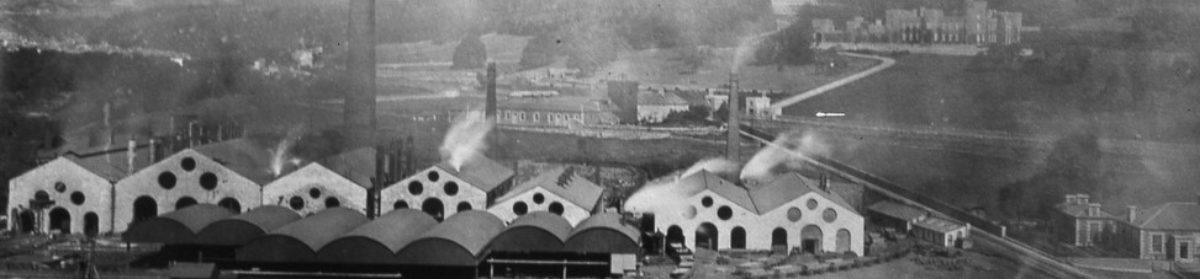
Engine house A 54 m (177 ft) long and 15 m (49 ft) high red brick industrial building constructed in 1905–07 to house three blowing engines as part of the Dowlais Ironworks. The works went into decline in the 1930s and in the late 20th century the building was being used by a chocolate company.

Quakers Yard Railway Viaduct

Treharris
ST0885396473
51°39′35″N 3°19′09″W

1 April 1988

Viaduct A tall stone-built viaduct with six arches that spans both the River Taff and the Merthyr Tramroad. It was constructed 1840–41 by Isambard Kingdom Brunel as part of the Taff Vale Railway and widened by 1861.

Ynysfach Engine House

Cyfarthfa
SO0452406096
51°44′44″N 3°23′04″W

5 Nov 1995

Engine house Built in 1836 as part of the Ynysfach Ironworks, it originally housed an engine made at the Neath Abbey Ironworks. This four-storey building of blue Pennant Sandstone with white ashlar dressings fell into disuse when the Ynysfach works closed in 1874. In the 1980s It was restored and became a museum until closed by the Leisure Trust.

Greenfield Bridge, Penydarren Tramroad

Treharris
ST0902496544
51°39′37″N 3°19′00″W

20 February 2003

Bridge A single arch Pennant Sandstone structure built to replace an earlier wooden bridge that collapsed in 1815 when a train was passing over it. The semi-circular arch has span of 19.2 m (63 ft) at a height of 8.4 m (28 ft) above the river. It is part of the Merthyr Tramroad scheduled monument.

Victoria Bridge, Penydarren Tramroad

Treharris
ST0942396281
51°39′29″N 3°18′39″W

20 February 2003

Bridge A single high-arch bridge over the River Taff similar in design to the nearby Greenfield bridge. Built in 1815 to replace a wooden bridge of 1800–02 it was originally as part of the Merthyr Tramway but is now a footbridge. It is part of the Merthyr Tramroad scheduled monument.

NOTE
The two viaducts constructed as part of the Brecon and Merthyr Railway both straddle the borders of neighbouring historic communities so have separate designations for each of these locations.

Land Ownership in Merthyr Tydfil – part 2

by Brian Jones

Throughout the Medieval period the number of local farms increased and these Manorial farms improved their productivity whilst the population waxed and waned. The antiquarian, David Merch, studied the 1558 “Morganiae Archaiographia” and identified 14 freehold farms. Manorial Rent Lists became important historical sources and John Griffiths used these records in his detailed work “Historical Farms of Merthyr Tudful” (2012) he identified 120 farms (see map below) twenty five of which were “Charter Land Farms” which were freehold in 1630 suggesting that the aristocracy divested a proportion of their freehold land in order to accrue capital or to curry favour with landed gentry. The freeholders of noble birth had been established for hundreds of year however these were not continuous blood lines. For example, the Earldom of Plymouth title has been established three times, firstly in 1675 by Charles II and by 1765 there had been another different family line as the original title holders did not have children or near relatives required in order to inherit.                                     

Five centuries after Gilbert de Clare claimed freehold ownership of all of the Merthyr land by force, a number of entrepreneurs came into the valley to begin the manufacture of iron. Business people such as Anthony Bacon, William Brownrigg, Isaac Wilkinson, John Guest, Richard Crawshay and the three Homfray brothers jostled to gain leases to build the ironworks: Dowlais (1759), Plymouth (1763), Cyfarthfa (1765) and Penydarren (1784). These works were financed by wealthy individuals and distant investors aware that resources were available to include coal, ironstone, limestone, clay, timber and particularly important, supplies of water.

The rich absentee freeholders owned tracts of local farmland and were anxious to lease their holdings in the knowledge they could increase their income by leasing land for the extraction of minerals to the newcomers rather than from their existing tenant farmer. Two of the largest freeholders were the Earl of Plymouth and Earl Talbot whose forebears had concentrated on rural economies but now they changed their attitude to manufacturing and this opened a new chapter on the ownership of land in their possession. There was a rapid decline in the number of farms and an attendant change from a rural to an urban economy; houses were required for the influx of people to man the ironworks, quarry the limestone and mine the iron ore and coal. People left the land for the minor village which now began to increase in size.

450 years after Gilbert de Clare,7th Earl of Gloucester took possession of the land, later known as Merthyr parish, it is remarkable that three dynasties owned the majority of the freehold of the parish. At the beginning there were no maps to record existing land holdings and therefore landscape features assumed particular importance and the River Taff served as a boundary. Much of the land to the west of the river was owned by Lord Talbot whilst that to the east of the river was owned by the Earl of Plymouth with a portion around the parish church owned by the successors of the Lewis family. The leases for all four ironworks are set out in an authoritative work completed by John Lloyd in his 1906 book “The Early History of the Old South Wales Ironworks 1760 -1840”. This work draws on the extensive collection of leases drawn up by a Brecon firm of solicitors, Messrs Walter and John Powell. The first Cyfarthfa lease of 7th October 1765 with Anthony Bacon and William Brownrigg was for 4000 acres of land below the junction of the Taff Fawr and Taff Fechan, southwards down the valley, to the centre line of Aberdare mountain. The ancestry of William Talbot can be traced back to a Norman family in France, then to Sir Gilbert Talbot (1276-1346) Lord Chamberlain to King Edward III who married into the Welsh line of Prince Rhys Mechyll. William Talbot was created Earl Talbot of Hensol in 1761 and his legacy had spanned centuries intertwining noble ancestry, legal expertise and political service. His estates were extensive and he had links to Llancaiach Fawr in Nelson and Dynevor (Dinefwr) in Carmarthenshire. The family name is still linked to the premier noble seat of the Earl of Shrewsbury where the present Earl is also titled as Baron Talbot of Hensol.

The Cyfarthfa lease of 29 August 1765 with William Talbot was also joined with Michael Richards of Cardiff. There is some uncertainty as to this latter freeholder although there appears to be a connection with the Llancaiach estate and Rhyd-y-Car farm. It is likely that some time between 1685 and 1729, Jane, one of the two daughters of Colonel Edward Pritchard, sold her half share of the Merthyr estate to a Michael Richards who in a later lease is identified as the freeholder of Rhyd-y-Car farm. The other daughter, Mary, married David Jenkins of Hensol and their daughter married Charles Talbot in 1713. It is likely that the Talbots and Richards were closely connected by the date of the Cyfarthfa lease of 1765 and by then Michael Richards was of some social standing and wealth, living in Cardiff.

The lease for the land to the east of the river was held by the other major freehold interest with the 4th Earl of Plymouth of the 2nd Creation, Other Lewis Windsor Hickman, styled as Lord Windsor, made the Lord Lieutenant of Glamorgan in 1754. This family had combined a few years earlier with a wealthy landed Glamorgan family with firm links to the history of Merthyr Tydfil (Tudful). In 1589 the Lewis family had occupied the Courthouse (Cwrt) at the site of the present Labour Club in the centre of the town, then the location of the small parish village with the church of “The Martyr”. “The Cwrt” was possibly the court of the Welsh prince, Ifor Bach and then passed through his descendants to the Lewis family who left Merthyr and moved to Caerphilly at the time of Elizabeth I where they built a manor house with extensive parkland at the Van. Lewis of the Van became the Sheriff of Glamorgan in 1548 and in time the Glamorgan estates were gifted to the last survivor of the family line, Elizabeth, who married into the Earl of Plymouth line with the 3rd Earl of Plymouth in 1730 and hence the combined wealth of both families came into play.

In summary the ownership of land in Merthyr Tydfil (Tudful) changed from a sole landowner in 1267 with a small number of tenanted farms to increase to  about 120 in 1630. Three quarters of the farms were rented and perhaps 14 to 25 freehold. Most of the freeholds were of relatively small acreage with substantial acreages in the hands of the few families who were descended from  Norman lines. The Llancaiach estates and those of the Earles Plymouth and Talbot, and Richards, figure large in the leases for mineral rights agreed with the 4 local ironwork companies. Then the number of farms reduced and 100 years later the coal era building boom ensued to meet the needs of the new colliery villages. By that time the village became the growing town of Merthyr Tydfil, churches and chapels increased in number and the older churches reinforced their medieval rights as Glebe lands. As the 19th turned into the 20th century the vast majority of properties were leasehold however the Leasehold Reform Act of 1967 enabled leaseholders to acquire freehold interests and that ownership is now the norm.

Merthyr’s Chapels: Hen Dy Cwrdd, Cefn Coed

We continue our series on Merthyr’s chapels with a look at one of the oldest causes in the Borough.

Hen Dy Cwrdd is the oldest chapel in the borough of Merthyr Tydfil. The chapel was originally built in 1747 when the Unitarians split from the congregation at Cwm-y-Glo and built their own small chapel at Cefn Coed.

This original building was built in a clearing in the wood between the Taf Fechan and the Taf Fawr rivers. It was a small barn-like structure, similar to the chapel at Cwm-y-Glo, with very small windows and a thatched roof. Indeed, the thatched roof wasn’t replaced by tiles until 1792.

An artists impression of the original Hen Dy Cwrdd Chapel

In 1765, Anthony Bacon built the first furnace at Cyfarthfa Iron Works and the wood was stripped of trees, and a small village began to grow in the clearing which became Cefn Coed y Cymer. Just over a century later, amid the rapid population explosion, a new chapel was built to cater for the ever growing congregation. The architect was John Lewis of Vaynor. £434 was collected via subscriptions by the members of the chapel and the new building opened in December 1853.

This chapel was very badly damaged in a storm and major repairs were necessary. The opportunity was taken to carry out various alterations and the chapel was virtually rebuilt in 1894/5 at a cost of £750, and so the present building took shape.

Hen Dy Cwrdd is considered to be an outstanding building and in 1985 it was listed by CADW Grade II, as being of Special Architectural and Historic Interest, and they made a considerable contribution to extensive refurbishment work, and in 1995-7 the chapel was re-erected using the masonry and fittings of the 1895 structure and is an almost exact replica of that building.

The reopening in 1997 coincided with the celebration of the chapel’s 250th Anniversary.

Hen Dy Cwrdd Chapel