Grade II* Listed buildings

Fifty years ago today a number of Merthyr’s buildings were given a Grade II* listing by CADW. Below is a list of all the Grade II* listed buildings in Merthyr.

Name

Location
Grid Ref.
Geo-coordinates
Date Listed

Notes

Cefn Railway Viaduct

Cyfarthfa
SO0304907597
51°45′31″N 3°24′22″W
7 Nov 1951 Viaduct A dual-listed (see below) structure built in 1866 to carry the Brecon and Merthyr Railway over the Taf Fawr. It was designed by Henry Conybeare and Alexander Sutherland at a cost of £25,000.  The fifteen arches of the 36.6 m (120 ft) high viaduct follow a gentle curve of 235 m (771 ft).
Cefn Railway Viaduct Vaynor
SO0304007795
51°45′38″N 3°24′23″W

7 Nov 1951

Viaduct A dual-listed (see above) structure built in 1866 to carry the Brecon and Merthyr Railway over the Taf Fawr. The viaduct has tall, slender limestone piers, a material originally intended to be used throughout, however, the arches were completed using a contrasting red brick due to a trade union strike by stonemasons.

Pont-y-Cafnau

Park
SO0376507138
51°45′17″N 3°23′44″W

22 August 1975

Bridge An ironwork bridge spanning the River Taff constructed in 1793. The name, meaning “bridge of troughs”, comes from its unusual three tier design of a tramroad between two watercourses, one beneath the bridge deck and the other on an upper wooden structure which is no longer present. Pont-y-Cafnau is also designated as a scheduled monument.

Town Hall

Town
SO0489306371
51°44′51″N 3°22′40″W

22 August 1975

Town hall A Large municipal building designed by Edwin Arthur Johnson in the early Renaissance style and built 1896–98 by Harry Gibbon. Built of red Cattybrook brick with orange terracotta dressings on a base of Pennant Sandstone. Following restoration work it became the Red House, an arts centre, in 2014.

Pontsarn Railway Viaduct

Pant
SO0454309921
51°46′47″N 3°23′06″W

22 August 1975

Viaduct A dual-listed (see below) structure built in 1866 to carry the Brecon and Merthyr Railway over the Taf Fechan. It was designed by Henry Conybeare and Alexander Sutherland. The viaduct is 28 m (92 ft) high and 128 m (420 ft) long.

Pontsarn Railway Viaduct

Vaynor
SO0453409918
51°46′47″N 3°23′07″W

22 August 1975

Viaduct A dual-listed (see above) structure built in 1866 to carry the Brecon and Merthyr Railway over the Taf Fechan. It is constructed of limestone and has tall, slender piers with segmental arches. The Cadw description has seven arches, Newman has eight.

Former Guest Memorial Library

Dowlais
SO0699107880
51°45′43″N 3°20′57″W

22 August 1975

Library A two-storey cruciform building of 1855–1863 built as a memorial to John Josiah Guest of the Dowlais Ironworks. The Dowlais workmen intended for the library and reading room to be funded by subscription, but rising costs led to the building being completed by the company at a total cost of £7,000.

Dowlais Works Blast Engine House

Dowlais
SO0690907739
51°45′38″N 3°21′01″W

22 August 1975

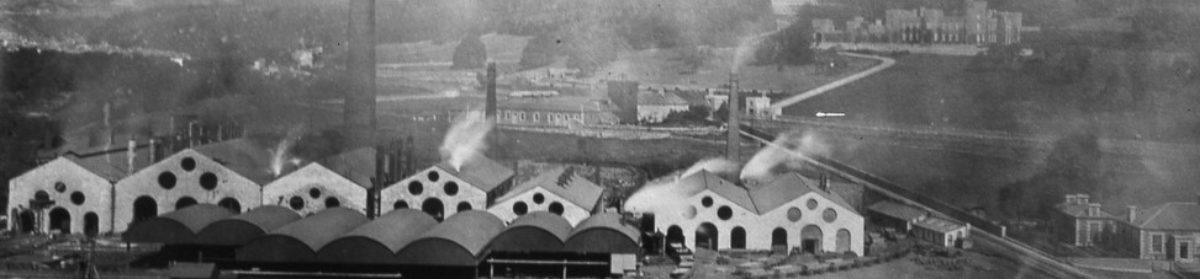
Engine house A 54 m (177 ft) long and 15 m (49 ft) high red brick industrial building constructed in 1905–07 to house three blowing engines as part of the Dowlais Ironworks. The works went into decline in the 1930s and in the late 20th century the building was being used by a chocolate company.

Quakers Yard Railway Viaduct

Treharris
ST0885396473
51°39′35″N 3°19′09″W

1 April 1988

Viaduct A tall stone-built viaduct with six arches that spans both the River Taff and the Merthyr Tramroad. It was constructed 1840–41 by Isambard Kingdom Brunel as part of the Taff Vale Railway and widened by 1861.

Ynysfach Engine House

Cyfarthfa
SO0452406096
51°44′44″N 3°23′04″W

5 Nov 1995

Engine house Built in 1836 as part of the Ynysfach Ironworks, it originally housed an engine made at the Neath Abbey Ironworks. This four-storey building of blue Pennant Sandstone with white ashlar dressings fell into disuse when the Ynysfach works closed in 1874. In the 1980s It was restored and became a museum until closed by the Leisure Trust.

Greenfield Bridge, Penydarren Tramroad

Treharris
ST0902496544
51°39′37″N 3°19′00″W

20 February 2003

Bridge A single arch Pennant Sandstone structure built to replace an earlier wooden bridge that collapsed in 1815 when a train was passing over it. The semi-circular arch has span of 19.2 m (63 ft) at a height of 8.4 m (28 ft) above the river. It is part of the Merthyr Tramroad scheduled monument.

Victoria Bridge, Penydarren Tramroad

Treharris
ST0942396281
51°39′29″N 3°18′39″W

20 February 2003

Bridge A single high-arch bridge over the River Taff similar in design to the nearby Greenfield bridge. Built in 1815 to replace a wooden bridge of 1800–02 it was originally as part of the Merthyr Tramway but is now a footbridge. It is part of the Merthyr Tramroad scheduled monument.

NOTE
The two viaducts constructed as part of the Brecon and Merthyr Railway both straddle the borders of neighbouring historic communities so have separate designations for each of these locations.

The Taff Vale Railway

In 1835, the major industrialists in Merthyr began considering building a railway line from Merthyr to the Bute Docks in Cardiff. To this end, Anthony Hill, owner of the Plymouth Ironworks, contacted Isambard Kingdom Brunel, to estimate the cost of building such a railway – Brunel replied quoting an estimate of £190,649. The industrialists subsequently held a meeting, chaired by Josiah John Guest, at the Castle Inn in Merthyr, to discuss the issue, and decided to request Parliamentary permission to form a company to build the railway. Permission was granted an the company was incorporated the following year.

On 21 June 1836 Royal Assent was given to The Taff Vale Railway Company’s Act, allowing for the creation of the Taff Vale Railway Company. The founding capital of the Company was fixed at £300,000, in £100 share units. The directors were Josiah John Guest, Walter Coffin, Edward Lee, Thomas Guest, Thomas Guppy, Thomas Powell, Christopher James, Thomas Carlisle, Henry Rudhall, William Wait, William Watson, and Peter Maze. Company profits were capped at 7% originally, with a clause allowing for an increase to 9% subject to a reduction in the rates and tolls charged for use of the line.

The Act also capped the speed of the trains on the line to 12 mph (19 km/h), with stiff penalties for any speeding.

Construction of the railway was started in 1836, and the stretch from Cardiff to Navigation House (later named Abercynon) was opened in a formal ceremony on 9 October 1840, with public services starting the next day. The stretch from Abercynon to Merthyr was opened on 12 April 1841. The railway was single-line for its entire length, with passing only possible at or near the stations. It was not until 1857 that it became a double line. Brunel, the chief engineer, had chosen a narrower gauge (4 feet 8.5 inches or 1.435 m) than the 7 foot (2.134 m) gauge he would later choose for his Great Western Railway in order to fit the railway into the narrow space allowed to him by the River Taff valley.

Construction of the main line was relatively straightforward. The line mostly followed the course of the valley, and therefore needed few bridges and no tunnels. Brunel designed an impressive skew stone arch viaduct at Pontypridd, which spanned 110 feet (34 m) over the River Rhondda; the viaduct is still in use today, although it has been supplanted by a second, parallel viaduct. A similar viaduct was built at Quakers Yard.

The TVR’s original station in Merthyr was at Plymouth Street and was opened on 12 April 1841.

The Taff Vale Railway Station at Plymouth Street. Photo courtesy of http://www.alangeorge.co.uk/index.htm

This was joined in 1853 by the High Street station of the Vale of Neath Railway. A short joint line (TVR and GWR) was built to connect the TVR line to the new station in 1877. A year later, in August 1878, the Taff Vale transferred all of its passenger services to the High Street station, and used Plymouth Street as a goods depot instead. High Street station thus became the only passenger station in Merthyr, and was used by a total of six separate companies prior to the 1923 grouping. The TVR also opened stations at Merthyr Vale in 1883 and Pentrebach in 1886.

Merthyr Vale Station. Photo courtesy of http://www.alangeorge.co.uk/index.htm

The main line of the TVR was 24 miles (39 km) long. However, no fewer than 23 branch lines took the full length of track to 124 miles and 42 chains (200.40 km). Many of those branch lines were smaller lines taken over by the TVR – in 1841 a branch line was opened in the Rhondda going as far as Dinas, and a second was opened to Llancaiach Colliery. The Rhondda line would subsequently be extended, and by 1856 it had been extended into two lines – one to Maerdy and the other to Treherbert.

The TVR proved its worth immediately. At its peak, two trains a minute passed through the busiest station, Pontypridd. By 1850, the TVR was carrying 600,000 tons (600,000 metric tons) of coal per annum, and was paying a 6% dividend.

The line was conceived as a goods line, carrying iron and coal. However, it also ran passenger services from the beginning. There were two passenger trains each way daily, including Sundays. This was extended to three weekday services in 1844. Single fares from Cardiff to Merthyr were 5 shillings for first class, 4s. for second class, and 3s. for third, and were each reduced by a shilling in 1845.

The Taff Vale Railway continued to operate as a company in its own right until it was incorporated into the Great Western Railway in 1923.

The current railway line between Cardiff and Merthyr now follows the route of the original Taff Vale Railway.

A Map of the Taff Vale Railway System in 1913

Quakers Yard Viaduct – an addendum

Following on from yesterday’s article about Quakers Yard Viaduct, historian Victoria Owens, a regular contributor to this blog has sent the following fascinating observation.

Lady Charlotte Guest, found the viaduct a source of total wonder and delight. In her journal entry for 25 October 1839 she describes a visit to the site while the bridge was under construction. It sounds as though John Guest was keen to show it off to a party of his friends, which included Edward Divett MP (he would be one of the trustees appointed to run the Dowlais Ironworks on Josiah John Guest’s death) and his fragile-sounding wife. Charlotte writes:-
When the carriages had reached that point of the turnpike road nearest to the viaduct, we got out and walked to it. There was more scrambling to get there than some of the ladies liked – We crossed by the scaffolding as I had done before & all the party went back over it in the same way except Merthyr and myself and we went over the bridge itself, scrambling over the rough masonry. – Three of the six arches were not closed and in these places we had planks thrown down across for us & I believe I was the first female that ever crossed this bridge, and at the height of some 70 or so feet it appeared a perilous undertaking thought it was not really so . The expedition fatigued Mrs Divett so much that she was not able to dine with us, which the men regretted, as we had a very pleasant evening and had some singers to entertain us with welsh songs.

Merthyr’s Bridges: Quakers Yard Viaduct

Twelve years ago today, two plaques in Welsh and English were unveiled on Quakers Yard Viaduct to commemorate the 200th anniversary of Isambard Kingdom Brunel’s birth.

The Quakers Yard Viaduct was constructed as part of Brunel’s single-track Taff Vale Railway that connected Merthyr Tydfil to the docks at Cardiff. It carried the railway over the River Taff just south of Treharris.

The Taff Vale Railway was the first in Wales to be powered only by locomotives and the railway company that constructed it appointed Isambard Kingdom Brunel as engineer for the line and its structures. Its original track was standard gauge (4ft 8.5in or 1.435m). The northern section, from Abercynon to Merthyr Tydfil, opened on 12 April 1841, and the first rail traffic crossed Quakers Yard Viaduct on 21 April 1841.

Quakers Yard Viaduct during construction

The viaduct is slightly curved in plan and set at a skew angle to the river. Overall, it is 32.3m high, with six arches of 15.2m span each. The masonry is pennant sandstone, which has tooled detailing on all visible faces.

Brunel was concerned about the potential for damage the foundations of the river piers. To minimise this, the piers are octagonal in plan, aligned with their sides parallel to the river’s axis. This was an innovative idea, removing sharp corners that could obstruct river flow and possibly lead to cavitation. Substantial pediments cap the piers and the rounded arches have deep chamfers, echoing the angled pier faces.

The railway’s gradient between the Quakers Yard Viaduct and nearby Abercynon was too steep (up to 1 in 19) for the locomotives of the 1840s, so trains were cable-hauled by a stationary steam winding engine, which was located at the southern end of the viaduct.

In 1861-62, the structure was widened as part of the project to make the Taff Vale Railway double track throughout. Engineer John Hawkshaw (1811-91) designed the new work, which is of plainer masonry, with unchamfered arches and rectangular piers, and located immediately adjacent to the original against its outer curve, on the downstream (north) side.

In 1864, the cable-worked incline south of the viaduct was reconstructed at a shallower gradient (1 in 40). In addition, trains of the 1860s had more pulling power and did not require the winding engine.

In April 1988, the structure was Grade II* listed.

Quakers Yard Viaduct