Grade II* Listed buildings

Fifty years ago today a number of Merthyr’s buildings were given a Grade II* listing by CADW. Below is a list of all the Grade II* listed buildings in Merthyr.

Name

Location
Grid Ref.
Geo-coordinates
Date Listed

Notes

Cefn Railway Viaduct

Cyfarthfa
SO0304907597
51°45′31″N 3°24′22″W
7 Nov 1951 Viaduct A dual-listed (see below) structure built in 1866 to carry the Brecon and Merthyr Railway over the Taf Fawr. It was designed by Henry Conybeare and Alexander Sutherland at a cost of £25,000.  The fifteen arches of the 36.6 m (120 ft) high viaduct follow a gentle curve of 235 m (771 ft).
Cefn Railway Viaduct Vaynor
SO0304007795
51°45′38″N 3°24′23″W

7 Nov 1951

Viaduct A dual-listed (see above) structure built in 1866 to carry the Brecon and Merthyr Railway over the Taf Fawr. The viaduct has tall, slender limestone piers, a material originally intended to be used throughout, however, the arches were completed using a contrasting red brick due to a trade union strike by stonemasons.

Pont-y-Cafnau

Park
SO0376507138
51°45′17″N 3°23′44″W

22 August 1975

Bridge An ironwork bridge spanning the River Taff constructed in 1793. The name, meaning “bridge of troughs”, comes from its unusual three tier design of a tramroad between two watercourses, one beneath the bridge deck and the other on an upper wooden structure which is no longer present. Pont-y-Cafnau is also designated as a scheduled monument.

Town Hall

Town
SO0489306371
51°44′51″N 3°22′40″W

22 August 1975

Town hall A Large municipal building designed by Edwin Arthur Johnson in the early Renaissance style and built 1896–98 by Harry Gibbon. Built of red Cattybrook brick with orange terracotta dressings on a base of Pennant Sandstone. Following restoration work it became the Red House, an arts centre, in 2014.

Pontsarn Railway Viaduct

Pant
SO0454309921
51°46′47″N 3°23′06″W

22 August 1975

Viaduct A dual-listed (see below) structure built in 1866 to carry the Brecon and Merthyr Railway over the Taf Fechan. It was designed by Henry Conybeare and Alexander Sutherland. The viaduct is 28 m (92 ft) high and 128 m (420 ft) long.

Pontsarn Railway Viaduct

Vaynor
SO0453409918
51°46′47″N 3°23′07″W

22 August 1975

Viaduct A dual-listed (see above) structure built in 1866 to carry the Brecon and Merthyr Railway over the Taf Fechan. It is constructed of limestone and has tall, slender piers with segmental arches. The Cadw description has seven arches, Newman has eight.

Former Guest Memorial Library

Dowlais
SO0699107880
51°45′43″N 3°20′57″W

22 August 1975

Library A two-storey cruciform building of 1855–1863 built as a memorial to John Josiah Guest of the Dowlais Ironworks. The Dowlais workmen intended for the library and reading room to be funded by subscription, but rising costs led to the building being completed by the company at a total cost of £7,000.

Dowlais Works Blast Engine House

Dowlais
SO0690907739
51°45′38″N 3°21′01″W

22 August 1975

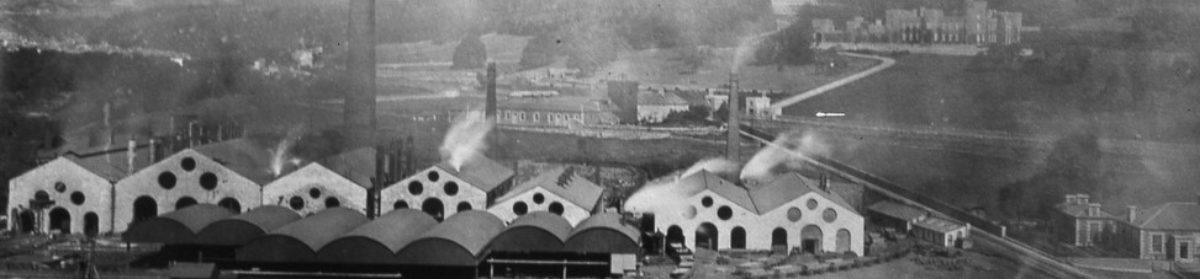
Engine house A 54 m (177 ft) long and 15 m (49 ft) high red brick industrial building constructed in 1905–07 to house three blowing engines as part of the Dowlais Ironworks. The works went into decline in the 1930s and in the late 20th century the building was being used by a chocolate company.

Quakers Yard Railway Viaduct

Treharris
ST0885396473
51°39′35″N 3°19′09″W

1 April 1988

Viaduct A tall stone-built viaduct with six arches that spans both the River Taff and the Merthyr Tramroad. It was constructed 1840–41 by Isambard Kingdom Brunel as part of the Taff Vale Railway and widened by 1861.

Ynysfach Engine House

Cyfarthfa
SO0452406096
51°44′44″N 3°23′04″W

5 Nov 1995

Engine house Built in 1836 as part of the Ynysfach Ironworks, it originally housed an engine made at the Neath Abbey Ironworks. This four-storey building of blue Pennant Sandstone with white ashlar dressings fell into disuse when the Ynysfach works closed in 1874. In the 1980s It was restored and became a museum until closed by the Leisure Trust.

Greenfield Bridge, Penydarren Tramroad

Treharris
ST0902496544
51°39′37″N 3°19′00″W

20 February 2003

Bridge A single arch Pennant Sandstone structure built to replace an earlier wooden bridge that collapsed in 1815 when a train was passing over it. The semi-circular arch has span of 19.2 m (63 ft) at a height of 8.4 m (28 ft) above the river. It is part of the Merthyr Tramroad scheduled monument.

Victoria Bridge, Penydarren Tramroad

Treharris
ST0942396281
51°39′29″N 3°18′39″W

20 February 2003

Bridge A single high-arch bridge over the River Taff similar in design to the nearby Greenfield bridge. Built in 1815 to replace a wooden bridge of 1800–02 it was originally as part of the Merthyr Tramway but is now a footbridge. It is part of the Merthyr Tramroad scheduled monument.

NOTE
The two viaducts constructed as part of the Brecon and Merthyr Railway both straddle the borders of neighbouring historic communities so have separate designations for each of these locations.

Robert Lugar – architect

The name Robert Lugar may not be one that most people are familiar with, but he is someone who has left an indelible mark on Merthyr’s history, as he was the architect who designed Cyfarthfa Castle.

Little is known of his early life, but he was born c.1773/4 in Colchester, the son of Edward Lugar, a carpenter. From about 1799 he was practising in London, being based at Featherstone Buildings, Holborn, and exhibited at the Royal Academy for the next twenty years. In 1812 he succeeded John Johnson as County Surveyor of Essex, a post which he held until 1816.

Lugar first made his mark with the publication of his first book ‘Architectural Sketches for Cottages, Rural Dwellings and Villas’ in 1805, and this was followed by ‘The Country Gentleman’s Architect’ in 1807. The following year he completed his first major commission Dunstall Priory, and this was followed in 1808-09 by Balloch and Tullichewen Castles. The resemblance between Tullichewen Castle and Cyfarthfa is remarkable.

Tullichewen Castle

In 1810, Lugar took on an apprentice to work with him at his Holborn offices – the 20 year old Archibald Simpson. Simpson would go on to be one of Scotland’s most important architects, who along with his rival John Smith is regarded as having fashioned the character of Aberdeen as “The Granite City”.

It was in 1824, that Lugar was commissioned by William Crawshay II to build a new home for him and his family, befitting his status as one of Merthyr’s great iron-masters. The new home designed by Lugar was Cyfarthfa Castle, which was completed by 1825 at a cost of £30,000.

Ground floor plan of Cyfarthfa Castle from 1827

In 1834, a fire all but destroyed the Houses of Parliament in London, and a competition was held to design a new building. Lugar entered the competition in collaboration with fellow architect John Burrell, but lost out to architect Charles Barry. Interestingly, Charles Barry is another architect closely connected with Merthyr – a friend of Lady Charlotte Guest; he designed both Dowlais Central Schools and the Guest Memorial Hall.

Robert Luger continued designing houses for the rest of his career, his most important works being Wyelands House in Monmouthsire (1830) and Bardon Hall in Leicestershire (1837). He died at his home at Pembroke Square, London on 23 June 1855, aged 82.

The Guest Memorial Hall

One of the few remaining historical buildings in Dowlais is the Guest Memorial Hall, or the Guest Keen Club as it is more commonly know today. It has a fascinating, if troubled history.

When Josiah John Guest died in 1852, his widow, Lady Charlotte began thinking of projects to commemorate her husband. Her first project was to build a school for the children of the Dowlais area, and the Dowlais Central Schools were completed in 1855. Whilst the school was under construction, the work-men of the Dowlais Ironworks also wanted to contribute to another memorial to their former employer.

In March 1854, a public meeting was held, and it was proposed that a library and reading room should be built in memory of Josiah John Guest. A committee was set up, and subscription lists were issued – they even placed an advertisement in The Times newspaper. A sum of £2,200 was eventually raised, and Sir Charles Barry was commissioned to design the building.

The Times – 7 June 1854

Sir Charles Barry was one of the foremost architects of the day, his most famous work being the Houses of Parliament. A personal friend of Sir Josiah and Lady Charlotte Guest, he had been responsible for designing the Dowlais Central School.

Unfortunately, Barry’s plans proved too grandiose for the funds available. Work started in early 1855, but by the end of the year, over £5,000 had already been spent on the project. New trustees were appointed, and they were dismayed to discover that not only had a huge amount been spent in excess of the budget, but only the walls and roof timbers had been prepared.

The trustees, having paid for slating the roof and glazing the upper story, called an emergency public meeting. They offered two alternatives: firstly the subscribers could try to find the extra money required to complete the work; or secondly, they could hand over the project to the Dowlais Iron Company who would finish the work, and thus own the building. The subscribers decided on the latter course of action.

The Dowlais Iron Company took over the project, and the original subscriptions were returned to the trustees who used the money to provide annual scholarships for the children taught in the Dowlais schools.

A postcard of the Guest Memorial Hall from the early 1900s. Photo courtesy of the Alan George Archive.

The new library, which was a classical style cruciform two-storey building, the main rooms raised on a basement storey, built of massive stones with a Bath-stone balustraded pillared portico on the first floor, was finally opened in 1863. The total cost of the building was £7,000. The new library was equipped with an excellent collection of books in both Welsh and English, and newspapers and magazines were also available to the public. A part of the building was also set aside to be used as a museum, and fossils that had been discovered in local pits and quarries were displayed there.

The library closed in 1907 when the new Carnegie Free Library opened in Dowlais. The building subsequently became a social club and remains open to this day as a restaurant and as an events venue.

Merthyr: Then and Now

Circa 1900

2012

Looking at these two photographs, it is encouraging to see that the Guest Memorial Hall hasn’t changed all that much in about a hundred or so years. A rare survivor of of Merthyr’s heritage.

Unfortunately, the same can’t be said of St Mair’s Church, seen standing behind the Guest Memorial Hall in the first photograph.

St Mair’s Church (or the Welsh Church as it was known), was the largest church in Dowlais, and built between 1871 and 1874 by the Dowlais Iron Company to accommodate the Welsh speaking members of St John’s Church.

The Church closed in 1962 and was demolished the following year.

St Mair’s Church during demolition

London to Dowlais via Downton Abbey!!!

Many people of a certain age will remember Dowlais Central Schools, but did you know that the building was actually designed by Sir Charles Barry, the architect responsible for building the present Houses of Parliament (not to mention remodelling Highclere Castle – the setting for Downton Abbey)?

Sir Charles Barry
Sir Charles Barry

In 1853, Lady Charlotte Guest decided to commission a new school in Dowlais in memory of her late husband, Sir John Josiah Guest. She approached Sir Charles Barry, a personal friend who had previously re-designed the Guest’s new home at Canford Manor in Dorsetshire, to design the school to accommodate 650 boys and girls and 680 infants. The school was built by John Gabe, the prestigious Merthyr builder, and it was completed at a cost of between £8,000 and £10,000 (depending on which source you consult) and opened in 1855. The cost of the building was paid for, in full, by the Dowlais Iron Company. The Merthyr Telegraph described the completed building as:-

“…very chaste, massive and grand, without being at all heavy in its effect. The principal entrance admits, under a spacious gallery, into the Infants’ School-room, a noble apartment, 100 feet long by 35 feet wide; the roof of the open Gothic is 60 feet from the floor at the highest point. To the right and left, through two immense arches, open the schools for boys and girls, each 90 feet long by 30 feet wide. Light is admitted through very large and handsome Gothic windows – there are several spacious and handsome class-rooms attached, and there is an extensive play ground in front.”

Dowlais Central Schools
Dowlais Central Schools courtesy of Old Merthyr Tydfil (http://www.alangeorge.co.uk/index.htm)

There was even a form of central heating used in the school, provided by hot air pumped from an engine house in the ironworks through underground ducts to the school itself.

Sir Charles Barry also designed, at Lady Charlotte Guest’s instigation, the Guest Memorial Hall (now the Guest Keen Club), a library and reading room for employees of the Dowlais Iron Company.

Guest Memorial Hall
Guest Memorial Hall

Dowlais Central Schools were demolished in the 1970’s, one of the many architectural masterpieces that Merthyr has sadly lost in the name of progress. Luckily the Guest Memorial Hall still survives to this day.

Do you have any memories of Dowlais Central Schools? If so please share them by using the comments button, or by e-mail at merthyr.history@gmail.com

If you want to learn more about Sir Charles Barry have a look at these sites:

https://en.wikipedia.org/wiki/Charles_Barry

https://www.architecture.com/Explore/Architects/CharlesBarry.aspx