The following article appeared in the Evening Express 124 years ago today….

The Melting Pot – Merthyr Tydfil's History and Culture
In Association with the Merthyr Tydfil & District Historical Society
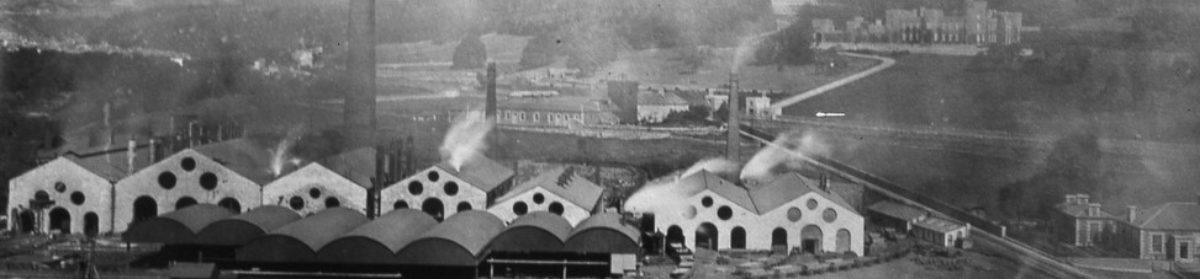
The following article appeared in the Evening Express 124 years ago today….
The Grade II* listed Pont-y-Cafnau over the River Taff in Cyfarthfa is thought to be the world’s oldest iron tramroad bridge. An influential early prototype and is a unique survivor of its kind, it is also an aqueduct, with a water trough below the deck. Its designer was Watkin George (c.1759-1822), the chief engineer of the nearby Cyfarthfa Ironworks, which it served, and the bridge/aqueduct enabled the movement of limestone on its tram rails and a water supply, both for the ironworks. The limestone came from the Gurnos Quarries, and the water from a leat supplied by the Taf Fechan. The water was used to drive waterwheels to generate power to run machinery for iron smelting.
The structure was designed sometime in 1792 and construction began in January 1793 and the bridge was completed some time before 1796.
The distinctive appearance of the bridge is created by two large cast iron A-frames, which span the river, their raking ends embedded in the coursed rubble abutment walls on either side. The span measures 14.3m. Three transverse iron beams, at the halfway and quarter-points, connect the A-frames and support the deck. George was originally a carpenter and he used carpentry techniques for the ironwork – mortise-and-tenon and dovetail joints can be seen.
The deck consists of rectangular aqueduct trough, 1.9m wide and 610mm high, made of long iron plates. The trough is covered by an iron deck, cast in sections, on which was laid the 1.22m (4ft) gauge tramroad. Wagons ran on straight iron rails carried on iron chairs. Some chairs and sleepers are still in place along the full length and segments of rail survive at the southern end.
The cast iron handrails were supported at the centre and quarter points of the span. Most of the original cast iron railings have now been replaced.
In 1795, a second bridge was cast from the same patterns to carry an extension of the tramroad and aqueduct from the ironworks to the Glamorganshire Canal. This bridge, sadly, no longer exists.
Shortly after Pont-y-Cafnau was completed, the Gwynne Water Aqueduct (completed 1796) was constructed over the top of it. Gwynne Water was 185m long, built entirely of timber and used the cast iron uprights of the bridge for support. it supplied water to the 15m diameter Aeolus waterwheel, also designed by George, which powered an air pump for the blast furnaces. Presumably, the extra bracing that has been added to the bridge dates from this work. Nothing of the second aqueduct remains.
Pont-y-Cafnau is a Scheduled Ancient Monument as well as a Grade II* listed structure. The iron trough no longer carries water. However, its name means “bridge of troughs”, testifying to its former life.
The bridge influenced the construction of other, better known, aqueducts. In 1794, Shropshire ironmaster William Reynolds (1758-1803) made a sketch of it. Reynolds’ involvement in the rebuilding of Thomas Telford’s (1757-1834) navigable Longdon on Tern Aqueduct on the Shrewsbury Canal in 1796 seems to have led Telford to reconsider using stone and to opt instead for cast iron. It was also the prototype for Telford’s famous Pontcysyllte Aqueduct, which opened in 1805.

In the first of what I hope will be a new regular series of articles, I share my memories of Twynyrodyn School.
Whenever I drive along Primrose Hill in Twynyrodyn, and pass the site of the old Twynyrodyn School, I always feel a pang of regret. Regret that the old school is gone, and regret that I didn’t really appreciate it more when I was there. I attended ‘Twyn’ School for four years in the late 1970’s, and now, in retrospect I realise what an impact it made on my life.

Twynyrodyn Junior School was an old school (I have since found out it was built in 1875), and was originally two schools – a boy’s school and a girl’s school, and these two ‘wings’ were separated by the central hall (in days gone by this was apparently the ‘infants’ school). The corridors were tall and echoing and tiled throughout, and in the old boy’s school wing were a flight of stone steps, leading to three upper classrooms, that had been worn down over the course of decades by the feet of thousands of children and staff going to and from their classes.
The classrooms were large and airy, lit by tall gothic windows. In my classroom (in the old boy’s wing, and incidentally the same classroom where my grandfather was pupil in the 1910’s on ’20’s) we had old individual desks with lifting lids and (now redundant) inkwells, all arranged in straight lines facing the door, with the blackboard to one side on an easel. Along the one wall were two very large, old cupboards containing text-books, some of which I am convinced hadn’t been looked at for decades. The walls of the classroom were lined with educational posters, and I remember vividly that the poster next to my desk depicted British Castles, and I spent many hours staring at that poster and dreaming of visiting all of the castles shown….I am getting there slowly!!!!!
In my day, the staff consisted of nine teachers and the headmaster, Mr Ken Adams-Morgan – red-faced, eyebrows with a personality all of their own, and feared by all!!!! I have since realised of course, that he was a very good and a very fair headmaster, not to mention a fine musician, and the school ran like clockwork under his leadership. The teachers were: Miss Davies, Mrs Phillips, Mrs Evans, Mrs Thomas and Mr Fitzgerald over in the old girl’s school (or over the other side as we used to say); and on ‘our side’: Mr Price, another Mrs Phillips, Mr Morgan, and last but by no means least, my own teacher – Mr Humphries.
I was taught by Mr Eddie Humphries for the whole time I was at Twyn School. Mr Humphries was a big man – in every sense of the word. He was a teacher of the ‘old school’, a strict disciplinarian, and focusing very much on ‘the Three R’s’. English and Maths were drilled in to us on a daily basis, with spot tests on spelling and times-tables. I didn’t mind the spelling tests – I was usually very good with those, but the times-tables struck fear into my heart. Anything mathematical still brings me out in a cold sweat. Mr Humphries had a cane hanging behind his desk, and in the four years I was in his class, I never recall him using it – the fact that it was there was enough!!!!
The above makes it sound as if Mr Humphries was a fearsome tyrant. He wasn’t. Every one of us respected him, and I know everyone I speak to today who had the privilege of being taught by him, still remembers him fondly. I know that Eddie Humphries had a profound effect on my life. Without doubt he was the biggest influence in my life, and made me the person I am today – for that I will always be grateful. If I can try to live by the standards he instilled in us all, and if I can be half the man he was, I will count myself a very lucky person.
I’m sure children today would think that the above description of school is from a totally bygone age, but it is in fact just 40 years ago. Schools and the process of teaching have totally changed – but are these changes for the better?
Twynyrodyn School is gone now. It closed in 2003 and amalgamated with the infants school, and the building was demolished in 2008, but it still holds a very special place in my memories.

If anyone has any Merthyr related memories that they would like to share, please get in touch. They can be about any subject as long they are connected with Merthyr.
The following article appeared in The Weekly Mail 110 years ago today….

by Carl Llewellyn
Joseph Williams was born at St Clears, Carmarthen, and came to Merthyr as a boy in 1842 to be apprenticed to his cousin Rees Lewis as a bookbinder. After serving his apprenticeship, he left Merthyr and went into business as a grocer at Llangattock. In 1872 he bought the printing business of Mr Thomas Howells (who had died the previous year) in Glebeland Street, which formed part of the block of buildings erected for Merthyr Express.
He continued at the premises for a few years before moving to other premises in Glebeland Place, extending his offices and putting in new machinery which helped with the journal publications. Some time after moving to the new premises, Williams took over the printing and publishing of the Welsh Congregational Newspaper. The newspaper had previously been published in Liverpool from its inception in 1864 under the title “Y Tyst Cymreig” (The Welsh Witness) then at Dolgellau, under the name of “Y Tyst a’r Dydd” (The Witness and the Day), but in the year 1892 the latter part of the title was dropped and it became known as “Y Tyst”.

Joseph Williams also published two monthly periodicals – the religious magazine “Cenad Hedd” (Messenger of Peace) from 1880, and “Cronicl Cenhadol” (The Missionary Chronicle) established in 1897, recording the work done in the foreign mission field by the London Missionary Society, both magazines were well known throughout the Welsh Independent denomination.
He was a life-long teetotaller, and from his earliest years in Merthyr Tydfil was closely associated with the temperance organisations which came into being in later years. Notably he was indentified with the well known society “Cymmrodorion Dirwestol” a literary society devoted to the preservation of the Welsh language, his connection enabling him to render great service to Welsh literature. He was for many years a most zealous and efficient secretary of “Cymmrodorion Dirwestol”, and in that capacity he had a good deal to do with the promotion and production of the long series of successful Eisteddfodau held at the Temperance Hall on Christmas Day.
In religion Mr Williams was a Congregationalist. He was a member of Zoar Chapel, until 1850 when Joseph Williams with 59 other members of the chapel transferred themselves to Ynysgau, due to the demise of the minister Rev T. B. Evans, who’d lost the respect of his congregation through his persistent indulgence in intoxicating liquors. As a result Ynysgau Chapel almost became extinct. With the influx of members from Zoar, the congregation began to increase, giving the chapel a new lease of life. Only two of the 60 members of Zoar remained at Ynysgau – Joseph Williams and William Powell. Joseph Williams never coveted office or position, but his remarkable faithfulness to the church won him the foremost positions in Ynysgau Chapel – where he was prepared to lead others were willing to follow. In 1875 he was elected a deacon; he became the chapel treasurer from 1880-1892 and he also became the Sunday school superintendent.
In politics Joseph Williams was a Liberal and was ardent in the maintenance of his principles. He was regarded not to be extreme or bigoted, or self-opinionated in the slightest degree. He was a fair minded man ready to hear the other side, and meet it with kindly discussion. Through being an active member of the Nonconformist Committee he was co-operated in the political organisation of the Liberal party in Merthyr Tydfil.
In 1899 Ynysgau Chapel celebrated the 150th anniversary of the establishment of the cause plus the clearance of Chapel debt. The chairmanship was given to Joseph Williams who gave an account of his connection with the church during his 50 year membership, and he called upon his son D. D. Williams to read out a very ably written history of Ynysgau Chapel from its establishment.
Joseph Williams died in July 1903, and at his funeral service at Ynysgau Chapel was remembered as a naturally able man, and his acquaintance with Welsh literature was extensive. He possessed a large amount of knowledge which was very accurate, and was a man of sound judgement, an upright character and a credit to the community.

The following piece appeared in the Merthyr Express 100 years ago today:

107 years ago today, you could have enjoyed a wonderful night at the theatre as advertised below:

Continuing the religious theme from the last post, I have received an e-mail from my friend Laura Bray in Wrexham (but ex of Merthyr) with a bit of a mystery.
Just outside Wrexham, in the village of Coedpoeth, there is a church dedicated to St Tydfil. Laura has sent some photos of the church and wondered if anyone could shed some light as to why a church near Wrexham should be dedicated to St Tydfil. If anyone has any information please get in touch.


Our regular feature on the chapels in Merthyr continues with one of the oldest chapels in Dowlais – Caersalem Welsh Baptist Chapel.

At the beginning of the 19th Century, the Baptists of Dowlais had to travel to Zion and Ebenezer Chapels in Merthyr to worship.
In 1817 a Baptist Cause was founded and met in the old Bethel Chapel in the Lower High Street in Dowlais. In 1820 it was decided to build a new chapel, so a plot of land in Well Street, just under 300 square yards was leased from the Dowlais Iron Company for 99 years, at an annual rent of £1.14s.11d, and the chapel was built at a cost of £500. Within three years of opening, the congregation had increased and a gallery had to be built at a cost of £150. Caersalem was still considered as a branch of Zion until 1829 when it gained its independence.
As the congregation grew, a larger building was required and a new chapel designed by Mr William Lewis, foreman carpenter at the Dowlais Ironworks was built in 1833 at a cost of £509.9s.3d.
The congregation grew to such an extent that three new churches were established, originally as branches of Caersalem:- Elim in Penydarren, Hebron and Moriah in Dowlais, and Caersalem was itself refurbished in 1852 at a cost of £650. In 1863 a cottage situated underneath the chapel was converted into a vestry, and in 1873 a baptistery was installed.
By 1883 it became obvious that extensive repairs were needed to the chapel. The exterior of the chapel was redesigned and the interior refurbished and a new pipe organ installed in the gallery. Whilst the renovations were carried out, the congregation met at Tabernacle Chapel in Ivor Street (later Elim Chapel).
In 1906, as a result of the 1904 revival, the vestry beneath the chapel was extended by converting the chapel keeper’s cottage which was next to the original vestry. This work was done by members of the congregation at a cost of £245.
On 30 June 1924, the freehold of the chapel and the three cottages beneath the chapel were purchased from Messrs Guest, Keen and Nettlefolds. The chapel freehold was purchased for one shilling as it was a religious building, but the three cottages were bought for £30 each.
Caersalem Chapel was forced to close and was finally demolished in 1977 due to the redevelopment of Dowlais. A new chapel was built in 1977 in Pant and is still in use.

The article, transcribed below, appeared in the Merthyr Guardian 170 years ago today:
On Friday evening, the 5th instant, by permission of R. T. Crawshay, Esq., Mr. Mathews, Wizard of Wizards, &c., exhibited his extraordinary feats of legerdemain at the Cyfarthfa ball room. The rapidity and cleverness with which Mr M. performed an almost endless succession of tricks, excited the wonder and curiosity of the spectators, and afforded very general satisfaction.
His ventriloquism was a novelty to many in the assembly and was very well done. But that which utterly confounded the shrewdest spectators in the room was the part enacted (as it would seem) by the so-called Mysterious Lady. She was truly blindfolded, and her back was duly turned upon the audience, yet she seemed to be perfectly cognizant of all that was carried on-and to every question she returned a correct and prompt reply. The contents of many a bachelor’s pocket were ransacked and every item was correctly described – she seemed to hear the very whispers of persons at a considerable distance from her, for she would pronounce aloud every secret that thus transpired. Even dumb show was significant to her for she appeared to see and understand it all.
A gentleman present shewed by chance a shilling of the Elizabethian age – a curiosity in its way – it was no sooner in Mr. Mathews’s hands than his lady yonder told him all about it. “Confound you” said one of the knowing ones present – I understand your other tricks very well, but this thoroughly puzzles me”- ” then you are confounded Sir”, was the prompt reply. This part of the performance was very cleverly accomplished.
The entertainment gave general satisfaction to a numerous and respectable company. The performances were repeated to a large company on Wednesday evening, with similar success.
Merthyr Guardian – 13 March 1847