
Joseph Edwards – Merthyr’s Great Sculptor
Joseph Edwards was born on 5 March 1814 at Ynysgau, Merthyr Tydfil. His father, John was a stonecutter, and Joseph grew up helping his father, showing exceptional ability from an early age. He had a limited education at local charity schools, but at the age of seventeen, Joseph sought to widen his horizons by walking through South and West Wales, spending nearly two years in Swansea where he was employed as a mason.
In 1835, he went to London carrying an introduction to the sculptor William Behnes who, after some hesitation, employed him. He stayed with Behnes until 1838, during which time he attended the Royal Academy Schools, winning the silver medal for best model from the antique, and exhibiting for the first time. He entered the studio of Patrick MacDowell while continuing his studies at the Royal Academy, where he won a second silver medal in 1839. By this time he was gaining commissions for portrait busts and memorials in his own right, especially from patrons connected with South Wales. He carved the monument to Henry Charles Somerset, Sixth Duke of Beaufort, and in 1840 he made a bust of Ivor Bertie Guest, the first of several commissions from Merthyr industrialists.

In 1843 Edwards carved The Last Dream at North Otterington Church in Yorkshire, now regarded as his early masterpiece. Welsh intellectuals became increasingly aware of his career, and Edwards was perceived to demonstrate the potential for national progress in Wales, having risen by his own efforts from humble origins to find a place in the English art world. Like Gibson, he was frequently cited in the mid-nineteenth century as an example for the young to follow. In 1855, at the Royal London Eisteddfod, he became the first Welsh artist to have a solo exhibition of his works.
Edwards was patronized by notable establishment figures. His marble relief Religion Consoling Justice (1853; Dingestow, Monmouthshire) formed part of the memorial to Justice Sir John Bernard Bosanquet, and in 1854 and 1856 he was again commissioned by the Beaufort family. In 1859 he met George Virtue, whose magazine, the Art Journal, promoted his work, publishing engravings on several occasions. Virtue also made use of a work by Edwards for the headpiece of his Girls Own Paper. In 1870 the sculptor was commissioned to execute the memorial to the publisher at Walton-on-Thames cemetery.
His sculpture ‘Religion’, exhibited as a plaster at the International Exhibition of 1862, became his only large-scale public sculpture in his native country, erected in marble at Cefn Cemetery ten years later (a second version is at Highgate Cemetery, London).

His seriousness and dedication to his art came at the expense of business considerations, and he was frequently financially embarrassed. Probably for this reason, in 1846 Edwards began to work for Matthew Noble in a role which, it is clear, far exceeded that of the normal assistant. Among Edwards’s papers is a list of some forty major pieces attributed to the English sculptor, on which Edwards worked at every stage from conception to completion, including the famous Wellington memorial of 1856 in Manchester. He became known in the art world as Noble’s ‘ghost’, entering his studio at the end of the day to work overnight, and on Sundays. On Noble’s death in 1876, Edwards completed his outstanding works, for which he received minimal recompense. In 1881 Thomas Woolner, who took a dim view of Noble’s practice, made application on Edwards’s behalf for a Turner bequest. The Welsh sculptor was able to benefit from only one payment, since he died on 9 January 1882 at his home in London. He is buried in Highgate Cemetery.

Photos courtesy of www.victorianweb.org.
To read more about Joseph Edwards take a look at the link below:
http://www.victorianweb.org/sculpture/edwards/index.html
A Letter from the Crimea 2
Following on from the previous post, here is another letter that appeared in the Merthyr Telegraph – dated 13 October 1855.

A Letter from the Crimea
In the last few months there have been posts about the First and Second World Wars, as well as the Zulu Wars. Let’s go back even further – here’s a letter from a soldier serving in the Crimean War, transcribed from the Merthyr Telegraph of 29 September 1855.
Camp, before Sebastopol, Sept. 15, 1855
Dear Parents
I am very happy to inform you of the great victory we have won after all the hardships we have endured last winter and during the summer. I have been this last three weeks twelve hours out of twenty-four fighting hard, and have seen several of my old comrades fall by my side, which grieved me very much. Two men in particular, good soldiers, that came out with me, and belonged to my own company, fell on the last day of the battle. I am glad to inform you that Tom Watkins is safe, and enjoys good health. I forgot to tell you in my last that he was slightly wounded; he was from duty about three weeks, and was soon out of danger.
I went down to the trenches about 1 o’clock on the morning of the 8th September, and we continued firing as hard as possible until 12 a.m. on the following day, when General Simpson came down to Green Hill Battery, with his staff; our Captain ordered us to fire for about twenty minutes, and then we heard the thunder of musketry of our men. They had attacked the Redan battery, and the French the Malakhoff. I could see them tearing across the plain in hundreds, and see them falling – it was a terrible sight. In front of each of these batteries was a trench about 14 feet deep, and about 12 feet wide; to cross this was extremely dangerous, as the enemy were pouring into them with musketry, grape shot, and canister.
The mystery was, how to get to the top of these trenches, when thousands were opposing you with picks, shovels, hatchets, staves, stones, bayonets, swords, and all kinds of things the rascals could lay their hands on – this was terrible work you may imagine. The way they had adopted of getting over this trench was by throwing wool-bags, and hay-bags into it, and then mounting by means of ladders. They at length succeeded, and fought until they had no ammunition, and were then most unfortunately obliged to retire. During this time we were not firing any, but were looking on for fear of killing our own men.
When I saw them retiring I could cry with sorrow, to think that it was another failure, the same as on the 18th of June; but it fortunately happened that the French took the Malakhoff, and in about two or three hours victory favoured our arms. The French planted their flag on the heights of the Malakhoff, and General Simpson said ‘Now men, you must attack the Redan again to-night, and if you do not take it tonight you must try again in the morning,’ Another attack was made that night at 12 o’clock, when not a Russian could be seen. They reconnoitered along the whole lines, but could find no Russians, and discovered that the whole town was in flames, Magazines were blowing up in all parts – the fleet was on fire in the harbour; and the next day, if you had been here, you would have enjoyed a treat, as I could have given you a ride in a carriage and four.
Everything in the town appeared to have been left to its fate; all were obliged to leave the town at a moment’s notice. It was just like going to a place twice the size of Merthyr, and smashing everything before you. When we got to the town there were arms in shoemakers’ shops and musket balls in the shops of tailors and carpenters. I could have furnished my father with a good kit of tools, and you I could have supplied with silk and satin. I could go to a stable and bring any horse I liked; and could go to a wine-shop and drink as much as I wished, and then to a piano, and play until I was tired, and then have smashed it to pieces.
I have got a few little things here. I have sold £9 worth of things. The French could bring what the liked out, but we were not allowed. I am as happy as a prince; have plenty of clothing to last me I should think for ten years.
I enclose you a little fringe that came off the pulpit of the church in Sebastopol. I wish I could have brought home some oil paintings which I sold to an officer for 12s. each, which were worth £100.
We expect to be home soon, as we were the first here.
I remain, dear Parents,
Your affectionate Son,
JOHN JONES, Royal Artillery.
Historical Entertainment
107 years ago today…….

Thanks to Steve Brewer for providing the above
Commercial Break

Christmas Carol Concert

Sir Josiah John Guest
Today marks the 164th anniversary of the death of one of the most famous figures in Merthyr’s history – Sir Josiah John Guest.

Josiah John Guest was born in Dowlais on 2 February 1785, the eldest child of Thomas Guest, manager and part owner of the Dowlais Ironworks, and Jemima Revel Phillips. His grandfather John Guest had moved from Shropshire to South Wales, where he helped to start a furnace at Merthyr Tydfil in the 1760s; he then became manager at Dowlais, which was transformed over successive decades by the Napoleonic wars and the international development of the railway, from a modest venture into the largest ironworks in the world. In turn Guest followed his father into management of the Dowlais Iron Company in 1807, having gained a valuable informal apprenticeship in the works after attending Bridgnorth grammar school.
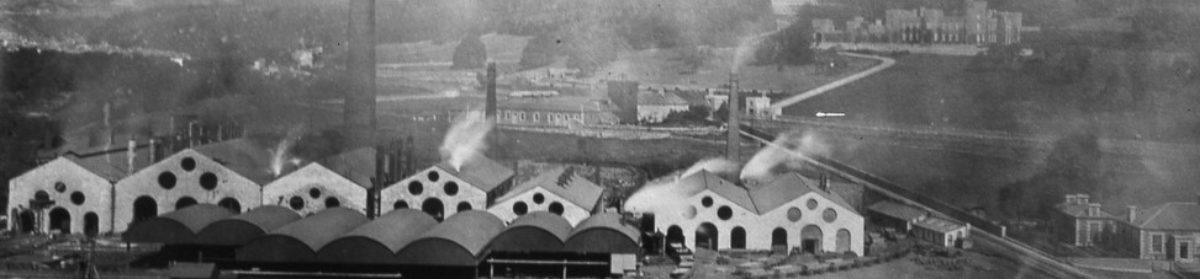
From the mid-1830s to the late 1840s the Dowlais Works were in their heyday. By 1845 they boasted 18 blast furnaces (the average number for ironworks was three), each producing over 100 tons weekly. The site covered 40 acres and the workforce numbered more than 7,000. A second works, the Ifor works (the Welsh spelling of Guest’s eldest son’s name), had been erected in 1839 at a cost of £47,000. As the railway network expanded at home and abroad, so the Dowlais Iron Company seized opportunities for new contracts both within Britain and further afield, notably in Germany, Russia, and America. In 1844, for example, an order was placed for an unprecedented 50,000 tons of rails for Russia.
Guest was forward thinking, engaging with key figures in scientific and technological development. He was elected a fellow of the Geological Society in 1818 and of the Royal Society in 1830. In 1834 he became an associate of the Institution of Civil Engineers. His business interests included coal mines in the Forest of Dean and he was the first chairman of the Taff Vale Railway Company.
Guest’s first wife, Maria Elizabeth (née Ranken), whom he married on 11 March 1817, was Irish, the third daughter of William Ranken. She died in January 1818, less than a year after their marriage, aged only twenty-three. There were no children. On 29 July 1833 Guest married into the English aristocracy: Lady Charlotte Elizabeth Bertie (1812–1895) was the eldest child of the late Ninth Earl of Lindsey; she was twenty-one and remarkably gifted. They went on to produce ten children.
The Guests lived in Dowlais House in the 1830s and 1840s; in 1846 they also purchased Canford Manor near Wimborne in Dorset for over £350,000. With the help of the architect Sir Charles Barry they turned Canford into their main home (although Dowlais House was retained). Guest was made a baronet on 14 August 1838 but his eldest son, Sir Ivor Bertie Guest, was elevated to the peerage, becoming the first Baron Wimborne in 1880; and a viscount in 1918.

Guest was also a politician. Between 1826 and 1831 he represented Honiton, Devon, initially supporting the Canningite Tories, but then becoming increasingly independent and in favour of parliamentary reform. During the reform crisis he lost his seat but he was returned in the new reformed parliament of 1832 as a Whig, the first Member of Parliament for Merthyr. He retained his seat until his death twenty years later. He won some support from the non-voters as well as from the small electorate, adopting a fairly progressive stance on a number of issues. He had helped to mediate during the Merthyr Rising of 1831.
The Dowlais Iron Company did not, however, own the land on which the Dowlais Works stood. In the 1840s its proprietor, the Tory Marquess of Bute, prevaricated over the renewal of the lease, endangering the livelihoods of about 12,000 families now dependent on the Dowlais Works. Annual profits were consistently high from the mid-1830s until 1848—in 1847 they exceeded £170,000—but fears over whether the lease would be renewed in 1848 resulted in the deliberate running down of operations. By the end of the decade profits had plummeted, and for 1849 amounted to less than £16,000. When the dispute was settled in 1848, the Guests were greeted in Dowlais like triumphal feudal lords returning from battle.
In his last years, severe kidney problems forced Sir John to rely increasingly on his wife’s business skills, and on the management structure he had evolved. When he died on 26 November 1852 an estimated 20,000 gathered for the funeral in Dowlais and The Times attributed to his foresight much of the wealth and prosperity of mid-nineteenth century Britain.

Ynysfach Engine House Event

The Fighting Woman of Merthyr Tydfil
by Carolyn Jacob
A hundred years ago women of very masculine (and muscular) proportions were often summoned for assaulting other women, fighting with men and even attacking the police. Mostly the regular fights took place in a public house and in 1912 the Merthyr Tydfil Police paid 10,386 visits to public houses in 3 months to either deal with serving out of hours or to referee and sort out fights taking place there. There were certain women whose names came up frequently in the Police Courts. Such a one was Margaret Hagerty.
In April 1903 the boxer Redmond Coleman was charged before the Merthyr Tydfil Police Court with living on the prostitution of women, especially Margaret Hagerty, a dipsomaniac whose favourite drink was gin. He may have been the toughest man in the tough town of Merthyr Tydfil, but on more than one occasion it was Margaret who fought to protect him from the law.
One local legend concerning her was that she stood on the Iron Bridge stripped to the waist and challenged all comers to a fight. Maggie Hagerty is mentioned frequently in the Merthyr Police Reports for drunkenness, robbery and insulting language. After she was convicted of drunk and riotous behaviour in Riverside on a Saturday night in November 1910, Margaret Hagerty, when asked if she had anything to say she said “There’s not much good saying anything. I’ve done a lot of prison.” This was her 73rd appearance in the Police Court.
In 1911 she tried her utmost to prevent the police taking Redmond to the station by stabbing an officer with her hat pin. She was taken in herself and managed to break nine windows in the Merthyr Police Station. Although in 1916, on her 98th court appearance, she claimed to have ‘given up fighting’, Margaret continued to be mentioned in the Merthyr Express and in November 1921 she was reported thus:-
“Margaret Hagerty a middle aged woman was arrested for insulting language at Riverside. She produced carpenter’s tools which she claimed Julie Murphy had used against her. The girl had called her a robber. Case was dismissed. The Chief Constable said she was the worst woman he had to deal with in Merthyr.”