From the Merthyr Express 80 years ago today….

The Melting Pot – Merthyr Tydfil's History and Culture
In Association with the Merthyr Tydfil & District Historical Society
From the Merthyr Express 80 years ago today….
The following article appeared in the Merthyr Express 70 years ago today…


If anyone would like to contribute an article about Merthyr’s remarkable boxing history, I would love to hear from you. Please contact me at merthyr.history@gmail.com
From the Merthyr Express 70 years ago today….

From the Merthyr Express 80 years ago today….

From the Merthyr Express 70 years ago today…

From the Merthyr Express 80 years ago today….

From the Merthyr Express 80 years ago today…

We continue our serialisation of the memories of Merthyr in the 1830’s by an un-named correspondent to the Merthyr Express, courtesy of Michael Donovan.
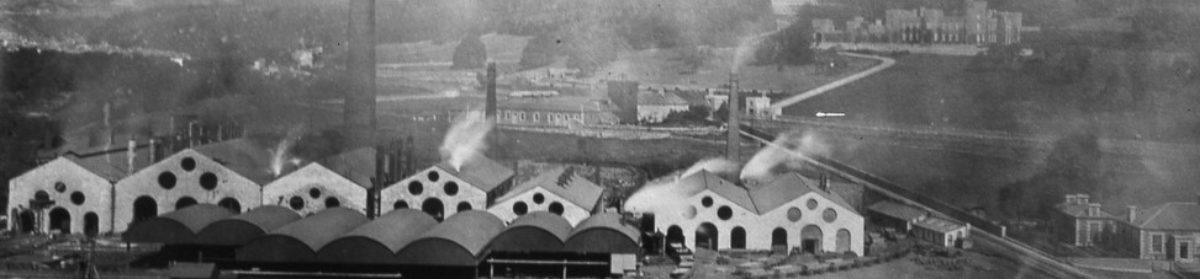
There are two trivialities that must be stated about Penydarren before alluding to that which will perpetuate its memory for all time. (1) The end of the forge was a pure example of Doric architecture, (2) and the small stack of the roll lathe boiler was an exact model one-fifth the size of the monument on Fish Street Hill, London.

The Petherick family had positions in the early days of Penydarren, and Evan Hopkins, the author of “Magnetic Distribution of Metalliferous Veins” went thence to South America about the deposits there. It is, however, as the parent of the locomotive that Penydarren will ever be remembered. As there seem to be doubts about some things I will endeavour to put it clear, although not strictly within my own personal recollections.

Notwithstanding the great genius of James Watt, and the wonderful sagacity of Mathew Boulton, the idea of using steam in a cylinder to give motion to a piston, and allowing it then to escape into the atmosphere, was thought to be too dangerous, and the condensation of the steam was adhered to them.
Richard Trevithick (left), however, more daring, did not allow himself to be influenced by such fears, but towards the close of the 18th century began to put his thoughts into use. He made a road locomotive, and in 1802, injunction with Andrew Vivian, obtained the patent.
It is only my idea that the Pethericks were the means of introducing Trevithick to Penydarren, for one (a Mr John Petherick), wrote in 1858 that, “I perfectly remember when a boy, about the year 1802, seeing Trevithick’s first locomotive, worked by himself, come through the principal street of Cambourne”. But be that as it may, this, or another of Trevithick’s make, travelled to London, and often ran upon some ground near Bethlehem Hospital, and also where Euston Station now stands. It must be borne in mind that it was thought quite impossible to get sufficient grip between the wheels and a road to cause them to move the carriage forward.
It is clear Trevithick was in the neighbourhood about 1800, for stationary engines were made by him or from his designs both at Penydarren and Tredegar Works. These have been seen at work by me. His first locomotive was used about the works, and very probably hauled some of the cinders which for the tip alongside of the Morlais Brook and River Taff. The fact of an engine having cast iron wheels, running on an iron road being able not only to propel itself forward but draw a load after it was there demonstrated, and must have been a subject of controversy because a bet of £1,000 was made between Mr Homfray and Mr Crawshay as to the possibility of its taking ten tons of iron down to the basin and bringing the empty trams back.

The ten tons of iron was take to its destination, but for some cause the engine and the empties did not return to the works as satisfactorily as hoped for. The weight of the engine is stated to have been about five tons, and the gross weight altogether of 25 tons.
It seems as if Mr Homfray was an exceedingly hot tempered man, and it is clear that Trevithick had the same infirmity. This I have from one who was able to recall both personally. It would scarcely be proper to trace here how engines were designed by Trevithick, and did work elsewhere soon afterward, and how Trevithick himself having more enticing engagements allowed others to carry on the work he had begun.
To be continued at a later date…..
From the Merthyr Express 90 years ago today….

by Mansell Richards
Prior to the 1960s and the arrival of the mass-produced, affordable motor car, district nurses visited their patients on foot or by bus. These hard- working ladies often walked miles in extremely bad weather,- rain, hail, snow and gale force winds.
One such lady was Nurse Frances Evans of Muriel Terrace, Caeharris, Dowlais. The mother of two children – David and Dwynwen; she had, sadly, lost an eight year old son, Elwyn to diphtheria in 1938, a child-killing disease of the time.
For several years during the 1950s her once-a-week journey was sometimes unusual to say the least.
Normally, she travelled every Tuesday on the 1.15PM train from Caeharris Railway Station (located behind the Antelope Hotel on upper Dowlais High Street) to the isolated, windswept former coal-mining community of Cwmbargoed some 4 miles away, the home of her elderly patient, former miner, Mr Horace Morgan. He was a surgical case who needed skilled attention every week. Back in those days the isolated village of Cwmbargoed was situated on the main line from Dowlais to Bedlinog.

THE COLLIERS’ TRAIN
Nurse Evans always referred to this train as ‘The Colliers’ Train’, recalling vivid memories of her younger days when hundreds of colliers disembarked every afternoon at Caeharris Station from ‘The Cwbs’, (these were old, basic carriages with wooden benches for seats). These colliers were returning to their homes having completed their early morning shifts in the pits at Cwmbargoed, Fochriw and Bedlinog etc. With so many pit closures between the wars however, far fewer colliers by the 1950s were travelling on this route.
Meanwhile after puchasing a ticket at the ticket office (priced 6d each way), Nurse Evans would begin her journey to Cwmbargoed. But with other patients to visit, she would sometimes miss the 1.15pm train, the next train leaving some three hours later. On these occasions she would be given a lift by other means. But no ordinary train this. It consisted of a single steam-driven locomotive and a guard’s van. She would be offered the only seat and would sit uncomfortably, behind the kindly driver and his sweating, grime-faced, coal-shovelling fireman.

JOURNEY’S END
On arrival at Cwmbargoed Nurse Evans would have a ten minute walk to the home of old Mr Morgan. On one occasion she fell into a snow drift and was rescued by a passing workman who heard her cries for help.
All district nurses had large areas to cover and they walked miles every day. In some parts of the country, some may well have adopted the means of transport favoured by a nurse in the modern, 1950s-based television series ‘Call The Midwife’, by making use of a bicycle. However, there is no evidence of local nurses relying on this method of transport.
Needless to say Nurse Evans, who retired in 1962 enjoyed her occasionally unusual journey inside a hot and noisy steam locomotive, across the lonely, windswept moorland above the town of Merthyr Tydfil.
Older folk may recall Nurse Evans, a kind and gentle lady, who was held in great affection by her patients during the 1950s and early 60s.
(This story was taken from an article in the Merthyr Express on 8 March 1958. Meanwhile, I thank Sian Anthony, Dowlais Library Service, Terry Jones, John Richards and the family of the late Dewi Bowen for their valuable assistance).