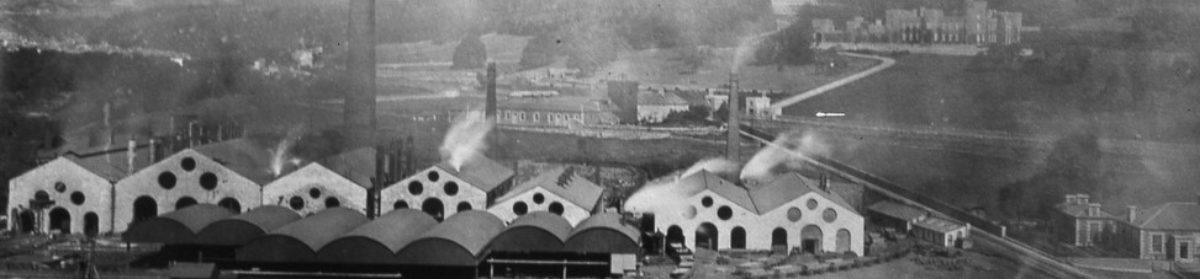
Merthyr Historian volume 33

The Merthyr Tydfil and District Historical Society is pleased to announce the publication of Volume 33 of the Merthyr Historian.

Contents:

  • A Local History Appreciated (‘The Story of Merthyr Tydfil …’ 1932) by Huw Williams
  • Merthyr Tydfil & District Historical Society: helping the historians of the future (The Welsh Heritage Schools Initiative Awards) by Clive Thomas
  • The history of Garthnewydd House by Lucy Richardson
  • Creating Merthyr Tydfil Educational Settlement (1930-1949): a view from behind the scenes by Christine Trevett
  • “Eisteddfod Merthyr Tydfil a’r Cylch”1958-1962 by John Fletcher
  • Japanese naval commander at Merthyr 1902 (transcription) by T. Fred Holley & John D. Holley
  • Mary Emmeline Horsfall, the lady of Gwernllwyn House: art, philanthropy and the workless in Dowlais by Christine Trevett
  • A Merthyr man’s wartime service in His Majesty’s Royal Navy by Brian, Peter & Barrie Jones
  • The dark side of convict life: an account of the career of Harry Williams (b. 1876), a Merthyr man by Barrie Jones
  • The White Horse, Twynyrodyn in the 19th century by Richard Clements
  • The first Aeronaut (balloonist) in Merthyr, 1847 (transcription)
  • Evacuees in the Borough’s Wards: ‘Merthyr welcomes evacuees…’ (transcription, 1940) by Stephen Brewer
  • Putting Merthyr Tydfil on the map by Clive Thomas
  • ‘Honouring a Dowlais Musician. Complimentary Concert …’ John Evans (Eos Myrddin) 1841-1905. A transcribed report from the Merthyr Times 1893 of ‘A Grand Performance’ by T. Fred Holley & John D. Holley
  • Gurnos Farm and the Cyfarthfa Estate by Alison Thomas Davies
  • Treharris pit-head baths and The Lancet 1908 (transcription)
  • The Lavernock tragedy 1888 and its Aberfan memorial by Stephen Brewer
  • The ‘earthly Eden’ which was dry and rustic Trelewis (newspaper items and editor’s commentary)
  • Chess in Merthyr by Martyn Griffiths
  • Lewys Glyn Cynon, Merthyr Vale poet by T. Fred Holley & John D. Holley
  • Calling local historians: banking and boxers by Stephen Brewer & Christine Trevett

This 324 page book is available to buy from the Merthyr Tydfil & District Historical Society for £13.

If you would like a copy, contact me at merthyr.history@gmail.com and all orders will be forwarded to the Society.

Saturday Football in our Local Community

by Brian Jones

Allan “Salty” Jones has recently published the centenary story (1913 -2013) of football played by a myriad of local teams. His account draws on a vast number of photographs of boys and men who set out to enjoy Saturday football on pitches of variable quality from the north to the south of the Merthyr Borough. Their faces shine out of the black/white and coloured prints spanning a number of generations the vast majority of whom are sadly not still with us. Nevertheless their spirit epitomises their love for the game, and perhaps more importantly, their camaraderie bound together by work, community, church or public house.

The names of the clubs who played in the MERTHYR LEAGUE ring out through the ages. Merthyr Trams, Aberfan Thursdays, Bethania Chapel, Court Rangers, Gellifaelog Youth Club, Mountain Hare, Hoovers, Castle Rangers, Miners Hall, Great Escape and Vaynor Quarries. The list is endless. A review of the history of local football mirrored the social and industrial changes spanning the 100 years. Gone are the teams representing local employers such as Guest Keen, Lines, B.S.A , Teddington Controls, Kayser Bondor, Welsh Products to name but a few.

Of the hundreds of teams who joined then left the League was S.W.E.B. who played post World War II into the early 1950s. The South Wales Electricity Board team of young men who served in the Army, Navy or Royal Air Force and went to work in an industry which blossomed with the surge in demand for an alternative power source. The sprint was on to convert homes from coal gas to electricity. Mains cables had to be laid in streets, Electricity meters installed and wiring to be linked to light switches and power points. Who can recall the demand for one shilling coins for the electricity slot meters to ensure the lights stayed on during dark winter nights!

The S.W.E.B team of 1954/55 played their home games in Heolgerrig and perhaps there are readers who are the grandchildren and great- grandchildren of those in the photograph. Were they players of great skill, who knows, but we can be assured that on their Monday stint in their work base at the Traction Yard in Penydarren they would certainly be enthusing about the win, draw or loss of the previous Saturday game

P.S. The author is the eight year old in the photograph

Court Rangers and Frank Cass

by David Watkins

In the 1940s, young men living Courtland Terrace and the surrounding area decided to start off a football team, appropriately naming their club Court Rangers A.F.C.

They first played in the Rhymney Valley Football League before joining the Merthyr League. Ken Tucker remembers the exciting times and the camaraderie that existed between the players, also the superb organisation of Frank Cass the manager, John Power the captain and an enthusiastic committee.

There were many extremely talented individuals in the team, including a young Philip Jones – later to become famous as Philip Madoc, however I wish to concentrate on another fascinating individual.

During a conversation with Ken, he asked me if I was aware of a Court Rangers player named Frank Cass? Although I knew he was in the publishing business, I was very surprised at the Court Rangers connection!

Whilst a young man, Frank and his Jewish family from London moved to Merthyr Tydfil at the start of the Second World War, and found accommodation at Dowlais, later moving to Courtland Terrace. He immediately integrated himself into the community, enjoying his stay in Merthyr, making friends before joining the Court Rangers Football Club and furthering his education at the County Grammar School.

All his life Frank was passionate about reading and knew he wanted a career in the world of books. Leaving Merthyr at the age of eighteen, he returned to London, and fortunately, a year later, found a job at the Economist Bookshop in Bloomsbury. Frank opened his own shop in 1953, and then, onwards and upwards, he became the owner of a number of prestigious publish firms.

One of the most satisfying decisions of his illustrious career was to publish the Goon Show Scripts in 1972. He knew that the Prince of Wales was a Goon fan and invited him to the book launch, along with Spike Milligan, Harry Secombe and Peter Sellers. They all attended and the book became an instant bestseller.

Frank’s love of Merthyr continued throughout his life and because of this he later published a book of particular interest to Merthyr entitled “Labour and Poor in England and Wales, 1849/1951 – Vol 3 South Wales, North Wales”. The first ninety-six pages are devoted to the working class of Merthyr Tydfil, with an illustration of Dowlais Ironworks on the cover.

After a wonderful and fulfilling career in the book trade, Frank sold off some of his publishing interests for fifteen million pounds! Not bad for a boy from North London, who for a short time in his life enjoyed himself living, studying, playing football for Court Ranger A.F.C. in Merthyr Tydfil.

Frank Cass died in 2007 aged 77