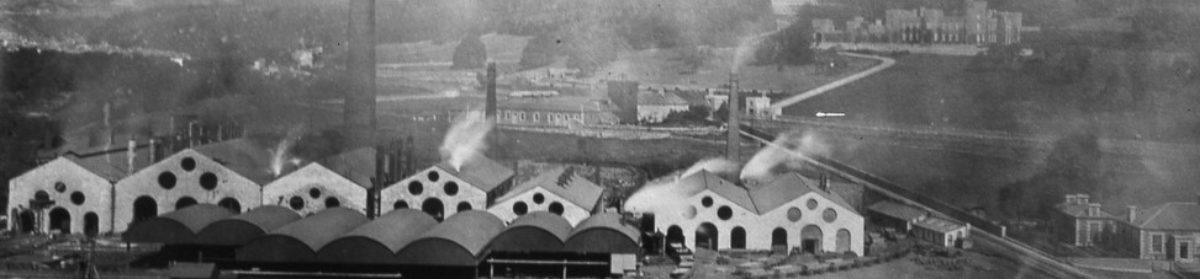
The Dark Side of Convict Life – part 22

by Barrie Jones

Chapter XIX. Henry recounts his association with the convict Samuel Blisset and how he helps pass on a message to Samuel’s daughter, Hannah Williams, following his release from Parkhurst. Blisset shot his wife Margaret on the 15th November 1894 outside her shop at 112 Ivor Street, Dowlais. Margaret a ‘well known’ greengrocer, died of her wounds on the following day. 

The Dark Side of Convict Life (Being the Account of the Career of Harry Williams, a Merthyr Man). Merthyr Express, 28th May 1910, page 11.

Chapter XIX

THE DOWLAIS TRADEGY RECALLED

During my stay in Parkhurst, I never got into much trouble, for though I was passed as perfectly sane, nevertheless, I was well treated by the doctors. Parkhurst is well known as the dead station; the last camping place it has been to many of the criminal class. Men suffering from all manner of diseases are to  found here – consumption, heart disease, pleurisy, dropsy, and a great many fit cases. I was in Parkhurst over three years, and during that time not one single week passed without some poor, unfortunate passing away to the unseen world.

I was surprised to see down there poor Samuel Blisset, who was sentenced to twenty years on the 12th of November, 1894, for the manslaughter of his wife, and I cannot help thinking that his case did not merit the heavy sentence passed upon him for, when all is said and done, it was more of an accident than a crime, and there is doubt that if had had been allowed to go into the witness box, as is done these days, and give his own evidence, then he might have cleared himself. I had not much of a chance beyond a passing word to speak to him, but I can well remember a few weeks before my liberation telling him that I would take a message to his daughter in Dowlais, and after some difficulty in searching I found her, and I received a great welcome. The poor woman had evidently been trying and trying to get her dear father’s sentence remitted, but the poor woman’s application each time met with a refusal. Samuel Blisset was fifty-four years of age at the time of his trial, and I suppose he was given the heavy sentence thinking he would not live to see it through. But what man proposes, God disposes, and Samuel Blisset now has his liberty, and is now restored to his daughter to live the remainder of his life in peace and happiness, and when the time comes he will not be buried in a convict’s grave, where no flowers nor headstones marks the place. Let us hope that Samuel Blisset will live with his daughter for many years yet. For a convict is a man who has a heart that can feel joy and sorrow just like another, so do not treat him worse because misfortune is his curse. But he is the son of some mother, remember.

Before closing this chapter I will give an account of a poor, week-minded lad, for he was far away from budding-manhood. This young fellow’s name was Calladine, and he was subject to fits, and very bad fits they were, too, which took him some time to get out of them. He was a light-hearted – although light-headed – friendly, little fellow, and many a chat we had together, but his conversation pointed strongly to brain trouble, for sometimes when speaking to one he would suddenly stop and look into the sky, as if looking for his next words. It was heart rending to hear him speak of his coming liberty, but the poor little chap never dreamt that in a few weeks’ time he would be laid to rest in the convict’s cemetery at Newport. One morning, coming over the steps of the Protestant Chapel, this poor fellow fell down in a  fit. He was taken to a hospital, and after recovering, he declined to stay there. While in the straight jacket I heard his shouts and cries, which were most pitiful to hear, and I was working at the time sweeping the gutters underneath the padded cells. The following night he was taken from the infirmary to the separate cells, ready to appear before the governor the next morning, but when the officer opened his cell door, poor Calladine was cold and stiff, having expired during the night.

To be continued…..

Merthyr’s Lost Landmarks: The Huts, Treharris

In the late 1860s, a mineral lease of over 3,000 acres of land, owned by three farms, Twyn-y-Garreg, Pantanas and Cefn Forest was exploited by a group of businessmen, headed by Frederick. W. Harris. There was no settlement here in those days just a beautiful green valley which was dissected by the small Taff Bargoed river.

Sinking commenced in 1873, and the colliery was to be named Harris’s Navigation Colliery (later Deep Navigation Colliery), the village which built up around it was subsequently names Harris’ town or Treharris.

In 1869, a row of small houses was built for the families and men who were to be employed to sink the pit. This small street was named the Twyn-y-Garreg Cottages, but have always been known locally as ‘The Huts’. There were 32 houses, and they mostly consisted of a kitchen and two bedrooms, although No.1 the Huts had four bedrooms, which the Minnett family of two adults and ten children occupied. These houses were made of wood and had hessian ceilings which were whitewashed, stone or brick chimney stacks and slate roofs. The rent was 7s. 8d.

‘The Huts’. Courtesy of the Alan George Archive

There was a commercial bakery at the Huts, and the first school lessons and religious services in the area were held there too.

Remarkably these huts survived until the 1950’s when they were finally demolished. A new street is built on the site now, and is called Navigation Close.

‘The Huts’ in 1936. Courtesy of the Alan George Archive

Merthyr’s Chapels: Salem Chapel

Salem Welsh Independent Chapel

In 1850, a group of worshippers at Wesley Chapel at Pontmorlais severed connections with the chapel and started to worship in the Temperance Hall, and started a new sect, calling themselves the Wesleyan Reformers.

Foremost amongst the new group was Mr Walter Watkins, and he along with Mr W John, Mr Rees Chandler, Mr George Williams and Mr Richard Harris were instrumental in getting the new cause established.

By 1856, with no sign of the rift with their mother church healing, the congregation decided to build their own chapel in Newcastle Street. Shortly after this a number of members left Zoar Chapel and joined the congregation at Salem, and Rev Thomas Jenkins of Aberaman was ordained as the first minister. The congregation were accepted into the Independent Union at a quarterly meeting of the East Glamorgan Association held at Bethesda Chapel. Rev Jenkins remained at the chapel until 1864 when he emigrated to America.

In 1907, the chapel acquired a house in Newcastle Street, and converted it, at a cost of £700, into a schoolroom.

In 1925 when storms severely damaged the old Morlais Chapel, the Salvation Army Corps met at Salem Chapel, and the elders of the chapel offered the building to the Salvation Army. They declined the offer however as the building was deemed too small for their purposes. By this time the congregation had severely dwindled and in 1930 the chapel closed and the remaining congregation returned to Zoar. The building was then sold to the Temperance Movement and renamed Salem Memorial Hall.

The building has since been used by the Jehovah’s Witness movement, but has now been converted to a house.

Memories of Old Merthyr

We continue our serialisation of the memories of Merthyr in the 1830’s by an un-named correspondent to the Merthyr Express, courtesy of Michael Donovan.

It was at the Dowlais Works the Bessemer process for the conversion of pig into malleable iron was tried, with the result, as told me by Sir Henry himself, “I was knocked down on my back, and for two years could not get up again”. The Bessemer process, as everyone knows, is to blow air through the molten metal and so burn the carbon out, but many years before that blowing steam through molten iron in the puddling was tried there. The furnace with the apparatus was seen in the upper forge – that is, between the Dowlais office and the fitting shop.

The Bessemer converter

Sir John himself conceived the idea of running the iron direct from the blast furnace into the refinery, so as to avoid the remelting usually followed. It was used for a while at the Ivor Works at the furnace next to the engine-house on the Pant side, but the refinery process itself was soon superseded to a great extent.

The Bessemer Converter at Dowlais Ironworks in 1896. Photo courtesy of the Alan George Archive

It was at Dowlais the very first steam whistle was made, and although the tale has been previously told, the use of the whistle for railway purposes is so extensive that it will be again told in the words of the inventor himself as told to me personally by him.

For the better understanding of it allow my saying that a column of water about 27 inches high gives a pressure of a pound for every square inch of its area, and for the feeding of his boilers James Watt had designed an automatic arrangement, based upon the weight above mentioned. Even up to 10lbs, a standpipe 270m inches high would suffice, but when it comes to 50lbs the pipe would be excessive, and as some little looking after is needed, it would be rather inconvenient, so that the regulation of the feed became dependent on the care of the stoker, he being guided by the use of gauge cocks. Stokers are human, and therefore remiss; the feed goes too low, overheating of the plates follows. This reduces their strength, perhaps, too, the steam pressure increases, and disaster follows.

Adrian Stephens inventor of the first steam whistle

Something of this kind happened, and Sir John asked Adrian Stephens if it were possible to arrange something to indicate that the feed was getting low. The upshot of the conversation was that one of the pipes from the organ in the house was sent for Stephens’ consideration. In Watts’ arrangement a float was used for governing the feed, and Stephens very naturally followed the idea. The idea of an inside valve was evolved, and by the passing of steam through the organ pipe sound was produced. It then occurred to Stephens that if the emission aperture were made all around the pipe it would be better, and he made it so.

It did not bring him profit, nor was he ever honoured as he should have been. Some Manchester workmen were then down with tools for the fitting-shop, and they either communicated or took the idea back there, and not as a regulator for feed, but as a means of calling attention the whistle became used in locomotion.

To be continued at a later date…..

Merthyr Historian Volume 34

The Merthyr Tydfil & District Historical Society is pleased to announce the publication of Volume 34 of the Merthyr Historian.

The cost is £12, and volumes will initially be for sale at the Society’s next lecture at Canolfan Soar on Monday 4 November. They can also be ordered (for £12 plus p&p) via this blog at merthyr.history@gmail.com.

CONTENTS

VOLUME 33 (2024) ISBN 978-1-7391627-1-9

1. Remembering Brian Davies

2. The Welsh Heritage School’s Initiative. The winner of the 2024 prize  from our Historical Society

3. ‘Carlton Working Men’s Hotel. “A great boon to Merthyr”’ (1911). Transcription by Carl Llewellyn

4. DENIED! Welshman Cuthbert Taylor and the abolition of boxing’s colour bar by Bill Williams

5. A Railway walk from Pantysgallog (High Level) Halt to Torpantau station (1961) by Alistair V. Phillips

6. The History of Merthyr Newspapers (and some of their Printers and Publishers) by D. Rhys Davies and Carl Llewellyn

7. Harris Schwartz: family, furniture and Merthyr’s Jewish community recalled by Rita (Schwartz) Silverman

8. Apprenticing a chemist in Dowlais, 1880, and all those concerned by Christine Trevett

9. The Almanack and Year Book 1897 Merthyr Tydfil. A Victorian Townsman’s Pride in the Press and in his home-town, the Best Shopping Centre in North Glamorgan by Mary Owen

10. A history of the education movement in the parish of Merthyr Tydfil (to 1896) by H. W. Southey from The Almanack and Year Book transcribed by Caroline Owen

11. The Quakers’ Yard Truant School: some glimpses of its history by Stephen Brewer, Carolyn Jacob and Christine Trevett

12. A school from the ashes. The British Tip and some reflections on the final years of Abermorlais School by Clive Thomas

13. A Little Gay History of Merthyr by Daryl Leeworthy

14. From Troedyrhiw to California. Welsh Immigrants in the Mount Diabolo Coalfield by David Collier

15. A History of Nonconformity in Dowlais by Stephen Brewer

16. ‘The Mighty Morlais’: A study in the history of Morlais Castle and its significant figures by Benedict Bray

17. Out and About with Cerddwyson by T. Fred Holley and John D. Holley

18. Our Excursion to Swansea transcription by Stephen Brewer

BIOGRAPHIES OF CONTRIBUTORS

The Dark Side of Convict Life – part 21

by Barrie Jones

Chapter XVIII. Henry recounts his removal from the asylum hall, and his work on a ‘labour privileged party’.

The Dark Side of Convict Life (Being the Account of the Career of Harry Williams, a Merthyr Man). Merthyr Express, 21st May 1910, page 9.

Chapter XVIII

After the event related in my last chapter I could not possibly remain in C Hall any longer, so I applied to the medical officer for a removal to another part of the prison, but my request was refused. After a further interview with the doctor, that worthy granted my request, and I was transferred to a prison known as A Hall, and placed among the intellectual convicts, that is to say the right-minded men. One morning early in the year 1907 I was told off parade to join No. 19 party. There were only eight men in this party, and our work was cut out for us, it being a first-class labour privileged party. We were occupied in drawing a coal cart, each man being supplied with a collar attached to a strong rope, after the manner of horses, and our work was to bring coal for the hospitals, blacksmiths, shoe maker’s shop, etc. In the afternoon of each day we went our round to the officers’ quarters, doctors, governor’s, chief and principal warders’ houses to clean and take away the refuse, and many a relic we often clapped our eyes and hands on when we got half a chance.

I must specially mention here that the wives of the officials were very kind to us in the shape of luxuries, as very often they would wrap up in a small piece of paper a bit of cake or meat, which we shared equally among the gang. Of course, we had to keep it all dark, and not even breath it to our boot laces. But no matter how careful we might be, there was always to be found a man in every gang who would bring it to the notice of the authorities, and, of course, they were duty bound to give the whole gang a special search, and then the poor fellow suffered as well as those they tried to get into trouble. The official in charge of the gang, to give him hid due, was not a bad sort of a , though strict. He was just, and there was no favouritism with him; for he would treat every man alike. He had a systematic way in working them, and when he saw one of his men doing all the work and others looking on he would say, “Now, come on, give this man a share of your strength.” I remember an argument once between two convicts, whose turn it was to lift a bag of coal. The officer, hearing the dispute, said, “Shall I lift the bag?” That was quite enough, for they both lifted it together. On another occasion two convicts were going to fight, and instead of reporting them, he separated them, remarking, “Now, I do not want any trouble with any of you, but from what I can see of it, you’re asking for it. You are like two little infants wrangling over a doll.”

This party was considered one of the best in the prison, also for seeing a bit of life, as on our journey back and fore to the prison we walked in close contact with free people along the country lanes, roads and fields. There was one thing our officer was down on us for, and that was tobacco. He would not have a single man of his stop to pick up fag ends, and when he himself saw any cigars or cigarette ends upon the ground he would either pick them up or put his foot on them. This was not for spite, but in order to keep temptation out of his man’s way. He was unlike some officials who would have allowed men to stoop and pick up things, and then pounce upon them for a report, which would mean three days’ bread and water, and perhaps eleven days remission. He was a different man altogether, and a Welshman, too. But no matter how careful he would be in keeping us out of trouble, one would sometimes drop right into it. An old game was to stick a bit of soap underneath the boot near the toe, and when they came across a bit of tobacco they would just put their foot on it, and it would stick to the soap.

I can well remember playing a good joke with our officer. We found some tissue paper, and one day got some dry dung, and made cigarettes of it. When walking along the road we dropped them one by one, and, of course, our officer, who possessed wonderful eyesight, would pick them up until he had nearly his pouch full. On arriving at the prison he would stop one of the senior officers, saying, “Look here, sir, I have picked up about a dozen cigarettes on the road, and I am sure somebody has been dropping them for the convicts. Now, this is only tempting my men.” “All right,” said the senior officer, “I will have a look around to see if there is anyone hanging about.” Shortly after, we were out again, and dropped some more, but the senior officer picked some up this time. Giving our gang the order to halt, he called our officer aside, and the both burst out laughing, for when looking at one of the cigarettes, they found out what they were. Never in all my life did I laugh so heartily.

On Easter Monday, 1907, our gang had a good feed of cakes, but I must confess we stole them. I myself did not steal them, but I received some of them, so I was quite as bad. It happened this way. Our regular officer went out on night duty, and for one whole week we had a substitute, He, too, was not a bad sort of a man. We were told off to go to the governor’s house to cart away the refuse. There are some trees at the back of the house, and near the trees is the larder and scullery, and in the larder were the cakes. Through the window we saw the cook cleaning some cabbage, the stumps of which she threw into a tub. Of course, we had arranged what to do. “What tree would you call that, sir,” said one of the gang to our officer, who turned round to look at the tree. Immediately one of the chaps slipped into the scullery, and filling his shirt full of hot scones, caught up the tub of stumps, which the cook had left, and was out again before the officer had turned his head. “Here you are, sir,” says he, “here’s the stumps.” Placing the tub in we hitched our collars on the rope, and away we went to the farm.

To be continued…..