From the Merthyr Express 120 years ago today….

The Melting Pot – Merthyr Tydfil's History and Culture
In Association with the Merthyr Tydfil & District Historical Society
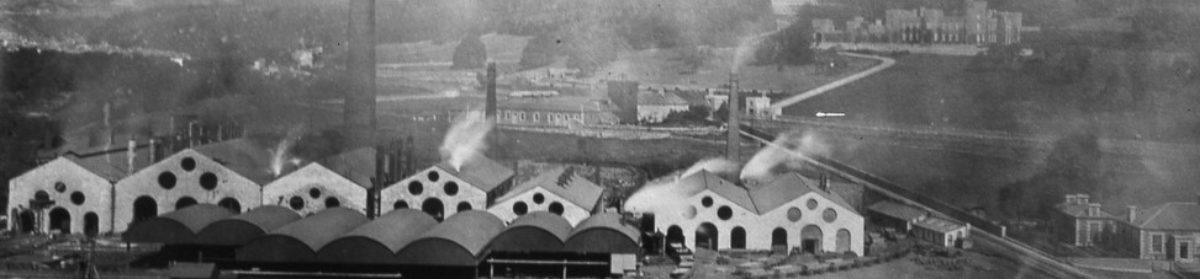
From the Merthyr Express 120 years ago today….
Here are the answers to the questions I posed you last week. How did you do?
King Brychan Brycheiniog
Anthony Bacon
James Keir Hardie
Ynysgau Chapel
The Star Inn in Caedraw
John Nixon, the founder of Merthyr Vale Colliery
Robert Thompson Crawshay
In Pontmorlais, just further up than the Theatre Royal
Howard Winstone
Treharris
At the corner of what was known as the Broad Pavement, opposite was the name given to a street built behind the Palace Cinema.
Behind the Theatre Royal and bordering the old Tramroad
The area now known as the Grove
In Vaughan Street, Caedraw
Factory Cottages were alongside the old Drill Hall and given this name as they adjoined a flannel factory.
The first landlord there was a Mr Storey
A narrow street by the Fountain …… turn left at the bottom of the High Street
The Farmer’s Arms, Mountain Hare
A famous actress associated with the Theatre Royal
Its name is derived from the fact that most of the English people brought in to the area to work in the Penydarren Ironworks lived here
 To round the year off, here is a quiz for you about Merthyr’s history.
There are 20 questions in all – 10 easy and 10 difficult. See how well you can do. The answers will appear in the New Year.
Many thanks to Carolyn Jacob for the hard questions…..she obviously has a hidden vicious streak!!!!
by Laura Bray
I am sure many of you like me, have wandered around Cyfarthfa Museum, and glanced at the instruments on display – particularly the most intriguing “serpent” – and then moved on without a second thought. The Egyptian mummies were always so much more interesting. As a consequence, although I knew there had been a band, I knew nothing of it. Time to rectify that, my friends!
The Cyfarthfa Band was founded and sponsored by Robert Thompson Crawshay sometime in the 1840s, essentially as his private band. The band played when he had guests in Cyfarthfa, it accompanied him to trips to Aberystwyth and Tenby, where they played outside his hotel, probably to the bewilderment of the locals, and band members were expected to present in uniform at all times.

For much of its life, the band was conducted by the Livseys – father and son. The father, Ralph, was from Northumberland, and was a brilliant keyed bugle player, a skill probably acquired in a military band, as the keyed bugle was developed in this context. He became a soloist with Wombwell’s Travelling Circus and Menagerie, and would have been known to the Crawshays, as Merthyr was a regular venue on Wombwell’s circuit. Around 1846, Robert Crawshay made him an offer – come and lead my brass band – and Ralph accepted. His son, George, aged then 13 was also recruited as another keyed bugle player. Ralph took the band to new heights – while it remained a private band, Livsey persuaded Crawshay to equip it with expensive Viennese instruments (imported expressly through Crawshay’s London supplier), rather than the much cheaper British versions, and developed a repertoire of playing more orchestral music than was the traditional remit of the brass band.
As a private enterprise, the Cyfarthfa Band was not a competition band, and rarely entered such. However, one of the few competitions the band entered was the Crystal Palace national competition of 1860, in which it played Verdi’s “Nabucco”. The band came first on the second day’s contest, and Crawshay’s reputation as a man of culture and taste was cemented – through that, the band’s reputation grew. Its importance can be illustrated by the anecdote told of a time when Crawshay was laying off his workers as result of a downturn in demand. He had identified men working in the Boiler Shop who were to be dismissed. The foreman, Mr Jenkins looked at the list and told Crawshay, in no uncertain terms, that his selection would “take the guts from the band”. Nothing further was ever said.

Ralph Livsey died in 1863 and was succeeded by his son, George, who remained band master for most of the next 50 years. The band’s reputation was maintained, if not enhanced, under George’s leadership – it played in the Cardiff Flower Show for 18 years, and was chosen to play when the Prince of Wales (later Edward VII) opened the Prince of Wales dock in Swansea in 1881.
It was George who introduced the band to some of more unusual instruments – including the Serpent (which brings us back to that showcase in the Museum today), an ophicleide – an instrument with a cello tone; and a valve trombone – so common now that we think nothing of it – but a novelty in the 1860s.

George conducted the band, trained its players, selected and arranged its repertoire and followed his father’s example of attracting some of the greatest brass instrumentalists of the day, such as the ophicleide player Sam Hughes, the greatest ever British virtuoso of the instrument. Indeed, the repertoire Livsey created survives, and because it is handwritten and bespoke it testifies to how, and not just to what, the band played. It was eclectic and included transcriptions of complete symphonies by Europe’s greatest composers and it was George’s boast that this was the only brass band to play all four movements of a Beethoven Symphony, a feat carried out in Cardiff to great acclaim. Such is testimony both to the remarkable virtuosity and skill of the band’s players and to the guidance and vision of a sophisticated musical director.
The last decade of the 19th century saw the band slowly decline. The Cyfarthfa works were losing orders as steel replaced iron, and by 1890 the works were being run by a skeleton staff. In addition there was more musical competition – Merthyr by this time could boast three military bands, seven brass bands and several orchestras – and the band quietly faded away, their instruments being put into storage.
But, my friends, this is not the end of the story, although it is the end of the glory days. Merthyr Council, who had acquired the Castle and grounds in 1908, decided that a band would be just the ticket, and so approached George Livsey to reform it as a municipal band. This duly happened in 1909 and the band was regularly heard playing in the Cyfarthfa and Thomastown bandstands over the next few years.

But George was now a man in his 70s, and so the band’s leadership fell first to a Mr Harvey and then to a Mr Laverock, who was its conductor during the dark days of 1914 -18. And so the band played on, until the Depression of 1926 finally sounded its death toll, as it did for most Merthyr bands, the exception being that of the Salvation Army Band which stands as witness to its heritage.
So next time you are in the Museum, stop at the case which houses the instruments and look up at the painting of George Livsey which hangs nearby – and remember the contribution made by the gentlemen of the Cyfarthfa Band, and wonder at the heights that were achieved by this band of ironworkers.

We continue our serialisation of the memories of Merthyr in the 1830’s by an un-named correspondent to the Merthyr Express, courtesy of Michael Donovan.
Taking the Nantygwenith Road first, with the exception of one occupied by David Evans, the master carpenter at Cyfarthfa (father of the Thomas Evans whose brewery has been mentioned), there was not another right away up to the gatehouse of the Turnpike on the right hand side, but there were dwellings on the other (the left) side all the way, and persons who resided there who should be mentioned.
Before doing so, however, it may be proper to state what kind of scientific society met at the Dynevor Arms, and what was then called philosophical instruments, made by W. and S. Jones, of High Holborn, kept there in the meeting room. Amongst other things attempted was the formation of a duck, which it was reputed they nearly accomplished, but extravagancies aside I can from recollection say there were very good instruments there, one being a telescope of about five inches in diameter.

Notwithstanding much that was desirable for sanitary conditions, there was a good deal of intellectual activity, and if any exceeding strong temperance advocates, deride the statement he can be told of a somewhat analogous one held near Birmingham that was frequented by persons whose names are world known, to wit, James Watt, Priestley and the time of meeting as near as may be to others whose forethought went so far as to have the time of meeting as near as may be to full moon, and were called in consequence the Lunar Society. There are few of any offices that that do not today benefit from one or two of their meetings.
On the left, the corner house of the Aberdare and Nantygwenith Roads, a grocer’s shop was opened by Mr Beddoe, next was a “gin shop”, so called, subsequently kept by Mr Lewis Lewis, superintendent of the Dowlais Stables previously, and afterwards of Pontyrhun; a few cottages followed and then a road. It was up this, and on the first opening to the left the Rev David John, the Unitarian Minister, taught his pupils. He was, I think, a good Welsh scholar, but I am certain of him being a good mathematician. He Had three sons and one daughter, the eldest Mathew, some years after carrying on the iron foundry business in Bryant’s old brewery premises.
The upper corner of this road was the grocery establishment of a Mr Edward Roach. He was a fine powerful man, and they used to say that seeing a woman, with a child in her arms, pursued by a bull, he rushed out and boldly attacked it.

Next above was the Patriot Inn, kept by Mr William Howells. He had two daughters, the youngest of whom was wooed by Mr William Spiller, then travelling around the hills selling flour on behalf of himself and a Mr Browne. The flour was called “Spiller and Browne”. The latter name seems to have passed, but the former has developed into a ‘household word’ in the quality of their product, and extension of business at Cardiff. The firm Spiller and Browne was then at Bridgwater.

To be continued at a later date……
by Roger Evans
Below is a poster from 1849, when starvation and unemployment in Ireland forced Irish workers to foreign fields.

50 years later however, at the peak of the Boer War, when Iron and Steel was in demand and labour in short supply:-
“It would appear that the stream of Irish immigrants flowing into the Merthyr and Dowlais district is destined, like the Tennysonian book, to go on forever. During the past few weeks some hundreds of big, braw, hearty sons of the Emerald Isle have left their native shores to fill up the much depleted ranks of the employed at the Cyfarthfa and Dowlais Iron Works.
Another contingent of 60 labourers came from Cork by the boat service to Newport on Tuesday night at a late hour after a journey occupying 36 hours. There was some difficulty in finding accommodation for them, but eventually this was accomplished, and Wednesday morning the men were sent on to Dowlais where they arrived about mid-day. They are all of the labouring class, and have been distributed about the works. It is rumoured that a further influx is expected before the week is out.The working staff has been so very much reduced by departures for the front, the Reservists and the Militia forces.It is certain that the fresh arrivals will be very acceptable at the present juncture and in view of the healthy and prosperous state of the iron and steel market.”
Transcribed from the Western Mail 25 May 1900.
by Keith Lewis-Jones
Plaque sited at the entrance to the Merthyr Tydfil Civic Centre, CF47 8AN
 John Hughes (1814-1899) trained as an engineer at the Cyfarthfa Ironworks in his native Merthyr Tydfil. He acquired an international reputation in marine engineering and armament production.
He was invited by the Tsar to help in the development of Russian railways and heavy industry.
He moved to the Ukraine in 1870 and established a steelworks at Hughesovka (Yuzovka) which was first renamed Stalino & then Donetsk.

We continue our serialisation of the memories of Merthyr in the 1830’s by an un-named correspondent to the Merthyr Express, courtesy of Michael Donovan.
Behind this part, and alongside the river, was the quarter whose savour was anything but respectable; it was known as China. It only went down the riverside a short way, from which to the Morlais Brook the cinder tip abutted on to the river.
 An extract from the 1851 Ordnance Survey map of Merthyr showing the location of China.
The locality was also called Pontstorehouse, the origin of this name, according to my idea, being from the storehouse for general housing of the shop goods being a little way beyond Jackson’s Bridge on the right hand. It was, of course, on the canal bank, and the wharfinger, or storehouse keeper, was a Mr Lewis Williams of Cardiff. There was also another storehouse a little lower on the other side of the canal, kept by Mr Mathew Pride of Cardiff, but it had not the traffic of the upper one.
Between these there were one or two private stores, one of which belonged to Mr Christopher James, already alluded to. The wharves of the Dowlais and Penydarren Companies were between the canal and the river. First came the Dowlais one, with a house so that oats or other material damageable by rain could be discharged; then the Penydarren Wharf, walled round with an entrance gate (the Dowlais one described above also had its entrance doors) and adjoining was the other Dowlais Wharf, used solely for the discharge of hematite ore, or other kindred material. The tramroad ran to the end of this wharf and no further. There was a building below, which afterwards altered and converted into a brewery. It was afterwards owned by Mr David Williams.

Having reached the terminus of the canal branch of the Old Tramroad, we could go straight on and join the road between the canal and Iron Bridges; but by so doing some parts would be omitted.
To return to the road passing over Jackson’s Bridge. Crossing the Canal Bridge between the Dowlais Wharf, partly covered, and Upper Storehouse, the first house on the left having entrance from the towing-path was occupied by Mr William Harrison, the clerk of the canal, whose office was at the Parliament Lock, a short distance down the canal, and nearly opposite the Ynysfach Works, on the other side of the canal.
There being some descendants of that name yet residing, I may perhaps interest them by saying Mr Harrison himself was rather short, inclined to be stout, and fond of his garden, which was kept in very good order. It is not for me to pry into anyone’s private history; but as it is clear that he was at one time engaged in the Forest of Dean, probably in connection with the timber of encroachments, he then took a wife, and a real good, kind woman she was. One of their sons was named Maynard Colchester (who became cashier at the Dowlais Ironworks), which indicates her to have been one of the family whose home was called the Wilderness, not very far from Mitchel Dean or Dean Magna.
Mr Harrison was a great hand at trigonometry. Keith being the author of his ideal books on those subjects. There were five sons and two daughters. Mr Harrison resided at one time at Pencaebach House, and was engaged at Plymouth Works. It is said he wrote to Pitt suggesting the putting of tax on the manufacture of iron, and suggesting that his own knowledge of the trade rendered his services of great value in the collection of such tax, if imposed. If I mistake not, this may be read by his grandchildren, and to them and every other whose name may be mentioned, I beg to tender as assurance that nothing is said but with due respect.
The road around to the Iron Bridge passed on one side of Mr Harrison’s garden, and the towing path of the canal on the other; but before turning down that road, let us glance around. One road is to the right, and led to the Nantygwenith turnpike gate; the road in front led up the hill to to Penyrheolgerrig, and on to Aberdare over the hill. A tramroad from Cyfarthfa to the Ynysfach Works crossed somewhat diagonally, and passed behind the Dynevor Arms, the first house on the left having only the road between it and the Canal House.

To be continued at a later date…..
As an addition to this piece, I would like to send my best wishes to Mike Donovan who provided these marvellous articles. Mike has been unwell lately, and I, (personally and on behalf of everyone who knows him) would like to wish him a speedy recovery.
by Ena Moreton
Many thanks to Hywel George, administrator of the Cynon Culture website for allowing me to use this article.
The land for a new building was given by Mrs Mary Williams of Penrhadwy. Vaynor, and work was about to start when Robert Thomson Crawshay, ironmaster at Cyfarthfa, four miles away, offered to build the church at his expense if the money already raised by the congregation, about £700, was put towards what is now St John’s in Cefn Coed. For many years this church was known as St Gwendoline’s, a mistaken dedication caused by confusion among scholars over Welsh and English usage.

Father Silas Morgan Harris (1888-1982) corrected the name whose scholarship embraced the Welsh saints and the history of mediaeval Welsh church. St Gwynno appears to have been Abbot Gwynno, born either in 487 or 507, whose feast day falls on October 22 and one of that company of Celtic saints who travelled spreading Christianity throughout these lands. In Scotland he is known as Guinochus and also credited with founding Plouhinec in Britanny and Kilglin in Co. Meath in Ireland. A contemporary view of St Gwynno can be seen in the fine bas relief near the entrance; He is shown with his shepherd’s crook and the invocation ‘St Guinoce, OPN’ – his Latin name and initials of Latin invocation Ora Pro Nobis (Pray for Us). The sculpture is signed AJJA, work of Arthur Ayres, winner of the Prix de Rome 1931 whose works can be seen in major international permanent exhibitions.
This work is in memory of Canon William Henry Harris (1884-1956), elder brother of Father Silas. Both were born in Pontsticill and firmly on the Anglo-Catholic wing of the Church. Canon Harris, known as Father Bill, was professor of Welsh at Lampeter, precentor of the chapel and canon treasurer of St David’s Cathedral. Continuing the family connection, the stained-glass window opposite, depicting the Blessed Virgin and Child, was given by the Harris brothers in memory of their mother, Ann, and is inscribed in Welsh with a line from the Hail Mary “Blessed art Thou amongst women”. The figure of the guardian angel further down the church could not be more distinctively Victorian. The angel is in memory of the four daughters and two sons of the Williams family at Penrhadwy, whose mother gave land for the church. All died in quick succession in their twenties and early thirties in the 11 years between 1859 and 1870.
The angel is by Joseph Edwards, Merthyr-born sculptor whose works are also to be found in Westminster Abbey. He was born in 1814, son of a stone-cutter, and is said to have been in love with one of the Penrhadwy daughters. The angel is reputed to have been modelled on her; one of the final three works in a career that saw 70 of his sculptures exhibited at Royal Academy.
The altar and reredos, with its carved woodwork and panelling, date from 1912 given in memory of Herbert Kirkhouse (died 1904, aged 72) a mining engineer at Cyfarthfa Works who married Maria Teresa, one of the Penrhadwy daughters. Maria Teresa is commemorated in the oak font, given by her son in 1930.The present St Gwynno’s was completed in 1868 a year before consecration by Dr Ollivant Bishop of Llandaff, standing in for Dr. Thirlwell, Bishop of St David’s.
The churchyard is noted for the grave of Robert Thomson Crawshay, the church’s benefactor, with its 11-ton granite slab inscribed ‘God Forgive Me.’ There are also graves of people at the lead edge when Merthyr was at the height of its industrial power, though many have been lost to the march of time.


The vegetation on the steep slope running down to the banks of Taf Fechan is now sanctuary to wild life, plant and animal; a protected nature reserve. Speed was not a speciality of Gruffydd Shon, the old bachelor, whose lady love tired of waiting for him and married a farmer. Gruffydd who died of a broken heart composed his own epitaph that existed as late as 1870 but vanished when his gravestone was broken during demolition of the old church. It read:
Here lies the body of Gruffydd Shon
Covered here with earth and stone
You may sweep it up or leave it alone
It will be just the same to Gruffydd Shon.
In the 140 or so years since St Gwynno’s re-build it has shown signs of strain. In 1969 the church tower on the verge of collapse was taken down and remodelled with a new steeple costing £2000. In the 1980s the church was re-roofed with pantiles as near the original as possible; in the late 1990s the internal floor was replaced and whilst work was going on services were held in Pontsticill village hall; the churches own parish hail having been sold in a few years earlier. For most of its 1200 years St Gwynno’s was mother church for the scattered farms and cottages of Vaynor. When Dolygaer reservoir was completed in 1862 and work began on Taf Fechan reservoir in 1910, Pontsticill, the village that originated as home to those involved in the water industry, grew up a mile from the church where many of its congregation now live. The only other building in the immediate vicinity is the Church Tavern, built in 1823, which started life as a Court where law was administered and later became a celebrated local hostelry until its conversion into a house in 2000.
Below are two recent photos of St Gwynno’s Church – Old and New.


To read the original article, please visit: http://cynonculture.co.uk/wordpress/merthyr-tydfil/history-of-st-gwynnos-church-vaynor/
by Clive Thomas
40 years ago today Merthyr was shocked by the news that a culvert had burst in a mountain stream and the deluge had inundated Rhyd-y-car Cottages, killing two people and leaving countless others homeless.
December 1979 had been very wet and in the week after Christmas there was serious flooding in many parts of the Borough of Merthyr Tydfil. By Thursday 27th most of the usual areas had been affected, with some properties suffering severe damage. Initially, it was the southern end of the valley which seemed to bear the brunt of the flooding but to the north and near to the town at Rhyd-y-car however, a story of flooding was unfolding which was not only responsible for irreparable damage to property but would also cause the deaths of two people and bring an end to a small but long established community. Here, a breached culvert caused water to cascade from the hillside into a confined area of land occupied by two rows of cottages. The torrent, loaded with silt, stones and other debris surged into cottages, outhouses and along the gwlis and yards between, devastating the properties in its path. To compound the misfortune suffered here and despite heroic efforts by family and friends, recently widowed Mrs. Gladys Jones and lodger Mr. Danny Jones were to lose their lives in the tragedy. Other inhabitants who had been in imminent danger were fortunate to escape serious injury or worse.

The cottages at Rhyd-y-car had been built on the banks of Nant Cwm Glo in the first years of the nineteenth century to house ironstone miners and their families who were needed to work at one of the newly opened mines belonging to the Cyfarthfa Ironworks. Twenty-nine cottages were built in two rows, with each unit consisting of a living room/kitchen and a single bedroom. At the back, on the ground floor in an outshot covered by a catslide roof was an extra bedroom and larder. Water would have been carried from the stream and there was no sanitation. Despite these obvious limitations and representing what we would view as a very basic form of habitation they would generally have been superior to the living conditions experienced by those arriving in Merthyr Tydfil from the Welsh countryside.

Although we have only scant information on the people who lived in the cottages in the first four decades of their existence, there is some evidence that they came mainly from the counties of Pembrokeshire and Carmarthenshire. The majority would have been Welsh speaking and brought few material possessions to furnish their new homes. By 1841 Rhyd-y-car was already a well established community with 90 per cent of the working population engaged in producing ironstone and coal from the nearby pit. Ten years later the cottages reached their peak in terms of population with a total of 169 inhabitants, averaging almost 6 per cottage. For almost a further one hundred and thirty years of Merthyr Tydfil’s fluctuating industrial fortunes the cottages housed families who formed part of a close knit and caring community.
By the 1970’s, notwithstanding the many changes that had taken place in the immediate locality, most of the inhabitants remained loyal to Rhyd-y-car , treasured and tried to improve their homes and this in itself is a tribute to the strong and steadfast community that existed there. Following the events of December 27th 1979 however, and despite the fact that some residents continued to express the wish to remain, it became inevitable that the cottages would have to be abandoned.
Movements for the preservation of significant aspects of Merthyr’s heritage were very much in their infancy at this time but there had been some notable successes. Dowlais Stables, parts of which had been in a state of collapse, the spectacular engine house at Ynysfach and the birthplace of Joseph Parry at Chapel Row had all been saved. Many people locally however, continued to emphasise lost opportunities and mourn the demolition of significant areas of industrial housing.
The decision to demolish and remove some of the Rhyd-y-car cottages, all be it in a piecemeal fashion,was seen as of little consolation and another loss to Merthyr Tydfil. Their survival at the museum in St. Fagan’s, with the potential for a part of Merthyr’s heritage to be seen by hundreds on a daily basis was hardly recognised and not given proper significance.

Nevertheless, negotiations were undertaken between the National Museum and the Merthyr Tydfil Borough Council and necessary plans laid to undertake the removal of six of the twenty-nine cottages to St. Fagan’s. Before demolition of course, the cottages were measured and recorded in great detail but because of the nature of the cottages’ construction individual stones or timbers were not numbered and repositioned on rebuilding. Within a relatively short period of time, Rhyd-y-car Cottages were erected on a carefully selected site and began their new and very different existence.
On Monday, 27 July 1987 The South Wales Echo announced that on the previous Saturday a special event had been held at the Welsh Folk Museum, St. Fagan’s to celebrate the official opening of Rhyd-y-car Cottages. Curator Dr. Geraint Jenkins who introduced the proceedings said, “Up until this time the museum’s efforts had been aimed at saving buildings from rural Wales but today we have been breaking new ground with the opening of a row of terraced cottages from an industrial town”and added,” the project was unique in Europe, if not the world by reconstructing the interiors and fabric of the buildings in different periods”.
One of Merthyr Tydfil’s famous boxing sons was present at the event and contributed by releasing a number of racing pigeons. Although not born at Rhyd-y-car, Mr. Eddie Thomas’ grandfather had lived at No. 26 with many aunts and cousins living in other cottages. Dr. Jenkins concluded by saying that, “The day belonged to Merthyr in celebration of the town’s contribution to Welsh Heritage”.