From the Illustrated London News 170 years ago today….

In Association with the Merthyr Tydfil & District Historical Society
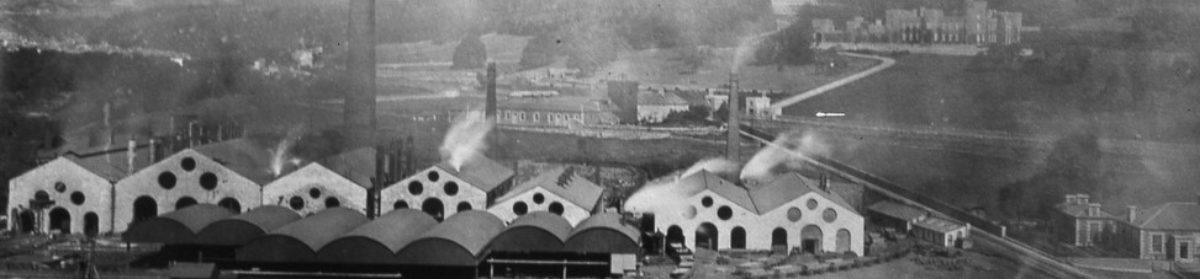
From the Illustrated London News 170 years ago today….

by Christine Trevett
Part Two: Changing the face of Art in Wales
In the years of war, and in the 1950s and beyond, Arthur Giardelli, the evacuee to Merthyr, would prove to be very active for art and artists in Wales. In 1956 with artist Heinz Koppel and others he was a founder member of firstly the South Wales Group (later The Welsh Group) of artists and then in 1956 of the 56 Group Wales. (https://56groupwales.co.uk/Arthur-Giardelli.html ).
He soon became its president and remained so until 1998, when he was made life president. At the time art in, and from, Wales got little attention and kudos among the art establishment. The 56 Group forefronted modernism in Welsh art and Giardelli, Koppel and others had helped to bring wider European trends to it. Through such groups Welsh artists got opportunities to exhibit in country wide touring exhibitions, so bringing attention to work from Wales. There was regular lobbying of institutions and politicians on behalf of art and artists, so that art galleries, museums and private collections came to have many more items by such contemporary Wales based artists. Giardelli’s conversation was sometimes peppered with phrases in other languages and phrases from Dante and Racine and he had collected European artwork since the 1930s. Here was a well travelled linguist and the man who helped to facilitate exhibitions in France, Italy, the Netherlands, Germany and elsewhere, as well.
So what of his own work as an artist? By the end of the 1940s he had moved from the Merthyr area but he was still ardently promoting adult education and the accessibility of art. He taught for the WEA and for University College Cardiff. In 1979 he was awarded an Honorary Fellowship of University College Aberystwyth, for apart from his many other activities, now based in west Wales he had taught in that university’s Department of Extra Mural Studies in the 1960s and 70s. He lectured extensively overseas too, was a committee member of CASW (the Contemporary Art Society for Wales, founded 1937) and from 1965 to 1975 was on the Welsh Arts Council arts committee. More than one film was made about him and for services to the Arts in Wales Arthur Giardelli was awarded MBE in 1973.
His own art was not being neglected. At the same time he was creating and exhibiting his own work in galleries in London, Oxford and Wales. A clue to an aspect of his style lies in the title of a film which BBC Wales made in 1967. It was See What the Next Tide Brings. This conjures up not just the importance of the sea for him in the landscape where he then lived in Pendine, Carmarthenshire but also the serendipity of the finds from which he had created artwork since the latter half of the 1950s. There were abstract constructions in relief, formal in style, collage and utilizing both found natural objects and scrap manmade objects. Shells, slate and wood, watch parts and glass, cut up brassware, string, paper and other materials figured. The works evoked nature and the seasons. His ‘Pembrokeshire Panel’ can be seen in Cyfarthfa Castle Museum & Art Gallery in Merthyr Tydfil. His work is found in galleries from the Tate in London to others in Prague, Dublin, New York and elsewhere, in museums and private collections, whether in pen and ink, mixed media or construction from found objects.

In 1969 Arthur bought the former school house ‘The Golden Plover’ near Warren, Castlemartin in Pembrokeshire, as a home, a studio and a gallery space. There he lived with his second wife, artist Beryl (Bim), née Butler. Given Giardelli’s Christian pacifism it seems ironic that nowadays Estate Agents highlight The Golden Plover’s spectacular view over a Ministry of Defence Training area. This talented man, cosmopolitan in outlook, devoted to communicating art and promoting modern artistry in Wales, had found his feet and confidence as an artist in our Merthyr Tydfil County Borough.
See many examples of his work on the Mutual Art website (free to log into).
https://www.mutualart.com/Artist/Arthur-Giardelli/9EE7775ED81C701B/Artworks
Read Arthur Giardelli obituaries in the Guardian and Independent newspapers
https://www.theguardian.com/artanddesign/2009/nov/11/arthur-giardelli-obituary
by Christine Trevett
Part One: Coming to South Wales
“When the train finally pulled into Merthyr, I felt I’d come home”
(Arthur Giardelli to Meic Stephens)
There were, a few years ago, still people of very mature years around Merthyr Tydfil who remembered Arthur Giardelli as a teacher of music and language in Cyfarthfa Castle secondary school. One or two I met did not know that he was also (or especially) an artist, and a significant one in the history of 20th century art in Wales. They knew him only as a Cyfarthfa teacher. In 1940 he had arrived in Merthyr with his school as an evacuee teacher, coming from Folkestone. It was the start of a remarkable story for the man who made Wales his home and who had loved Wales ever since family holidays in Pembrokeshire in his teenage years.
Arthur Giardelli was a Londoner, son of an English mother and an Italian father, a father who had become determinedly ‘English’ and had abandoned things ‘continental’. His son Arthur was highly intelligent and talented. He studied modern languages at Oxford and in parallel did some study at Ruskin School of Art. He was also passionate about music and would use his viola and piano playing skills (and those of his first wife Phillis, a very talented pianist) to good effect in due course. Unlike his father’s indifference, Arthur became steeped in knowledge of the European scene and of avant garde art. Above all he was a good communicator and widely read, a man who wanted to see the arts appreciated by everyone and accessible to all. Art in Wales would gain from that passion.

In 1940 his wartime pupils from Folkestone’s Harvey Grammar School shared Cyfarthfa Castle school with the local classes on a ‘split day’ basis. Arthur Giardelli soon found himself unemployed, though, a married man with two young children, sacked by Folkestone Education Authority. This was due to being a pacifist and an admirer of Gandhi and now declaring himself a conscientious objector (C.O.). Fortunately the Dowlais Educational Settlement was on his doorstep and it had been involved in adult education and social care since 1929. Giardelli had been volunteering there. Its Warden, the sculptor and Londoner John Dennithorne was a Quaker, pacifist and fellow admirer of Gandhi. With the agreement of the Settlement’s Quaker committee he took the Giardelli family into Trewern House (the Settlement base), provided a maintenance grant while the result of the teacher’s Tribunal appearance was pending and employed him as a teacher. In Merthyr Central Library, in one of the boxes housing the John Dennithorne papers is a copy of the letter Dennithorne wrote on April 10th 1941, to the the Chairman of the Appeals Tribunal at Cardiff. He was advocating Giardelli’s unconditional exemption from service because he was valuable as an educator and on other fronts. Through the Settlement, for example, he had oversight of a newly-formed mixed-sex social club for young factory workers; he led members of Settlement classes in a new allotment scheme in which produce would also be shared with the elderly, infirm and those feeling the loss of their gardening menfolk who were now away at war. As he reported himself, Arthur Giardelli was also a part time fireman. Interestingly, in his letter John Dennithorne made no reference to Giardelli as an artist, for that was not how he was known at the time.
Arthur was exempted from war service. It would be some time before he regained a teaching post, in Cyfarthfa school where he taught music, languages and English. At the time there were objections to the Education Committee from people who felt someone who had been a C.O. should not be given such employment.
Through the war years Giardelli with his wife provided very regular classical music recitals and recital lectures at The Armoury, Dowlais (advertised in the Merthyr Express, free entry but contributions welcome to defray expenses), and with Mervyn Fry (another Settlement employee) provided recorded music sessions, lectures about musicians, painters and the interrelation of music, painting and literature, while John Dennithorne the Warden gave scheduled lectures on the theory and practice of sculpture. It was all part of the morale building activity which the government wanted to see. Significantly during the war Arthur Giardelli also worked with CEMA (Council for the Encouragement of Music and the Arts), the forerunner of the Arts Council. It sent art exhibitions and theatrical performances around the country at this time, including to Merthyr and Dowlais, with very well known artists and performers. Among the artists exhibiting were Cedric Morris, who was already part of the story of the Dowlais/Merthyr art scene in other ways, and he had encouraged Giardelli.
In 1940 Dowlais must have seemed an unpromising place for an evacuee but there, Giardelli said, he had encountered ‘a whole mixed body of people’, not just evacuated teachers and Merthyr’s middle and professional classes but miners who gathered to view art, ‘people of all classes’, as he recalled in an interview included in Derek Shiel’s 2001 published study of him (Arthur Giardelli: Paintings, Constructions, Relief Sculptures, Bridgend: Seren). In Dowlais, though, his own art work and move to a professional artist’s life had been encouraged.
To be continued…..
 Do you like history?
Is there anything that you want to learn more about?
Why not join the Merthyr Tydfil Branch of Adult Learning Wales for their weekly history class?
This friendly and informal class meets every Tuesday morning at 10.30 during term time at Canolfan Soar, and several regular lecturers offer informative talks on a variety of different subjects – local, British and world history, stretching from ancient times to modern. There is something to cater to everyone’s tastes.
Classes cost £5 per lecture to cover expenses.
Why not go along and join the class – you will be guaranteed a very warm welcome. No need to book….just turn up.
by Barrie Jones
Merthyr Tydfil and District has produced its fair share of prominent football referees: Leo Callaghan (1924-1987), Iorwerth Price Jones (b.1927), and Howard King (b. 1946) come to mind, men who managed the ‘middle’ and ran the ‘line’ in English League and international football matches. To reach that status they had to ‘cut their teeth’ as members of referees’ associations, where over the decades men and now women have given up their free time to officiate at local league and tournament matches.
One such referee was my Grand-uncle Glyndwr Jones (1913-1960), a keen footballer in his youth, who also played for Hills Plymouth Cricket Club well into middle age. ‘Uncle’ Glyn’s reward for his services to refereeing was to be selected to officiate at an international schoolboy U15/16 match between Scotland and Northern Ireland at Celtic Park, Glasgow. Born in Troedyrhiw, Glyn followed his four older brothers working underground and at the time of his selection for the international match he was working as a colliery official at Merthyr Vale Colliery.
Shortly before his trip to Glasgow, Glyn attended an evening at Merthyr Vale and Aberfan Social Democratic Club, there club members, officials of the NCB Colliery Merthyr Vale, and other friends gathered to present him with a travelling bag and a sum of money. The presentation was made by Mr W. J. Williams JP, headmaster of Pantglas Secondary School and vice-president of the Welsh Schools Football Association. Mr Williams said that:
“Mr Jones has served Welsh schools’ football freely for many years as a referee to Pantglas School, Merthyr Schools League and the Welsh Schools Football Association, and he had long been recognised as a first-class referee who was particularly qualified to take charge of schoolboy football, he had always given his services without any remuneration or reward.”
Receiving the gifts Uncle Glyn said he “would endeavour to live up to Merthyr Vale and Aberfan’s fine record of sportsmanship.” Reporting on his selection and the evening’s presentation, the press commented that it was a “rare honour.”
The match took place on Saturday, 23rd of May 1953, the match programme titled it as the ‘Schools Coronation International’ and Scotland won four goals to none. The following season Uncle Glyn was further rewarded when he officiated at the Welsh Schools Cup Final.
Sadly, Glyn died at an early age in May 1960, aged forty-six, several referees’ representing the Merthyr Referees’ Society, including Leo Callaghan, attended his funeral.

From the Merthyr Telegraph 140 years ago today….

The article transcribed below appeared in the Merthyr Express 100 years go today…
QUAKERS’ YARD BRIDGE.
A GREAT AND MUCH NEEDED IMPROVEMENT.
MAYOR OF MERTHYR PERFORMS THE OPENING CEREMONY.
In the presence of about 5.000 people, the Mayor of Merthyr (Councillor F. A. Phillips) on Thursday afternoon opened the splendid bridge of reinforced concrete. built by the Corporation at Quakers’ Yard, by cutting a silken ribbon with a pair of silver scissors presented to him by the contractor. Major Rugg of Westminster. Afterwards the Mayor and his party of Aldermen Councillors and friends, drove across the bridge and declared the same open for traffic, after which the children of Woodland School passed across in procession carrying flags.
At a meeting subsequently held the Mayor said:-
Ladies and Gentlemen.—The history of the reinforced concrete bridge which I am privileged to open today dates back as far as 1909, at which time the Town Clerk received a letter from the Road Board stating that advances were available from the Development and Road Improvement Fund in respect of works to highways.
In December, 1910. Councillor Edward Edwards moved a resolution that the attention of the Corporation should he called to the state of the Quakers’ Yard Bridge, and the Borough Engineer, Mr. Harvey, was instructed to report upon a scheme for widening the old structure. In January, 1911, plans were submitted showing the widening of the bridge to 28 feet between the parapets at an estimated cost of £250, and the Council gave instructions for detailed drawings to be prepared, but the matter deferred owing to the difficulties experienced in negotiating with the land owners.
There was now a lapse of ten years before the question was revived, as in January, 1921, two schemes were submitted for the Corporation’s consideration. Scheme No. 1 was for a proposed widening of the old bridge on both sides, destroying the existing arch and constructing in lieu thereof a concrete decking over the river. This proposal was intended to lower the level of the roadway and thus improve the dangerous inclination towards Mill-street. The estimated cost of this work was £1,350.
Scheme No. 2 proposed to entirely divert the main road filling in the Friends Burial-ground and adjoining meadow, culverting the Taff Bargoed for the width of the roadway, together with the necessary masonry wing walls. This proposal was specially recommended to the Council, and sub-committee who visited the site unanimously adopted the same, and abandoned all former proposals as inadequate. The estimated cost of this work was £4,200, the intention being to carry out the necessary filling by tipping house refuse obtained from Treharris and Quakers’ Yard.
When the committee’s resolution was brought before the Council an amendment to the scheme was proposed anti carried on the grounds that the interference with the burial ground was objectionable.
The improvement was again deferred until July, 1922. when the Ministry of Transport intimated to the Corporation that they were prepared to consider schemes of road improvement which would find useful employment for the unemployed during the autumn and winter of 1922-1923. In the same month the Borough Engineer submitted plans and estimates for various road improvements and diversions. one of which was the subject of our meeting to-day.
In view of the trend of former discussions a new line of diversion was chosen and plans prepared showing the non-interference with the Friends Burial-ground, but which involved the removal of the dwelling known as Hawthorn Cottage. The scheme was approved by the Ministry of Transport, and tenders were invited for carrying out the work. The width of roadway was intended to be 30 feet, being 24 feet of carriage-way and one six feet footpath.
When considering the tenders the committee after careful deliberations came to the conclusion that a wider structure would be advantageous, and eventually a 39-feet unit carriage -way with two 5-feet paths, was definitely decided upon.
Messrs. Lewis Rugg and Co., whose tender for the narrower scheme had been provisionally accepted, were asked to quote for the widened structure, and after examples of their work had been seen and approved of they were entrusted with the contract.
The bridge, which has a length of 360 feet, is comprised of 10 spans, each of 30 feet. and one span over the Taff Bargoed of 45 feet, together with a skew span at the lower extremity. The height of the spans vary between 12 feet and 24 feet above the ground level, whilst the river span is 26 feet shove the normal flow of the water. The carriageway on the bridge has a gradient of 1 in 36, and the kerb level of the outer side of the curve is super elevated to the extent of 7½ inches.
The work was commenced in January of this year, so it will he observed that no time has been lost in getting ever many difficulties which have presented themselves. The structure was tested in presence of a Ministry of Transport Official yesterday, when the following trains were passed over the bridge at a speed of six mike per hour: No. 1. a train composed of two 13-ton steam rollers, two 11-ton steam rollers, and two 4-ton lorries; No. 2. two trains composed of two 13-ton rollers side by side, two 11-ton rollers side by side, two 4-ton lorries side by side: No. 3. trains as in test No. 2, passing in opposite directions. the 13-ton rollers passing each other at the centre of the bridge. The deflection as observed by instrument at three points – one at the centre of the 45-feet span and two at the centres of the 30 feet spans, was negligible, which is highly satisfactory.
The general scheme was designed and the specification and conditions of contract prepared by Mr. A. J. Marshall, Borough Engineer, whilst Messrs. Lewis Rugg and Co., Westminster. were responsible for the carrying out of the work. The cost of the bridge and appurtenant work is £8,650.
Merthyr Express 3 October 1925

by Mary Owen
 Gwyn Alfred Williams was born on September 30th, 1925 in Lower Row, Penywern, Dowlais. His parents, Thomas John and Gwladys, were schoolteachers. The family attended Gwernllwyn Independent Chapel, where they worshipped in Welsh and where young Gwyn and his friends, the ‘Gwernllwyn Chapel Gang’, absorbed the scriptures and played a lively part in social activities. He was educated in Cyfarthfa Castle Grammar School, where he enjoyed school life and many successes, becoming Head Boy and winning a David Davies Open Scholarship to study History at the University College of Wales, Aberystwyth.
Sadly, he was unable to begin these studies immediately because, as Geraint H. Jenkins wrote in his 18-page tribute to Gwyn on behalf of the University of Wales Centre for Advanced Welsh and Celtic Studies 1996, ‘the demands of war took him instead to the battlefields of Europe where he learnt a great deal about human suffering. Indeed, the experience of wartime service stayed with him for the rest of his days. Having witnessed the liberation of Paris and stood amongst the ruins of Berlin, he was then persuaded that he should help to build a better world in Yugoslavia, where he joined gangs of labourers who built a road linking Zagreb and Belgrade.’
His belated studies began ‘at the feet of Francis Treharne, Professor of History since the 1930s and a fellow native of Merthyr’ who veered Gwyn to specialise in medievalism. He graduated with an ‘outstanding first-class honours in 1950 and ‘was showered with prizes.’ A master’s degree and a doctorate followed and in 1954 Gwyn was appointed to teach Welsh History at the College. Jenkins states, ‘It is entirely appropriate that we in Aberystwyth should pay tribute to Gwyn for it was here that he served his apprenticeship as a historian and made his reputation as a scintillating lecturer. His senior colleagues ‘were rather staid, undemonstrative and solemn lecturers… lacking improvisation and lightness of touch…It was all clearly too dull and complacent for the young ball of fire from Dowlais. In his classes Gwyn was erudite and entertaining and his penchant for irreverent statements meant that the classroom where he delivered lectures to first year students was always filled to the brim.’
The strong views and quick wit of Gwyn’s early lecturing days had been evident in his 1940s school days and honed to perfection when I once heard him recall, in a Prize-giving event in the 1970s at Cyfarthfa High School, when he told us of the day when Miss Davenport, Head of the Girls’ Section, based upstairs, where the boys were not allowed to tread, asked him (then the Head Boy) to come to see her.
‘Mr Williams’, she said, ‘There are boys hanging about upstairs. I want you to do something about it.’ His reply to her complaint was:
‘Miss Davenport, what do you want me to do about it? Cut them down?’
His early research as a keen medieval historian widened and Jenkins relates, ‘he became obsessively interested in the French Revolution and in the Atlantic world. Nor was the early history of Merthyr Tydfil, the cradle of the Industrial Revolution in Wales, ever far from his mind. Indeed, the first articles of Welsh history -published in 1959-61 were devoted to the Merthyr Riots of 1831.’ All helped to make this historian ‘the people’s remembrancer’ he wished to be.
Gwyn’s fame spread and in 1963 he was invited to become Reader in History at the new University of York ‘a major turning-point in his career.’ Two years later he was awarded a Chair and for the next eleven years, the swinging sixties! the young professor enjoyed furthering his career with his own exhilarating, modern style of teaching, delighted by classes, again ‘filled to the brim’.
In 1974 he returned to Wales to become Professor of History at Cardiff University. It was a sea- change: his aim to liven up and modernise the study of Welsh History was met with indifference by senior colleagues, who did not share his left-wing values and enthusiasm for the need to focus on the evils of capitalism and the struggles of the exploited working-class of 19th and 20th century industrial South Wales. His new post brought friction and bitter disappointment to the ambitious 49-year- old Welshman. His health suffered and, after battling against the odds for five years, he was persuaded to retire.
 Nevertheless, there was life after academia, and he was saved by his need to research, write and to impart his views and his knowledge via active political work and then through radio and television. In 1979 his book, The Merthyr Rising of 1831 was an outstanding success, displaying his scholarship and masterly command of language and written in his fast and furious style. It still has a place on many a bookshelf in Merthyr Tydfil and elsewhere. Revolutions, riots and risings in France, Italy and Spain became favoured topics of his writings. Gwyn, who had already relearnt his Welsh, was a gifted linguist, reading and translating from original documents, often studied in those foreign countries. He won great success as a broadcaster too. His passionate performance in the 1988 TV series, The Dragon has Two Tongues, (A History of the Welsh) proved that the ‘ball of fire from Dowlais’ was still blazing.
He died of cancer on November 16, 1995.

by Alison Davies
I love collecting Vaynor memorabilia and postcards of the area, like many local collectors it’s a lifelong passion.
Then every so often a card comes along that is both historically important on the front and back, and please excuse the phrase but ‘it blows me away’ and below is one.

A General View of Pontsarn
This is a rare image taken from the fields overlooking Vaynor a little way below Pontsticill. It’s like peeping through a curtain back in time.
In the centre of the picture is the back of the Church Tavern pub with the two churches at Vaynor you can see the steeple on the new Church, the pathway leading from the old church and first few headstones in the new cemetery. The houses too: Dolcoed, Hy Brasail and Bragty Cottages are clearly visible along with the fields systems around.
The view then sweeps down the valley to the viaduct, Pontsarn Station and beyond its one of the most incredible postcards of Vaynor that I’ve seen.
The back of the card is equally important, it is an incredible piece of Merthyr’s history. Postmarked Merthyr Tydfil 27 Dec 1936 and sent from Gwernllwyn House Dowlais by M E Horsefall (Mary Emmeline Horsfall)
It reads:
Thank you for your card and good wishes.
I hope you and Mr Cobby are well
With good wishes M E Horsfall
Mary Horsfall was a philanthropist who came to Dowlais in 1934 to help at the Educational Settlement formed by John Dennithorne. She lived at Gwenllwyn House Dowlais and from there ran classes teaching unemployed men and women the arts.
Mary invited important artists including Heinz Koppel and Cedric Morris to teach art at Dowlais. Her address book must have read like a who’s who of the art world. Whilst in Dowlais Heinz Koppel painted Mary’s Portrait from his studio at Gwenllwyn House. Also in Dowlais between 1936-1939 Cedric Morris painted two of the most iconic and celebrated paintings in Welsh Art today, Dowlais Tips and Caeharris Post Office. Now in Cyfarthfa Castle Museum.
So who is the card written to ?
Mary Horsfall wrote the card to her friend Lucy Mary Cobby and her husband Anthony Cobby at little Bognor, Frittleworth Sussex.
Little Bognor is a tiny rural hamlet in Sussex re known for its artistic connections however I think Mary knew Lucy Cobby from earlier connections rather than artistic ones.
If you’re interested in the Dowlais Settlement and Mary Horsfall see Christine Trevett’s wonderful article Merthyr Historian Vol 33 p 123.
To see more of Alison’s fantastic research about Pontsarn and Vaynor, please follow this link: https://www.facebook.com/groups/747174317220437